Quantum Research Brief

Quantum BriefBRIEF

07/11–07/12· Included 24 items· 6 sources

Jul 11 – Jul 12, 2026 Weekly

02Hardware

Hardware Frontiers

Superconducting

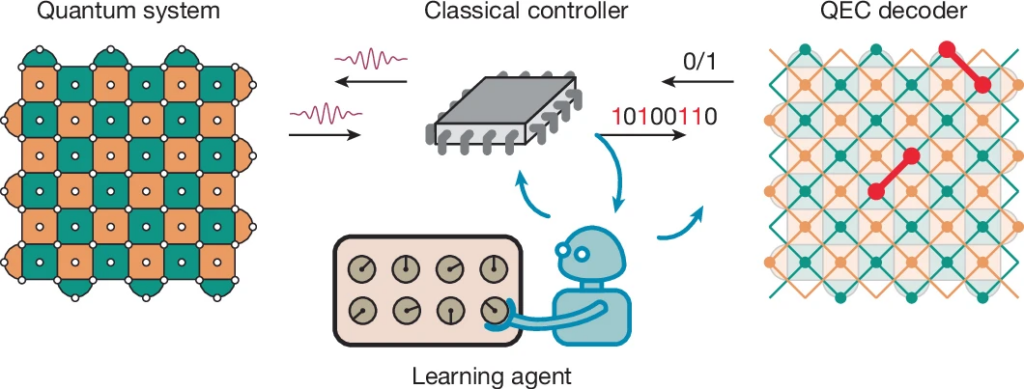
  • Google Quantum AI reported in Nature the use of a reinforcement-learning control layer to stabilize the Willow quantum processor, achieving real-time calibration and quantum error correction[6].
  • NYU and IST Austria measured 10⁻⁹ radiation noise in Josephson junction arrays[17].

Photonics/Mechanical

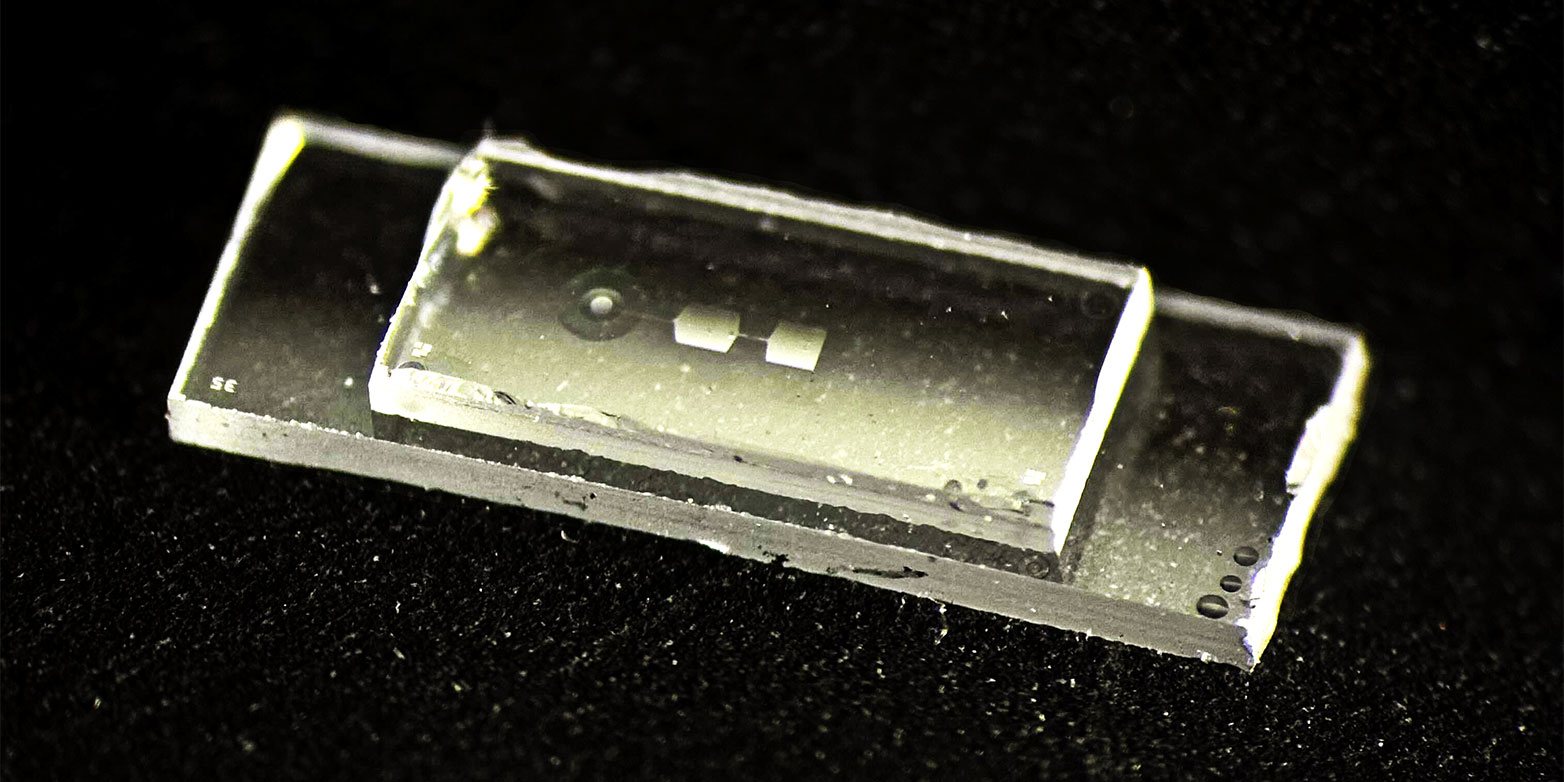
  • ETH Zurich proposed a quantum computing architecture based on mechanical resonators in Science, using mechanical vibrations instead of electromagnetic fields to separate processing and working memory[2].
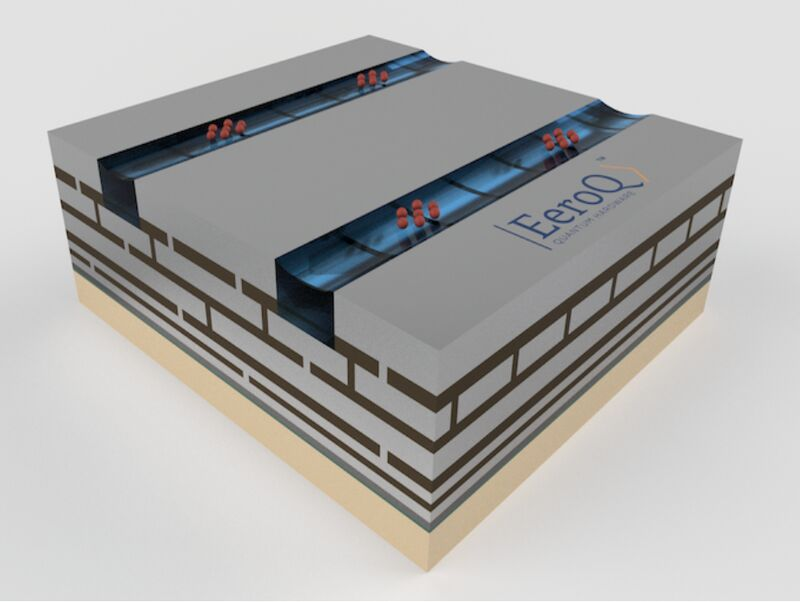
  • EeroQ published results in Physical Review Applied, verifying selective two-dimensional transport of electrons on superfluid helium using a 130-nm CMOS chip[5][11].
  • Gärttner et al. developed a multi-pulse protocol to generate tunable photonic Fock states within a framework that accounts for loss[9].
  • NRC Canada connected a chip-integrated quantum-dot single-photon source with an erbium-doped fiber quantum memory at 980 nm wavelength, advancing scalable quantum networks[13].

Other

  • Google researchers modeled (In,Ga)N quantum wells, revealing the impact of disorder on optical properties[14].
03Algorithms

Algorithms & Software

Quantum error correction

  • Okada et al. developed a rate-2/3 quantum LDPC code, achieving no decoding failures at error rates up to 1% in billion-shot simulations, with a threshold near p=0.029[10].
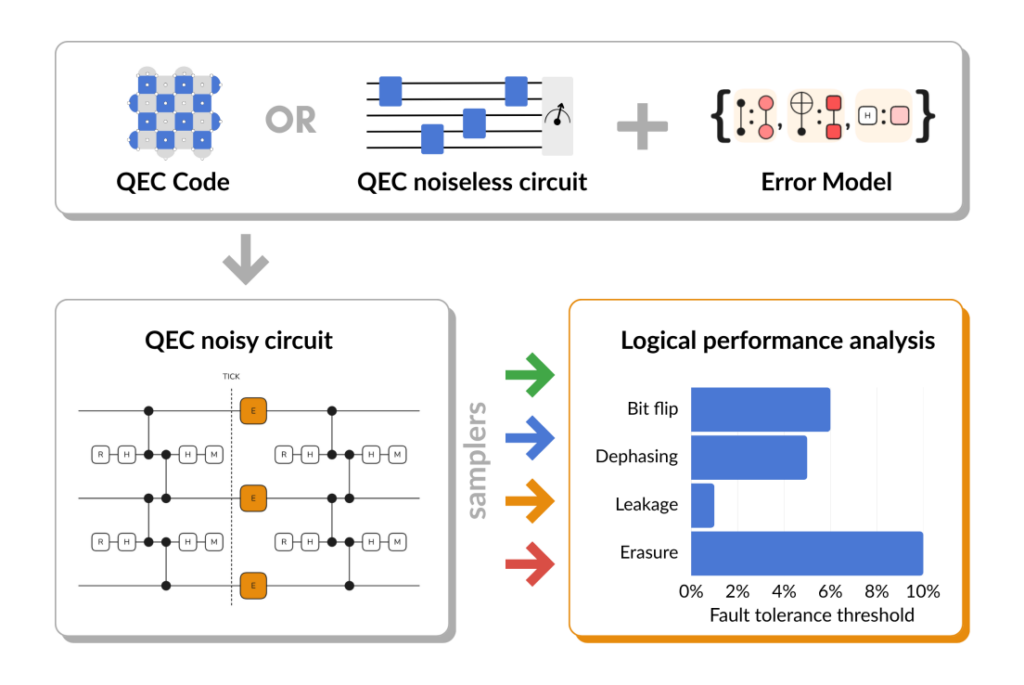
  • QC Design released the unified "Plaquette" framework, automating hardware-aware fault-tolerant quantum computing simulation[8].

Quantum algorithms

  • Variational quantum algorithms prepared Gibbs states of the transverse-field Ising model on an IonQ quantum computer, with fidelity assessed via state tomography[16].
  • Researchers prepared thermal states using 640 gates on Quantinuum hardware, reaching an entropy of 0.166 per spin[18].

Quantum Resource Theory

  • Gühne et al. proposed the "witness expansion" framework, providing the first analytical criterion for detecting quantum "magic" in noisy quantum systems of arbitrary size[12].

Quantum-Classical Integration

  • MIT and IBM mapped quantum unitary operators into the latent space of large language models, enabling multimodal circuit synthesis[1].
04Industry

Industry & Ecosystem

Company News

  • Photonic Inc. appointed Orlagh Neary as CMO and Briony Shipman as VP of Global Government Affairs[4].
  • NordLocker deployed the "Project Renaissance" architecture, migrating private storage from a lockbox-style file system to a decentralized, append-only log engine[7].
  • BTQ Technologies and ICTK completed the design of a next-generation QCIM-PUF security chip, combining a quantum cryptographic accelerator with a physically unclonable function[23].

Funding and Policy

  • Keyfactor secured over $1 billion in growth capital, and Qiz Security raised $17 million for post-quantum cryptography management[24].
  • The White House summit announced over $2.2 billion in coordinated support, targeting a fault-tolerant system by 2028[24].
  • ORNL deployed a new 20-qubit IQM quantum computer for hybrid HPC[24].

Ecosystem and Perspectives

  • Google and Fraunhofer launched a global call for early fault-tolerant quantum algorithms and enterprise use cases[3].
  • A commentary article noted that quantum computing requires a robust ecosystem to scale[22].
05Research

Research Frontiers

Key Papers

  • ETH Zurich: "Mechanical resonator–based quantum computing" (Science)[2].
  • Google Quantum AI: "Reinforcement learning control of quantum error correction" (Nature)[6].
  • EeroQ: "Selective shuttling of electrons on helium using a CMOS control platform" (Physical Review Applied)[5][11].
  • MIT-IBM: "Aligning Quantum Operators with Large Language Models" (IEEE QCE 2026)[1].

arXiv preprint

  • QC Design: "Plaquette: A hardware-aware design platform for fault-tolerant quantum computers"[8].
06Editors

Editor's Note

This week’s highlights focus on substantial breakthroughs in hardware architecture innovation and error-correction theory. ETH Zurich’s mechanical resonator architecture introduces classical von Neumann concepts into quantum computing, potentially alleviating the bottleneck between quantum storage and processing. Google’s reinforcement-learning control layer demonstrates the potential of machine learning for real-time optimization of quantum systems, though its generality and scalability require attention. EeroQ’s electron transport verification offers a new path for hybrid superconducting and photonic architectures. In error correction, QC Design’s Plaquette framework and Okada’s LDPC codes advance the practicalization of fault-tolerant quantum computing from the software-tool and code-construction perspectives, respectively. On the industry side, the White House’s large-scale funding commitment and multiple financing rounds indicate that post-quantum cryptography and fault-tolerant systems are becoming focal points for policy and capital, though caution is warranted regarding the gap between hype and actual deployment.