Quantum Research Brief

Quantum BriefBRIEF

07/14–07/15· Included 31 items· 6 sources

Jul 14 – Jul 15, 2026 Weekly

02Hardware

Hardware Frontiers

Superconducting

Trapped ion

MIT and Caltech achieved quantum error correction in a single ion, improving qubit stability by a factor of 2.2, potentially offering a new path to reduce error-correction overhead.[15].

Photonic

QuiX Quantum announced its commercial photonic quantum computing architecture, Carina, and delivered it to DLR. The system features a room-temperature, data-center-deployable design, marking the transition of photonic quantum computing from an experimental platform to practical infrastructure.[4][23].

Silicon quantum dots

Imec and Diraq achieved the first coherent control of an 8-quantum-dot silicon spin array. The device was fabricated on a 300 mm CMOS process, proving for the first time that silicon spin qubits can be realized on a large-scale industrial platform, clearing a key obstacle for mass production.[10]Shannon Harvey's team at SLAC is advancing research on scalable fabrication of quantum-dot qubits, focusing on manufacturability.[12][28].

Other

Q-CTRL showcased the first airworthiness-certified quantum navigation system at the Farnborough Airshow. During flight tests, positioning accuracy was better than 0.3 nautical miles 95% of the time, serving as a GPS backup against jamming and marking the entry of quantum sensing into aviation safety applications.[9].

03Algorithms

Algorithms & Software

Quantum error correction

NVIDIA released an open-source Ising decoder architecture based on a 3D convolutional neural network that reduces the logical error rate of color codes by a factor of 347, elevating AI decoder performance to a practical level for the first time and potentially significantly reducing the physical-qubit overhead for fault-tolerant quantum computing.[6]Nord Quantique used post-selected stabilization techniques to push the state-preparation-and-measurement (SPAM) error rate of GKP qubits below 0.1%, breaking through a key bottleneck for bosonic codes on the path to fault-tolerant computing.[7].

Quantum Simulation and Optimization

Quantinuum is collaborating with Rolls-Royce, Riverlane, and the University of Edinburgh to explore combining its Helios quantum computer with supercomputers for gas-turbine fluid-dynamics simulations, aiming to shorten industrial design cycles from weeks to hours.[13][29].

Software & tools

Xanadu and Lockheed Martin are expanding their quantum-talent training collaboration based on PennyLane, promoting the application of quantum machine learning in the defense sector.[21].

04Industry

Industry & Ecosystem

Funding and Government Investment

Japanese hardware startup Yaqumo received investment from the government-backed JIC VGI and a Toyota-affiliated fund, completing a seed-extension round using a J-KISS instrument, reflecting Japan's push to accelerate quantum-hardware deployment through public-private partnerships.[5]UKRI released its five-year strategy, investing £38.6 billion to support over 20,000 researchers, with quantum technologies as one of the key focus areas.[18].

Commercialization and Deployment

QuSecure listed its QuProtect R3 crypto-agility platform on the AWS marketplace dedicated to U.S. intelligence agencies, providing post-quantum cryptography migration services to federal agencies and marking PQC's entry into government procurement channels.[3]Logical Qubit Technology launched a cloud platform for superconducting quantum computing, lowering the barrier to entry for users.[26].

Partnerships and Ecosystem

Deutsche Telekom and AIT are leading a new round of European quantum-communication infrastructure projects, promoting the construction of quantum-key-distribution networks.[24]Tennessee allocated $3 million to recruit an NSF X-Labs quantum team, aiming to translate research into local commerce.[8][25].

Quantum Security

QMill introduced a quantum-enhanced encryption method that provides an additional security layer for critical networks, addressing threats from both quantum and classical computing.[1]nLighten and Arqit completed a proof-of-concept, using quantum-safe encryption to anchor cloud workloads to sovereign European infrastructure, meeting data-sovereignty requirements.[11][27]QuintessenceLabs became a Gold Sponsor of Q+AI 2026.[2].

05Research

Research Frontiers

Quantum error correction

MIT and Caltech achieved quantum error correction in a single ion, improving stability by a factor of 2.2, offering a new idea for reducing error-correction overhead.[15].

Quantum machine learning

GPT-5.4 successfully fixed 48.8% of defects in Qiskit programs (across 6 versions), significantly outperforming other models, potentially opening a new paradigm for AI-assisted quantum programming.[17].

Quantum Biology

The Jane Goodall Institute and FormationQ launched the first quantum-ecology research project, using quantum computing to analyze the roots of conflict and peaceful coexistence among chimpanzees and bonobos.[14].

Quantum materials

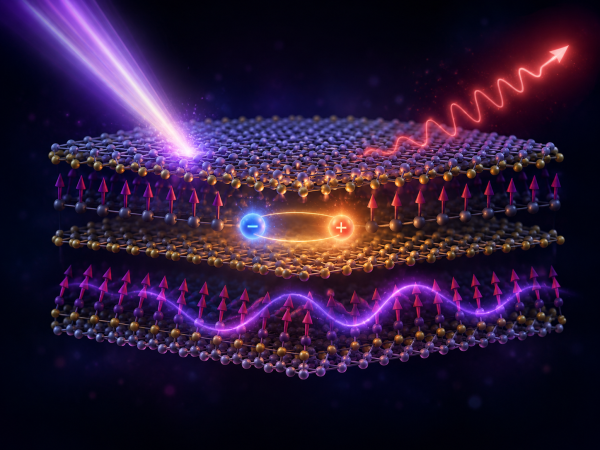
A review article mapped out a roadmap for exciton research in magnetic quantum materials, providing guidance for designing novel quantum materials.[30].

Other

NEC developed the first AI technology capable of generating detailed 3D models from standard video in one minute. While not quantum-related, it demonstrates rapid AI progress in data processing.[16].

06Impact

This Week's Impact

  • Quantum Error Correction Landscape ReshapedNVIDIA's Ising decoder reduces the logical error rate of color codes by a factor of 347, potentially making color codes a preferred fault-tolerant architecture over surface codes. This creates roadmap pressure for players relying on surface codes (e.g., Google, IBM), warranting close attention to subsequent experimental validation.[6].
  • Silicon Quantum Dot Commercialization AcceleratesThe successful operation of Imec/Diraq's 8-quantum-dot array on a 300 mm CMOS process shifts the scaling path for silicon spin qubits from academic exploration to industrial mass production. Semiconductor giants like Intel and CEA-Leti may accelerate their follow-up efforts.[10].
  • Quantum Navigation Enters Aviation CertificationThe airworthiness certification of Q-CTRL's system means quantum sensing has crossed the aviation-safety threshold. It may replace GPS as critical infrastructure in the future, posing a disruptive threat to traditional navigation suppliers.[9].
  • PQC Government Procurement Channel OpensQuSecure's listing on AWS ICMP marks the first entry of post-quantum cryptography into the U.S. intelligence community's procurement catalog, accelerating federal agency migration. The post-NIST-standardization market landscape is beginning to take shape.[3].
  • Photonic Quantum Computing Delivery MilestoneQuiX Quantum's delivery of the Carina system to DLR proves that the photonic route can provide room-temperature, deployable commercial hardware, a positive signal for peer companies like PsiQuantum and Xanadu.[4].
07Editors

Editor's Note

The most striking trend this week is the deep integration of AI and quantum error correction. NVIDIA's Ising decoder, released as open source, is not only a leap in performance (347× error-rate suppression) but also marks the point where deep learning begins to substantively participate in the design of the fault-tolerant control layer. This direction could fundamentally change the trade-offs in error-correction architecture—where we once relied on hardware redundancy, we may in the future rely on intelligent decoders to "squeeze" out more logical fidelity. Meanwhile, the commercialization progress of silicon-based quantum dots and the photonic route indicates that quantum computing is shifting from "who has qubits" to "who can build a usable system." Notably, the accelerated deployment of government procurement and sovereign cloud deployments in the quantum-security domain shows that geopolitical factors are pushing quantum technology from the lab into critical infrastructure.