Quantum Research Brief

Quantum BriefBRIEF

07/16–07/17· Included 41 items· 10 sources

Jul 16 – Jul 17, 2026 Weekly

02Hardware

Hardware Frontiers

Photonics/Quantum Networks

  • Quantum Source and the Israel Ministry of Defense demonstrate a robust single‑atom entangled photon source suitable for practical quantum communication[27]: This result may imply high‑fidelity entangled‑photon generation under real‑world conditions, providing a key component for quantum‑network deployment.
  • Arq Quantum Technologies raises $1.4 million in pre‑seed funding for multi‑node quantum‑repeater R&D[5][33]: Quantum repeaters are the core bottleneck for long‑distance quantum communication; this funding accelerates their path to practical use.
  • SES and Airbus sign a site lease agreement for Europe’s flagship EAGLE‑1 quantum optical ground station[9]: The ground station will serve as a key node for satellite‑based quantum communication, marking a new phase in the construction of Europe’s integrated space‑ground quantum‑network infrastructure.
  • Photon Queue receives a $500,000 grant to establish a quantum‑memory assembly and test centre in New Mexico[12]: Quantum memory is a core element for quantum repeaters and networks; this move may push it from the lab toward engineering.

Quantum materials

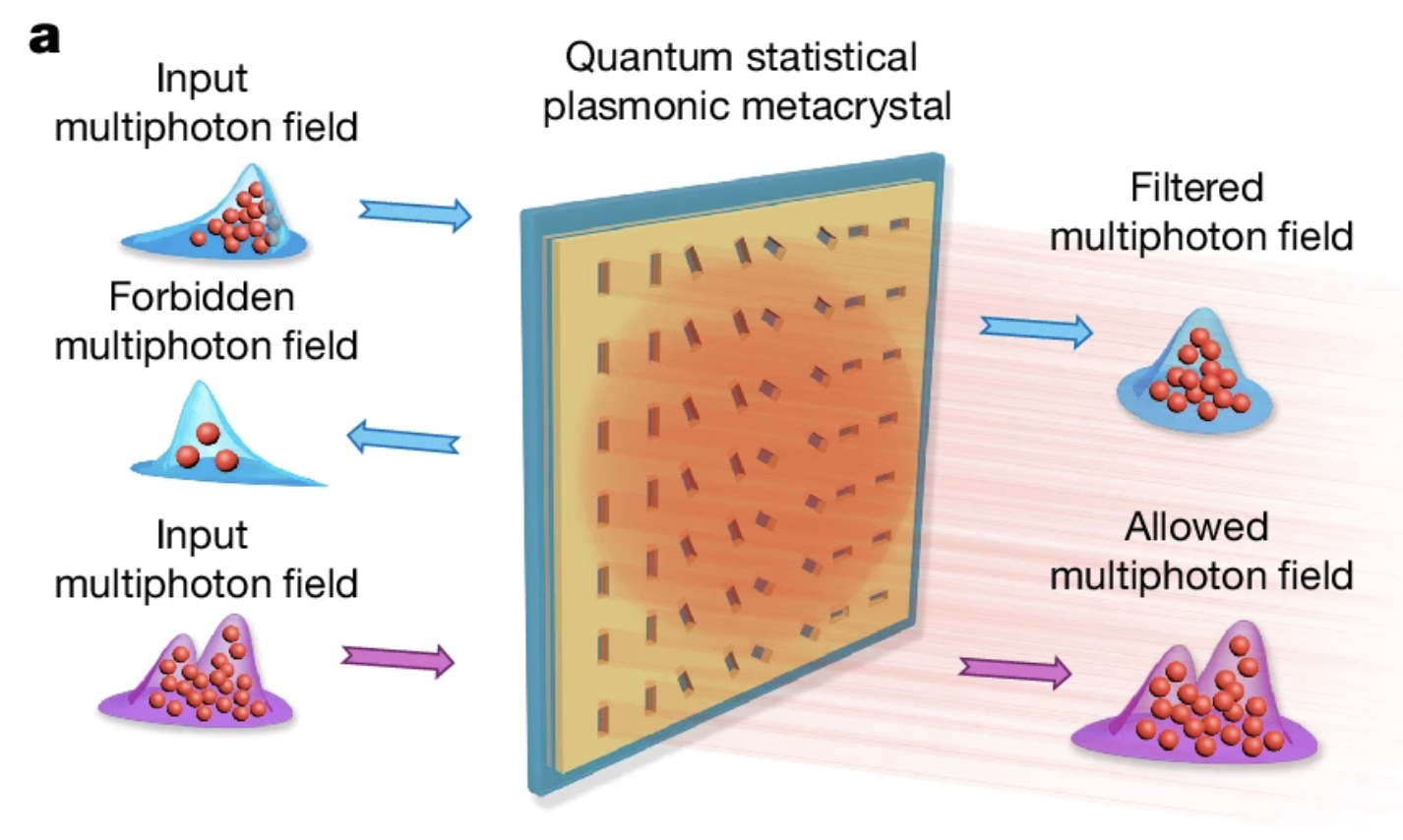
  • Researchers create a room‑temperature quantum material that can filter photons according to quantum statistics[34]: This is the first demonstration of quantum‑statistics‑based optical filtering at room temperature, potentially offering a new platform for quantum optical devices.
  • High‑Q Technologies partners with Creative Biostructure to scale quantum‑enhanced EPR protein mapping[10]: Bringing quantum sensing into structural biology may significantly boost the precision and throughput of protein‑dynamics analysis.

Other

  • ESA introduces a quantum computing system into its Earth‑observation research centre[32]: The potential advantage of quantum computing for remote‑sensing data processing is beginning to attract attention from space agencies, likely accelerating application exploration in this field.
03Algorithms

Algorithms & Software

Quantum error correction

  • A Rice University team proposes a topological subsystem code framework that requires only weight‑3 to weight‑4 local check‑operator measurements while preserving a large number of undisturbed local gauge qubits[16]: Compared with existing subsystem codes, this construction reduces measurement complexity while maintaining topological protection, making it easier to implement on diverse hardware platforms.

Quantum sensing

  • Manya et al. realise a method for simplifying observables in Floquet time‑crystal sensing, achieving near‑optimal precision by approximating the theoretically optimal measurement[14]: Previously, time‑crystal sensing required measuring complex, inaccessible observables; this work bridges theory and experiment with simple observables such as spin magnetisation, potentially advancing practical quantum‑enhanced sensing.

Quantum Computing

  • The Shadow Pauli Flow concept is introduced to characterise determinism in measurement‑based quantum computing (MBQC) based on Pauli measurements[19]: This provides a new theoretical tool for classical simulation and logic‑gate implementation in MBQC, potentially improving the designability of cluster‑state‑based quantum computing schemes.
04Industry

Industry & Ecosystem

Funding & Startups

  • Arq Quantum Technologies raises $1.4 million in pre‑seed funding[5][33]: Investment in a Spanish quantum‑networking start‑up indicates that the quantum‑communication entrepreneurial ecosystem in Europe is becoming active.
  • Photon Queue receives a $500,000 grant[12]: A UIUC spin‑off receives support from the New Mexico state government, showing that regional quantum‑cluster cultivation policies are yielding results.

Standards & Policy

  • Post‑Quantum’s Classic McEliece becomes the first post‑quantum cryptographic algorithm to receive an ISO standard[8]: This is a major milestone in global PQC standardisation, providing an authoritative benchmark for government and industry adoption.
  • enQase’s cryptographic module receives FIPS 140‑3 Level 1 validation[6]: A quantum‑safe cryptographic module passes U.S. federal standard certification, meaning it can enter government procurement lists.
  • Quantum eMotion’s SecureKey module enters NIST FIPS 140‑3 testing[7]: Approaching certification indicates that its quantum‑safe solution is moving toward compliance.
  • QED‑C holds the 2026 Quantum Technology Showcase on Capitol Hill[38]: Held after a U.S. policy milestone, it shows deepening interaction between industry and policy makers.
  • NSF invests $15 million in the Connecticut Quantum Engine[11]: The Regional Innovation Engines programme supports quantum‑technology translation, potentially accelerating the formation of a local quantum industry ecosystem.

Partnerships & People

  • Intel and Google Cloud expand their partnership to deploy Gemini enterprise‑grade AI[1]: Although not directly quantum, Intel’s layout in classical computing and AI may indirectly influence its quantum‑computing resource allocation.
  • Former IBM quantum executive Denise Ruffner joins Haiqu to drive quantum‑software adoption[29]: Senior talent mobility indicates growing attractiveness of the quantum‑software market.
  • PsiQuantum strengthens its executive team[31]: Indicates that the photonic quantum‑computing leader is preparing for commercialisation.
  • Bloq Quantum partners with MIUUL to enter the Turkish market, promoting quantum‑machine‑learning training[4][30][39]: The quantum‑education market is expanding, potentially cultivating more application developers.
  • Digital Catapult welcomes a new cohort of companies exploring industrial quantum applications[28]: The UK continues to promote quantum‑technology industrialisation through programmes.
  • Pan Jianwei receives the UNESCO‑Mendeleev Prize, becoming the first Chinese scientist to win the award[37]: The award recognises his contributions to quantum communication and computing, enhancing the international prestige of Chinese quantum research.

Other

  • AT&T and Palo Alto Networks partner to launch a quantum‑resilient SASE architecture[13]: Quantum‑safe network services enter the product lines of mainstream communication vendors, likely accelerating enterprise security upgrades.
  • Mind Success launches a quantum‑materials discovery platform and digital‑twin software[36]: AI and digital‑twin technologies are being used to accelerate quantum‑materials R&D.
05Research

Research Frontiers

Quantum error correction

  • Rice University: topological subsystem code framework with weight‑3 to weight‑4 check operators[16]: Compared with traditional topological codes that require higher‑weight measurements, this work lowers the hardware‑implementation barrier and may provide more easily realisable error‑correction schemes for platforms such as superconducting and ion‑trap systems.

Quantum sensing

  • Manya et al.: method for simplifying observables in Floquet time‑crystal sensing[14]: For the first time, simple observables are used to approach the theoretically optimal sensitivity, potentially moving time‑crystal sensors from theory to experiment.

Quantum Fundamentals

  • University of Gdańsk: discovery that non‑locality of entangled particles can exhibit asymmetry depending on the way measurements are swapped[17]: In randomised Bell tests, asymmetric maximally entangled states can increase the probability of observing non‑locality, revealing a new role for state symmetry in optimising quantum communication protocols.
  • Georgia Institute of Technology: proposes a new chirality‑diagnosis method based on relative entropy for complex quantum states[18]: This solves the problem that traditional methods cannot identify the chirality of complex topological states, potentially holding significance for matter characterisation in topological quantum computing.

Quantum materials

  • Room‑temperature quantum material can filter photons according to quantum statistics[34]: This is the first demonstration of such functionality at room temperature, potentially offering a new platform for quantum optical devices.
  • Review of cooperative effects between light and magnetism in atomically thin materials[20]: Photo‑generated excitons can directly control magnetism, potentially paving the way for optically controlled quantum memory and quantum devices.

Other

  • Review of algorithms for the maximum‑clique problem: covering classical, AI and quantum methods[2]: Provides researchers with a comprehensive reference for cross‑domain algorithm comparison.
06Impact

This Week's Impact

  • Quantum Error Correction Hardware Architect: The Rice University topological subsystem code requires only weight‑3 to weight‑4 check operators, which may reduce the measurement complexity for implementing quantum error correction on current superconducting and ion‑trap platforms; follow‑up experimental verification is worth watching.[16]
  • Post-Quantum Cryptography Standardization Process: Classic McEliece obtaining an ISO standard will accelerate migration to PQC in critical sectors such as government and finance, while putting pressure on the standardisation of other candidate algorithms (e.g., Kyber, Dilithium).[8]
  • European Quantum Network Infrastructure: The signing of the EAGLE‑1 ground‑station agreement, combined with Arq’s repeater funding, shows Europe’s integrated space‑ground quantum‑communication network moving from planning to construction; demand for related component suppliers (e.g., single‑photon sources, quantum memories) will increase.[9][5]
  • Quantum Sensing Industrialization: The simplified Floquet time‑crystal sensing scheme and the High‑Q Technologies EPR collaboration are pushing quantum sensing out of the lab from the theoretical and commercial sides, respectively; bio‑imaging and materials science may be among the first to benefit.[14][10]
  • Quantum-Safe Network Services: AT&T and Palo Alto launching quantum‑resilient SASE indicates that mainstream communication vendors are beginning to integrate quantum security into enterprise‑grade products; enterprise customers can start planning quantum‑safe network upgrades.[13]
07Editors

Editor's Note

This week’s developments reveal a dual‑track landscape of "hardware error‑correction simplification" and "cryptographic standardisation" in the quantum‑computing field. The Rice University topological subsystem code theoretically lowers the physical threshold for error‑correction implementation, but there is still a gap to actual hardware deployment; meanwhile, the ISO standardisation of Classic McEliece provides a solid institutional cornerstone for post‑quantum security and will directly drive compliant adoption by industry. It is noteworthy that Europe’s continued investment in quantum‑network infrastructure (EAGLE‑1 ground station, Arq repeater funding) shows its attempt to seize the initiative in the quantum‑communication race. At the same time, the translation of quantum sensing from theory to commercialisation is accelerating, with the simplified Floquet time‑crystal sensing scheme and the High‑Q Technologies EPR collaboration serving as typical examples. Overall, quantum technology is transitioning from "proof‑of‑principle" to "engineering" and "standardisation," with the roles of interdisciplinary collaboration and industrial‑policy guidance becoming increasingly prominent.