Quantum Research Brief

Quantum BriefBRIEF

07/17–07/18· Included 30 items· 9 sources

Jul 17 – Jul 18, 2026 Weekly

02Hardware

Hardware Frontiers

Superconducting

  • IBM achieves 25× faster qubit reset[4]: Fast reset is key to shortening the interval between quantum circuit executions; a 25× improvement means more circuits can be run in the same time window, which is especially critical for repeated error-correction cycles in fault-tolerant quantum computing — this is the first publicly reported reset-speed improvement of this magnitude.

Topology

  • Braiding exotic particles may enable reliable universal quantum computers[23]: The article explores the potential of using anyon braiding to realize topological quantum computing. If demonstrated experimentally, it would provide a quantum-computing paradigm inherently immune to local noise, but it remains at the theoretical exploration stage.
03Algorithms

Algorithms & Software

Quantum error correction

  • LDGM codes boost quantum error-correction performance[8]: Researchers used low-density generator-matrix (LDGM) codes to construct new CSS codes, combined with graph decoding and discrete density-evolution analysis. Compared with conventional error-correcting codes, this may reduce physical-qubit overhead, but no concrete threshold comparison has been given yet.

Software & tools

  • CETQAP’s PkTron 9.0.6 supports the full Qiskit C-API[12]: Through the QkDag interface it enables advanced compiler optimization and hardware-aware compilation, allowing third-party tools to deeply integrate with the IBM ecosystem — for quantum-compiler developers this means more flexible optimization passes.
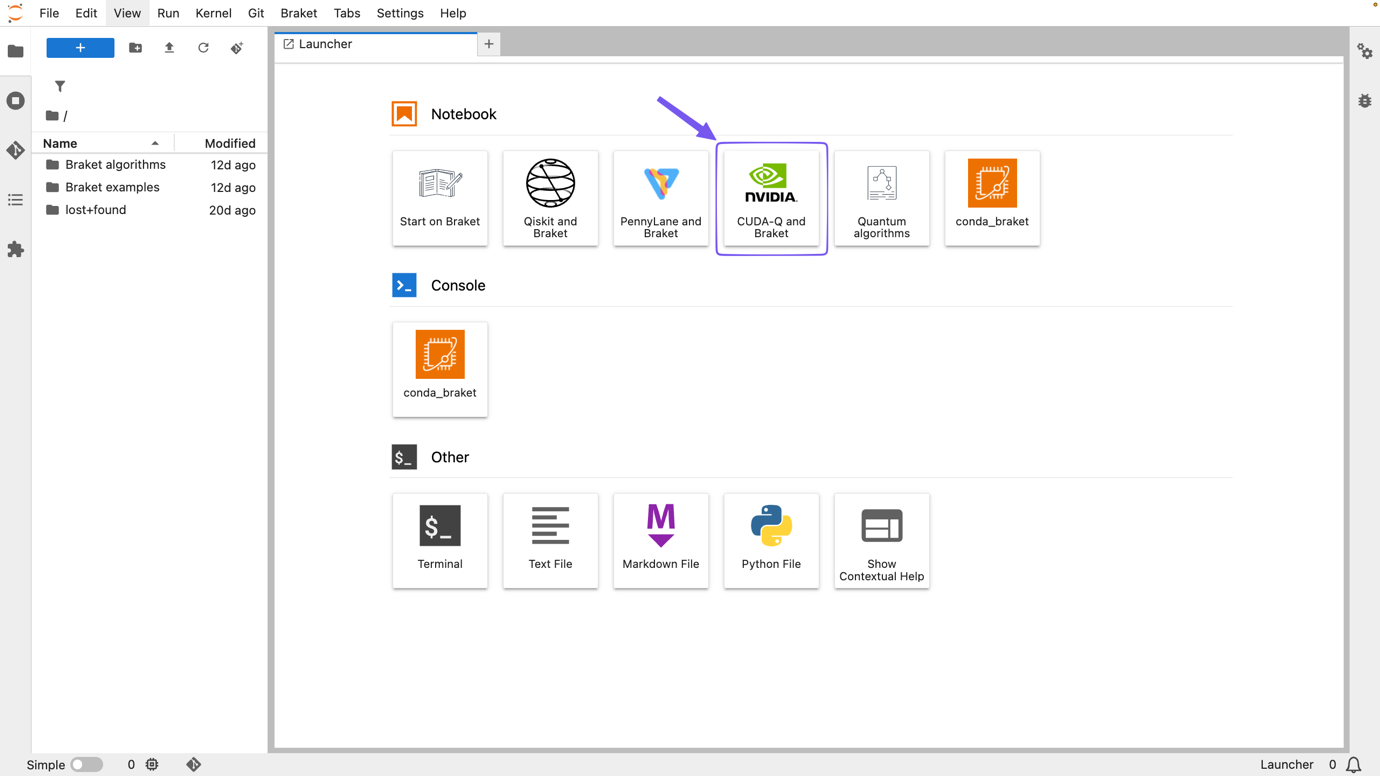
  • Amazon Braket integrates the NVIDIA CUDA-Q Application Hub[1]: Users can run peer-reviewed quantum-research examples directly within the Braket environment, lowering the barrier for developing hybrid quantum-classical applications, though this is primarily ecosystem integration rather than a technical breakthrough.
  • IBM releases Qiskit v2.5[4]: Alongside hardware improvements, the new software-stack version is further optimized, but no specific new features were disclosed.
04Industry

Industry & Ecosystem

Funding

  • pQCee raises $3.9 M in seed funding⟦10,24⟧: Combined with the previous $2.8 M, the total reaches $6.7 M, to be used for expanding its quantum-safe cybersecurity business into the U.S., Europe and the Middle East. With the NIST post-quantum cryptography standard about to be finalized, the funding activity of such startups serves as a barometer of industry maturity.

Partnerships

  • AT&T and Palo Alto Networks partner to launch a quantum-resilient SASE architecture[27]: Combining AT&T’s global network with Prisma SD-WAN, they offer quantum-safe network services to enterprises, marking a shift of quantum security from single-point encryption to network-architecture-level integration.
  • Bloq Quantum partners with MIUUL to enter the Turkish market[29]: Integrating an enterprise-grade quantum platform into MIUUL’s quantum machine-learning curriculum aims to cultivate a local developer ecosystem — an important step for Turkey’s quantum talent pipeline.
  • Digital Catapult welcomes NatWest and 10 other industry leaders into its Quantum Technology Access Programme[14]: Focusing on financial applications such as fraud detection, this signals that financial institutions’ interest in quantum exploration is moving from proof-of-concept to real business scenarios.

Policy & Ecosystem

  • QED-C holds the 2026 Quantum Technology Showcase on Capitol Hill[28]: Following the White House Quantum Innovation Summit and executive orders, the showcase brings together government, Congress and industry, indicating that U.S. quantum policy is progressing from top-level design to industry promotion, with a catalytic effect on standards-setting and cross-agency collaboration.
  • Tennessee launches a K‑12 quantum education program[22]: Through the TN QuantumWorks initiative it aims to cultivate the future quantum workforce. This is a case study of a state-level quantum education program that, in the long run, will help alleviate the quantum talent shortage.
  • Professor Goldschmidt of the University of Illinois takes over as director of IQUIST[6]: As IQUIST is a major U.S. quantum research center, the leadership change may influence its research direction and resource allocation.
  • QTREX Quantum appoints independent directors[21]: Corporate governance improves, but the concrete impact is limited.

Other

  • 2026 supplier guide for Korean quantum-computing companies[5]: The guide profiles local players such as SDT, Norma and Korea Quantum Computing, reflecting South Korea’s accelerating push in the quantum sector.
05Research

Research Frontiers

Quantum Chaos & Feedback Control

  • Quantum processor exhibits a mixed phase space with no classical analogue[9]: Researchers stabilized regular trajectories in a classically chaotic quantum many-body system via hybrid feedback control, realizing for the first time dynamics that possess both chaotic and regular features in a quantum system — significant for understanding the quantum-classical boundary and for quantum simulation.

2D Materials

  • University of Southampton develops a cleaner, cheaper method for fabricating 2D heterostructures[7]: Using atomically flat material stacking, the method promises to reduce fabrication defects in 2D materials for quantum devices, but it has not yet been directly applied to quantum computing.

Quantum sensing

  • SpaceWERX physics-constrained AI cuts space-object identification time by 99%[11]: BosonQ Psi Federal won the contract to embed physics constraints into AI models, dramatically speeding up space-domain awareness. While not directly quantum computing, it demonstrates the potential of quantum-inspired approaches for classical problems.
06Impact

This Week's Impact

  1. IBM user: The 25× faster qubit reset means IBM’s quantum cloud services can deliver higher throughput and shorter user wait times, especially benefiting variational quantum algorithms and quantum-chemistry simulations that require many repeated circuits. The next thing to watch is whether this technique has already been deployed on IBM’s latest processors.
  2. Quantum Error Correction Community: LDGM codes combined with graph decoding provide a new candidate for low-overhead error correction. If experiments verify that their threshold outperforms the surface code, it could alter the error-correction roadmap. The next steps to monitor are the concrete error-rate thresholds and the difficulty of physical implementation.
  3. Cybersecurity Industry: The pQCee funding and the AT&T/Palo Alto quantum-resilient SASE indicate that quantum-safe networking is upgrading from cryptographic-algorithm replacement to system-level architectural redesign. Industries such as finance and government need to accelerate assessments of their existing networks’ vulnerability to quantum attacks.
  4. Quantum Education Sector: The Tennessee K‑12 program and the Bloq/MIUUL partnership show that quantum education is extending from universities to secondary schools and vocational training. In the long term this will expand the quantum talent pool, though the near-term impact on research is limited.
  5. U.S. Quantum Policy: The QED-C Capitol Hill showcase means quantum technology has become a bipartisan consensus issue, which may subsequently drive more federal funding and cross-agency collaboration — a positive signal for academia and startups that rely on government support.
07Editors

Editor's Note

This week’s developments reveal two distinct trends: on the hardware side, the focus is shifting from pursuing higher qubit counts to fine-tuning operational speed and fidelity (e.g., IBM’s reset-speed improvement); on the industrial-ecosystem side, the shift is from single-technology-route competition to cross-domain synergy (e.g., networking, finance, education). It is worth noting that some advances remain at the conceptual or theoretical level (e.g., topological quantum computing) and are still some distance from practical use. On the eve of the NIST post-quantum cryptography standard release, the dense appearance of funding and partnerships in the quantum-security space indicates that industry is proactively preparing for future threats.