Quantum Research Brief

Quantum BriefBRIEF

07/17–07/23· Included 88 items· 19 sources

Jul 17 – Jul 23, 2026 Weekly

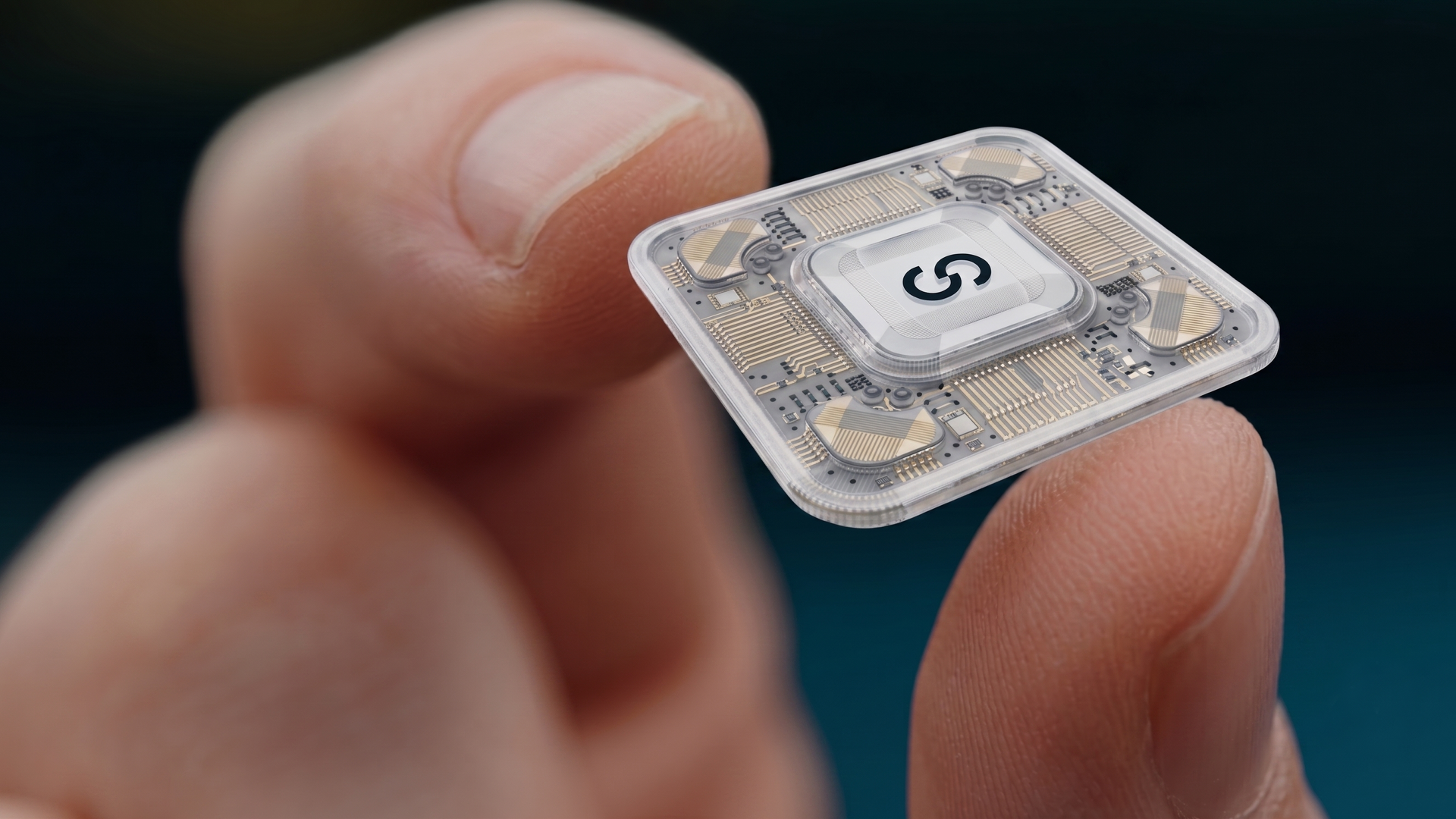
—— SAXON Q releases 128/512-qubit room-temperature diamond quantum computer, breaking superconducting monopoly

02Hardware

Hardware Frontiers

Neutral atom

  • Infleqtion will deploy a fault-tolerant neutral-atom quantum computer in Illinois ⟦1⟧ and open a new Chicago Quantum Innovation Center ⟦2⟧. This marks the first time the neutral-atom approach has entered the fault-tolerant computing deployment stage, but specific fault-tolerance schemes and physical metrics have not yet been disclosed.PsiQuantum signs a $125 million expansion agreement with DARPA ⟦3⟧ to carry out verification and validation tasks under the Quantum Benchmarking Initiative (QBI) ⟦4⟧. This is PsiQuantum’s largest U.S. government contract to date, indicating DARPA’s confidence in its photonic approach, but key metrics such as the end-to-end loss budget have not been made public.[2]SAXON Q releases 128- and 512-qubit room-temperature diamond quantum computers ⟦5⟧, models SXQ128 and SXQ512, based on nitrogen-vacancy (NV) centers, requiring no cryogenics or vacuum ⟦6⟧. This is the first time a commercial diamond-based quantum processor has exceeded 10 physical qubits, but NV-center two-qubit gate fidelity is typically below 99%, several orders of magnitude short of the 99.99% required for fault-tolerant computing, and error-correction demonstrations are lacking.

Photonic

  • Photon Queue completes a $4 million seed funding round ⟦7⟧. Room-temperature quantum memories could lower quantum-network deployment costs, but storage time and fidelity have not yet been announced.Maybell Quantum deploys 4 dilution refrigerators at the Roadrunner Quantum Laboratory in New Mexico ⟦8⟧. This deployment supports superconducting and spin-qubit approaches, but dilution refrigerators themselves are not a quantum hardware breakthrough.[5][17]Interlune achieves extraction of 99% pure helium-3 from ordinary helium ⟦9⟧. Helium-3 is a key working fluid for dilution refrigerators; this technology could ease supply-chain bottlenecks, but production scale still needs validation.

Diamond NV

  • This section contains 4 in-depth per-article analyses (background / key points / commentary), which are paid-subscription content.IQM and Deutsche Bahn demonstrate a hybrid quantum algorithm on real operational data ⟦10⟧. The QAOA algorithm generates feasible timetables for 190 trains across approximately 98,500 possible cycles, but performance has not been compared against classical optimal solutions.[44]A new framework uses quantum geometry to help quantum AI systems remember learned content ⟦11⟧. This work could improve long-term memory in quantum machine learning, but has not yet been verified on hardware.

Quantum Memory and Interconnects

  • The Australian Signals Directorate releases a post-quantum security vendor assessment guide ⟦12⟧. The guide is based on the LATICE framework, covering cryptographic inventories, data lifecycle risks, etc., providing a practical tool for industry migration., developing room-temperature quantum memory[45]Taiyi Quantum raises $42 million in financing ⟦13⟧. This funding scale indicates that the neutral-atom approach continues to attract capital, but Taiyi has not yet disclosed hardware metrics publicly.

Cryogenic Infrastructure

  • Photon Queue completes a $4 million seed round ⟦14⟧.[46]The U.S. Department of Energy invests in a Fermilab project ⟦15⟧ to accelerate AI-driven scientific discovery ⟦16⟧.

Helium-3 Supply

  • The U.S. announces $5 billion for AI-driven scientific research ⟦17⟧. Quantum computing may benefit indirectly as an AI accelerator., for quantum computing and other applications[27][82]The Bloch Quantum Technology Hub receives $55 million in federal and matching funds ⟦18⟧. The hub covers the three states of Illinois, Indiana, and Wisconsin, focusing on manufacturing and supply chains.

In-Depth Analysis · Premium Feature

New Mexico allocates $1.2 million ⟦19⟧.

Access code distributed with this issue’s paid subscription · Enter once to unlock full text.

03Algorithms

Algorithms & Software

Quantum-Classical Hybrid

  • The Israel Innovation Authority allocates $32.9 million ⟦20⟧ to build national quantum computing R&D infrastructure., for railway scheduling optimization[78]Infleqtion wins three U.S. Department of Energy Genesis Mission projects ⟦21⟧.

Quantum error correction

  • Hitachi collaborates with Intel and AIST ⟦22⟧ to advance the scaling of silicon-spin quantum processors under Japan’s NEDO project.[13]Quantinuum and SoftBank release a joint white paper ⟦23⟧ mapping quantum hardware roadmaps to enterprise use cases.

Quantum Security

  • The Singapore Armed Forces collaborates with IBM ⟦24⟧ to explore quantum computing for mission planning and logistics optimization.[79]BTQ Technologies partners with TIDAL PWR ⟦25⟧ to develop a trusted quantum data center architecture.
04Industry

Industry & Ecosystem

Investment and Financing

  • Keyfactor expands its global partner program ⟦26⟧., advancing neutral-atom quantum computing[11]Galaxy Digital commits $5 million ⟦27⟧ to a Bitcoin quantum readiness initiative.
  • Fermilab’s quantum education program draws attention ⟦28⟧., developing room-temperature quantum memory[45].

Policy and Infrastructure

  • A JLL report identifies quantum real estate as an emerging sector ⟦29⟧, with 240+ facilities and $4 billion in projects under construction ⟦30⟧.Proof of the optimal asymptotic scaling for the number of T gates required to approximate an arbitrary n-qubit quantum state to error ε ⟦31⟧. This result has significant implications for resource estimation in fault-tolerant quantum computing.[1].
  • Controller-decoder system requirements for implementing Shor’s algorithm ⟦32⟧. Provides quantitative guidance for designing practical quantum error correction systems.[7]Complexity classification of graph-state preparation when measurements and Clifford operations are allowed ⟦33⟧.
  • Exact quantum many-body scars in two-dimensional quantum gauge models ⟦34⟧: Discovery of rare exact QMBS in high-dimensional systems., building the U.S. quantum supply chain[41]Optimal scheduling for quantum Zeno dragging ⟦35⟧.
  • Entangled-photon infrared spectroscopy signal enhanced by 21.8 times ⟦36⟧: Scanning quantum Fourier transform infrared (sQFTIR) technology ⟦37⟧. This technology can improve chemical sensing sensitivity., supporting six quantum startups[42].
  • QuantX Labs completes the world’s first in-orbit verification of a space-based optical frequency comb ⟦38⟧. Space-grade optical frequency combs can be used for quantum sensing and clock synchronization.A new theory links entropy, dark energy, and life ⟦39⟧: Based on the "gravity from entropy" framework.[80].

Partnerships & deployments

  • A complete theory of Clifford commutators ⟦40⟧.[3][12].
  • The diamond NV approach enters the commercial hundred-qubit stage for the first time ⟦41⟧: SAXON Q’s SXQ128/512 moves room-temperature quantum computing from lab samples to products, but the two-qubit gate fidelity (typically <99%) remains far from the fault-tolerance threshold (>99.99%), and cannot challenge superconducting and ion-trap approaches in the short term ⟦42⟧. The next things worth watching are its fidelity data and error-correction demonstrations.The neutral-atom approach receives its largest government order to date ⟦43⟧: Infleqtion’s fault-tolerant deployment plan and three DOE projects ⟦44⟧, along with Taiyi Quantum’s $42 million financing ⟦45⟧, indicate that the neutral-atom approach is shifting from academic demonstrations to engineering. However, the approach’s weaknesses — low cycle repetition rate (1–10 Hz) and mid-circuit measurement noise — have not yet been fundamentally resolved.[6].
  • Post-quantum cryptography migration enters the operational stage ⟦46⟧: The Australian Signals Directorate releases an assessment guide ⟦47⟧, Keyfactor expands partnerships ⟦48⟧, and Galaxy Digital invests in Bitcoin quantum security ⟦49⟧, showing that governments and the financial industry are preparing for the quantum threat. However, actual migration progress still depends on standard maturity and enterprise willingness.Quantum real estate becomes a new investment track ⟦50⟧: The JLL report points to 240+ facilities and $4 billion in projects under construction ⟦51⟧, reflecting the quantum computing industry chain’s extension from hardware to infrastructure. But this area is still in its early stages, and the investment return cycle requires careful assessment.[43].
  • Room-temperature quantum memory attracts capital attention ⟦52⟧: Photon Queue’s $4 million seed round ⟦53⟧ and Interlune’s helium-3 extraction ⟦54⟧ provide key components for quantum networks, but the performance metrics of room-temperature memories still require independent verification.The most eye-catching development this week is SAXON Q’s room-temperature diamond quantum computer, which breaks the monopoly of superconducting and ion-trap platforms in commercial quantum hardware and proves that non-traditional approaches can also achieve hundred-qubit scale. However, the inherently low gate fidelity and short coherence time of NV centers mean there is still a long road to fault-tolerant computing; in the short term, they are better suited for specific applications like quantum sensing. The neutral-atom approach continues to heat up in terms of government funding and commercial deployment, but if the repetition-rate bottleneck is not overcome, it will limit the advantages of its logical qubits. Post-quantum cryptography migration is moving from discussion to practical implementation, and the industry should pay attention to standard finalization and supply-chain readiness. Overall, quantum computing is shifting from a single-technology race to multi-approach ecosystem building, and the hard battle over hardware metrics is far from over.[83].
  • BTQ Technologies and TIDAL PWR partner, to develop trusted quantum data center architecture[77].

Post-Quantum Cryptography

  • Keyfactor expands global partner program, to support post-quantum cryptography migration[15][21].
  • Galaxy Digital commits $5 million, for Bitcoin Quantum Readiness Initiative[19].

Talent and Education

  • Fermilab quantum education program draws attention[25].

Other

  • JLL report identifies quantum real estate as an emerging sector, 240+ facilities, $4 billion in projects under construction[81].
05Research

Research Frontiers

Quantum error correction

  • Optimal T-gate count for quantum state preparation: proving the optimal asymptotic scaling of T-gate count required to approximate an arbitrary n-qubit state to within error ε[65]. This result has significant implications for resource estimation in fault-tolerant quantum computing.
  • Controller-decoder system requirements for implementing Shor's algorithm, analyzed based on the surface code[63]. Providing quantitative guidance for the design of practical quantum error correction systems.

Quantum Algorithms and Complexity

  • Complexity of graph state preparation: complexity classification of graph state preparation under allowed measurements and Clifford operations[58].
  • Non-commutative polynomial optimization problems: a new framework introducing differential constraints[64].

Quantum many-body physics

  • Exact quantum many-body scars in two-dimensional quantum gauge models: discovering rare exact QMBS in higher-dimensional systems[59].
  • Optimal scheduling for quantum Zeno drag: Applied to k-SAT problems[60].

Quantum optics and sensing

  • 21.8× enhancement of entangled-photon infrared spectral signals: Scanning quantum Fourier-transform infrared (sQFTIR) technology[53]. This technique can improve chemical-sensing sensitivity.
  • QuantX Labs completes the world’s first in-orbit verification of a space-based optical frequency comb[40]. Space-grade optical frequency combs can be used for quantum sensing and clock synchronization.

Quantum gravity

  • New theory links entropy, dark energy and life: Based on the "gravity from entropy" framework[66].

Other

  • Complete theory of Clifford swap operators[62].
  • Resource quantification for low-depth quantum circuits[61].
  • Finite stellar-rank design for bosonic codes[51].
06Impact

This Week's Impact

  1. Diamond NV route enters the hundred-qubit commercial stage for the first time: SAXON Q’s SXQ128/512 moves room-temperature quantum computing from lab samples to products, but two-qubit gate fidelity (typically<99%)距容错阈值(>99.99%) — a huge gap; no near-term challenge to the superconducting and trapped-ion routes[44]. Next, its fidelity data and error-correction demonstrations are worth watching.
  2. Neutral-atom route receives the largest government order to date: Infleqtion’s fault-tolerant deployment plan and three DOE projects[2][3][12], along with Taiyi Quantum’s $42 million funding round[11], indicate that the neutral-atom route is shifting from academic demonstrations to engineering. However, the route’s weaknesses—low cycle repetition rate (1–10 Hz) and mid-circuit measurement noise—have yet to be fundamentally resolved.
  3. Post-quantum cryptography migration accelerates: The Australian Signals Directorate releases an assessment guide[79], Keyfactor expands partnerships[15][21], Galaxy Digital invests in Bitcoin quantum security[19], showing that governments and the financial industry are preparing for the quantum threat. But actual migration progress still depends on standard maturity and enterprise willingness.
  4. Quantum real estate becomes a new investment track: A JLL report points to 240+ facilities and $4 billion in projects under construction[81], reflecting the quantum computing industry chain extending from hardware to infrastructure. However, the sector is still in its early stages, and the investment-return timeline requires careful assessment.
  5. Room-temperature quantum memories attract capital attention: Photon Queue’s $4 million seed round[45]and Interlune’s helium-3 extraction[27][82]provide key components for quantum networks, but the performance metrics of room-temperature memories still need independent verification.
07Editors

Editor's Note

The most eye-catching development this week is SAXON Q’s room-temperature diamond quantum computer, which breaks the monopoly of superconducting and ion-trap commercial quantum hardware and proves that unconventional routes can also reach hundred-qubit scale. However, the inherently low gate fidelity and short coherence time of NV centers mean there is still a long road to fault-tolerant computation; in the near term it is better suited to specific applications such as quantum sensing. The neutral-atom route continues to heat up in government funding and commercial deployment, but if the repetition-rate bottleneck is not overcome it will limit the exploitation of its logical-qubit advantage. Post-quantum cryptography migration is moving from discussion to practical implementation; the industry should pay attention to standard finalization and supply-chain readiness. Overall, quantum computing is shifting from a single-technology race to multi-route ecosystem building, and the hard battle over hardware metrics is far from over.