Quantum Research Brief

Quantum BriefBRIEF

07/18–07/19· Included 27 items· 8 sources

Jul 18 – Jul 19, 2026 Weekly

02Hardware

Hardware Frontiers

Trapped ion

  • Quantinuum, together with the University of Chicago, Harvard University and others, demonstrated a universal topological gate set for the first time on the H2 processor, realizing fault-tolerant logic gates by braiding non-Abelian anyons.[5]This is the first experimental realization of a universal topological gate set, signifying that topological quantum computing has moved from a theoretical concept to a verifiable hardware stage — a milestone for the fault-tolerant quantum computing roadmap.

Photonic

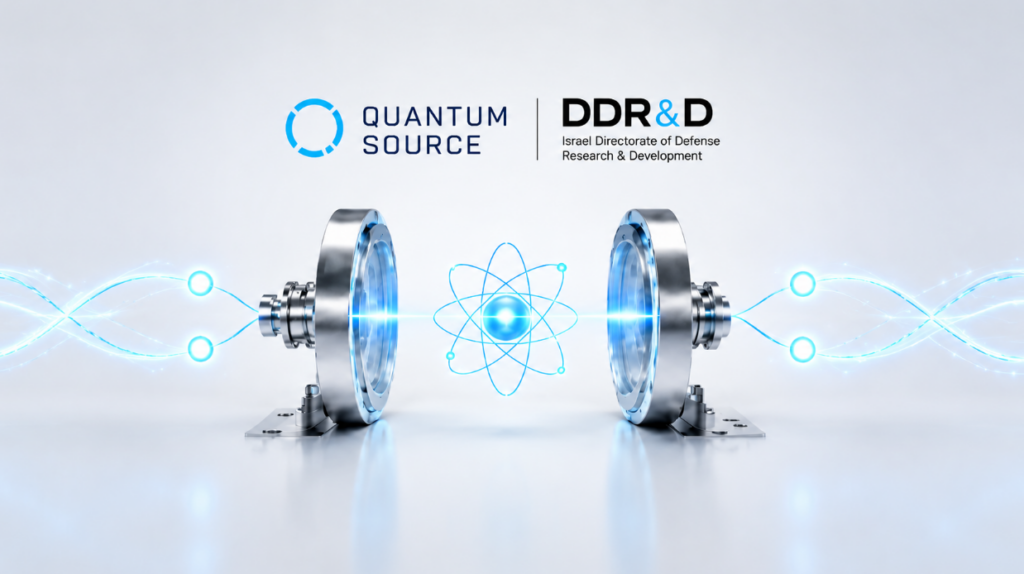
  • Quantum Source, in cooperation with the Israel Directorate of Defense Research & Development, demonstrated on-demand generation of polarization-entangled photon pairs from a single rubidium-atom cavity, producing singlet Bell states.[7]The scheme achieves a deterministic photon source without calibration and may solve a key scalability bottleneck in photonic quantum computing — on-demand entangled photon generation.

Hybrid architecture

  • Quantum Source Alpha Labs published a blueprint for a hybrid photonic–atomic fault-tolerant quantum architecture on arXiv, using cavity quantum electrodynamics to address scaling bottlenecks.[8]The blueprint proposes a complete design and may offer a system-level fault-tolerant path for the photonic–atomic hybrid approach.

Superconducting/other

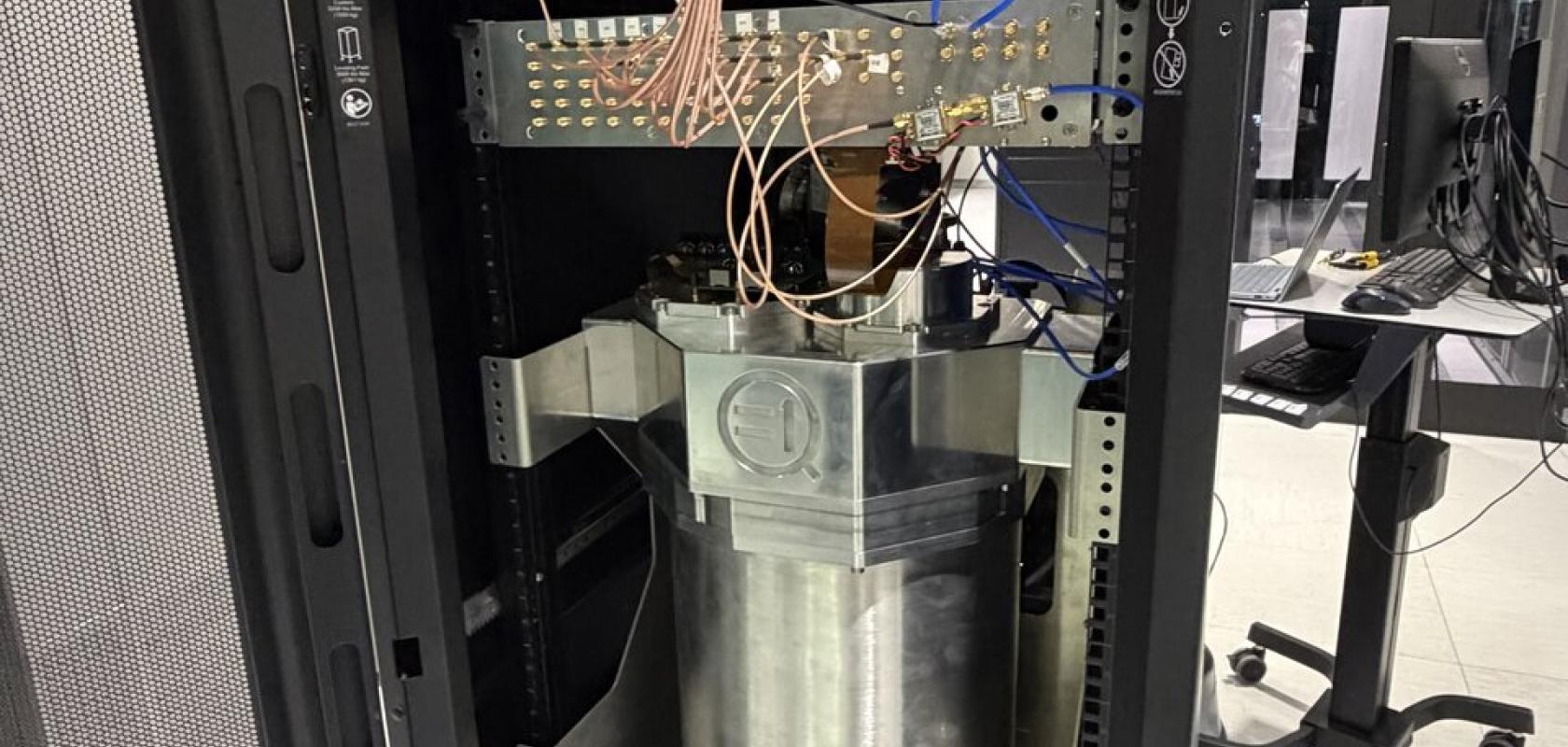
  • The European Space Agency installed its first on-premises quantum computer, the Equal1 Bell-1, at the Frascati data center for integrating Earth-observation data with HPC.[9]This is the first time a quantum computer has been deployed directly inside a space agency’s data center, indicating that the Earth-observation field is shifting from theoretical algorithm research to practical hardware integration.
03Algorithms

Algorithms & Software

Quantum error correction

  • New research proposes binary Gaussian stabilizers that can simplify quantum error correction without adding extra qubits.[16]Compared with conventional stabilizer codes that require many ancillary qubits, this method may significantly reduce error-correction overhead and holds significance for near-term fault-tolerant implementations.

Quantum algorithms

  • Yokohama National University studied the influence of a magnetic vector potential on periodic Grover walks and found that the robustness of the periodicity depends on the spectral structure of the graph.[17]This work is the first to analyze the stability of Grover walks using a magnetic vector potential as a perturbation, and it may provide theoretical guidance for designing quantum search algorithms in complex environments.

Software & tools

  • The PQ-REACT project selected Qryptix to develop a post-quantum cryptography plugin for the Eclipse Qrisp quantum programming framework.[24]This is the first time a post-quantum cryptography tool has been integrated directly into a quantum programming framework, potentially lowering the barrier for developers migrating to quantum-resistant cryptography.
04Industry

Industry & Ecosystem

Funding & IPOs

  • Aqarios listed on the Düsseldorf exchange via SPAC, becoming Germany’s first pure-play quantum computing public company.[2]The SPAC route provides a new capital-exit channel for European quantum startups and may drive more European quantum companies to go public.
  • Singapore’s pQCee raised US$3.9 million in seed funding to accelerate global deployment of post-quantum cryptography.[3]The participation of government-backed investors indicates that post-quantum cryptography is moving from academic research into enterprise procurement, potentially accelerating the cryptographic migration process in the Asia-Pacific region.

Policy & Education

  • The Chattanooga Quantum Collaborative in Tennessee launched TN QuantumWorks, one of the first K‑12 quantum education programs in the United States.[4]The program pushes quantum education down to primary and secondary schools and may provide a replicable model for the U.S. quantum workforce pipeline.

Partnerships & deployments

  • The UK’s Digital Catapult and NQCC launched the third phase of the QTAP program, adding banking and healthcare tracks.[6][26]The introduction of financial-services participants for the first time signals that industrial applications of quantum computing in finance are entering the pilot stage.
  • Pasqal appointed former HPE executive Mark Armstrong as Chief Commercial Officer for EMEA and APAC.[1]The appointment indicates that Pasqal is accelerating its commercialization layout, especially in the European and Asia-Pacific markets.
05Research

Research Frontiers

Topological gate set experiment

  • The Quantinuum-led team published a paper in Nature, realizing a universal topological gate set on an ion-trap processor for the first time.[5]: See Hardware Frontiers for details.

Quantum many-body scars

  • Quantum 10, 2164 demonstrates exact quantum many-body scars in a two-dimensional quantum gauge model.[20]Previously exact QMBS were mainly found in one-dimensional systems; this work extends the dimension to two and may provide a new platform for understanding higher-dimensional non-equilibrium dynamics.

Graph state preparation complexity

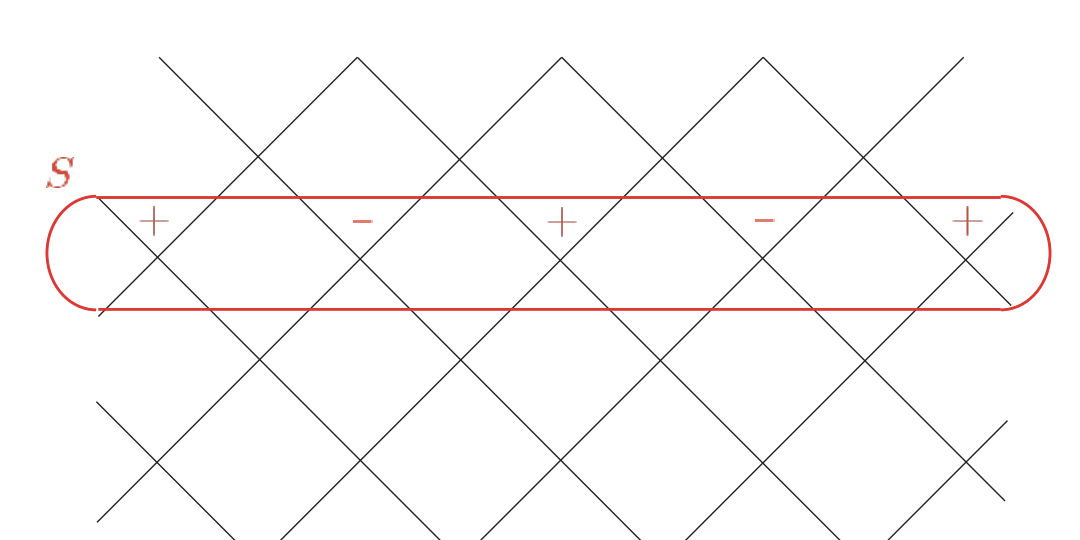
  • Quantum 10, 2165 studies the complexity of preparing graph states with Clifford circuits, defining complexity under a model that allows measurements and Clifford operations.[19]The result establishes a rigorous lower bound for graph-state preparation and offers guidance for optimizing quantum networks and entanglement resources.

Fermion encoding geometry

  • A preprint reveals the intrinsic geometric structure of fermion-to-qubit transformations, going beyond conventional spectral correspondences.[14]The work shows that the choice of encoding scheme affects the geometric properties of observables and may provide a new perspective for resource optimization in quantum simulations.

Entanglement cloning limit

  • A study proves that distributed cloning causes entanglement fidelity to decay exponentially with system size, with a scaling factor of [c]^N.[15]It provides the first quantitative bound on many-body entanglement broadcasting, carrying important constraints for entanglement distribution in quantum networks.
06Impact

This Week's Impact

  • Topological quantum computing roadmapQuantinuum’s universal topological gate-set demonstration[5]directly validates the braidability of non-Abelian anyons and serves as a strong signal for topological-route players such as Microsoft and Station Q. The next step worth watching is whether it can be scaled to more qubits.
  • European quantum software ecosystem: Aqarios goes public[2]It opens a capital-market channel for European quantum software companies and may attract more venture capital attention to the quantum optimization software sector. The next step is to watch revenue and customer growth.
  • Earth observation domainESA installs its first on-premises quantum computer[9]It signals that space agencies are beginning to use quantum computing for real data processing and serves as an important reference case for hardware vendors such as Equal1. The next step is to watch concrete application performance metrics.
  • Post-quantum cryptography deployment: pQCee financing[3]and the PQ-REACT tool development[24]indicate that the PQC migration is shifting from standards-setting to toolchain development, creating competitive pressure on traditional cryptography vendors. The next step is to watch government procurement orders.
  • K-12 quantum education: Tennessee initiative[4]It provides an early template for U.S. quantum workforce development and may influence education policy in other states. The next step is to watch curriculum effectiveness evaluations and expansion plans.
07Editors

Editor's Note

The most striking development this week is the experimental breakthrough in topological quantum computing — the demonstration of a universal gate set with non-Abelian anyons has moved from theory to a verifiable hardware platform. Although the result is based on ion traps, its proof-of-principle nature is foundational for the long-term vision of topological quantum computing. Meanwhile, two trends are visible on the industry side: European quantum enterprises are accelerating capitalization via SPACs, and post-quantum cryptography is moving from academic discussion into the actual deployment toolchain stage. Notably, ESA’s installation of a local quantum computer marks the point where traditional sectors such as aerospace are beginning to actively integrate quantum hardware rather than relying solely on cloud services. Overall, quantum computing is shifting from a single-technology race toward the comprehensive construction of an ecosystem that spans education, financing and industry applications.