Quantum Research Brief

Quantum BriefBRIEF

07/20–07/21· Included 38 items· 13 sources

Jul 20 – Jul 21, 2026 Weekly

02Hardware

Hardware Frontiers

Neutral atom

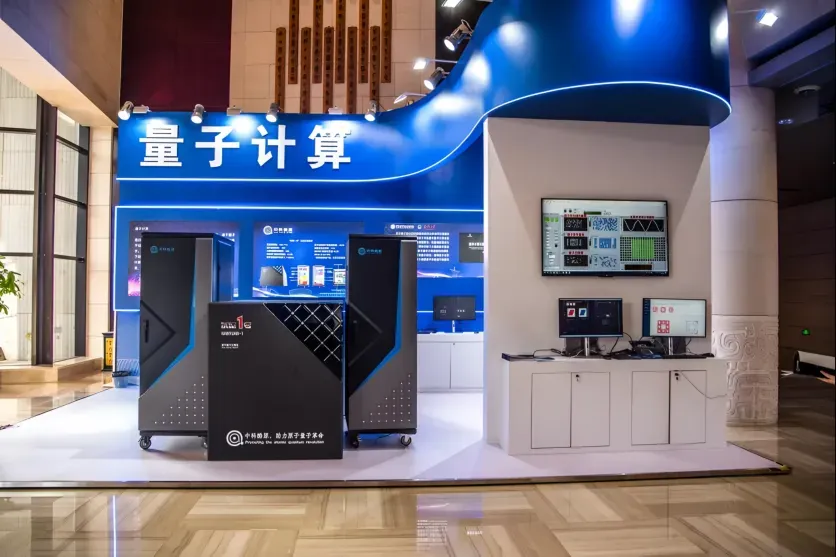
  • Chinese startup Zhongqi Wuliang unveils the rack‑mount neutral‑atom quantum computer "Qinghe‑1" at WAIC 2026 in Shanghai, which can be installed directly into a standard server rack[10]: This is the first neutral‑atom system optimized for data‑center deployment, potentially lowering the physical barrier to integrating quantum computing with classical HPC.

Trapped ion

  • The MCQST team proposes a novel ion‑trap array architecture that combines the coherence of ion traps with the parallel control capability of neutral‑atom optical tweezers, using state‑dependent displacement to generate an effective electric dipole[14]: The design attempts to merge the strengths of two platforms, but actual gate fidelities have not yet been demonstrated and it remains far from practical use.

Photonic

  • A team at the University of Mainz determines the Schmidt‑rank threshold for deterministic Bell measurements, proving that only a rank‑d auxiliary entangled state is needed to distinguish all d² Bell states[13]: This breaks the previous limitation that high‑dimensional Bell measurements require extra photons or entanglement, and may reduce the resource overhead of photonic quantum protocols.

Quantum materials

  • Quantum materials discovery is expected to advance electronics for extreme environments, but no specific new materials or performance data are disclosed[28]: Such reports lack technical detail; caution against hype is warranted.
03Algorithms

Algorithms & Software

Quantum-Classical Hybrid

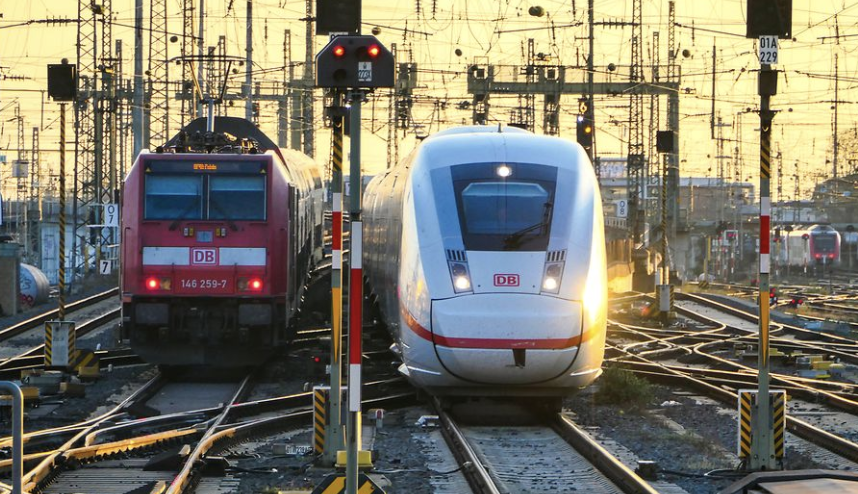
  • IQM and Deutsche Bahn demonstrate a hybrid quantum algorithm (QAOA) for railway scheduling on real operational data, covering 190 trains and about 98,500 possible periodicities, producing feasible end‑to‑end schedules on IQM’s existing hardware[31][33]: This is a rare real‑scale demonstration of quantum algorithms in transportation and logistics, but the solution quality compared with classical solvers has not been clarified, and practicality remains to be verified.

Quantum error correction

  • Optimized scheduling for solving k‑SAT problems via multi‑channel quantum Zeno dragging is published in the journal Quantum[15]: The Zeno effect has potential applications in quantum error correction and state preparation, but this work is theoretical analysis; experimental realization still requires high‑fidelity repeated measurements.

Programming & Resources

  • A resource quantification method for programming low‑depth quantum circuits is published in the journal Quantum[16]: It provides a resource‑estimation tool for NISQ algorithm design, but does not break through the noise limitations of NISQ.
04Industry

Industry & Ecosystem

Policy & Investment

  • The Israel Innovation Authority launches a tender for a national quantum computing R&D infrastructure with a budget of 100 million NIS (about $33 million), requiring integration of at least three different QPU technologies and service availability within 12 months[9][27][35]: The program emphasizes technology diversity and rapid delivery, which may accelerate the practical development of Israel’s quantum ecosystem.
  • The Bloch Quantum Technology Hub in the U.S. receives a $30 million federal grant from EDA and $25 million in matching funds, totaling $55 million, to build the U.S. quantum supply chain[12][22]: This move strengthens the industrial position of the "Quantum Prairie" region (Illinois, Indiana, Wisconsin), but actual supply‑chain realization will still take years.
  • New Mexico launches a $450 million quantum initiative; Maybell Quantum will establish an operations site in the state[24]: Maybell focuses on cryogenic infrastructure such as dilution refrigerators, potentially filling a critical link in the quantum hardware supply chain.

Collaboration & Standards

  • BTQ Technologies and TIDAL PWR collaborate to develop a trusted quantum data‑center reference architecture, integrating QPUs with post‑quantum security protocols[8][26][32]: This is the first proposal of a standardized quantum data‑center blueprint, but the specific technical roadmap has not been disclosed.
  • The Australian Signals Directorate releases a post‑quantum cryptography third‑party vendor assessment questionnaire based on the LATICE framework[34]: It provides a practical tool for government and enterprise procurement of PQC products, promoting industry standardization.

Company news

  • The CEO of Infleqtion testifies before the U.S. House Natural Resources Committee on quantum technology for critical‑mineral mapping[3]: Policy attention on quantum sensing for resource exploration is increasing, but commercialization remains slow.
  • Interlune develops cryogenic technology to purify helium‑3 from domestic helium for quantum computing cooling[23]: Helium‑3 is a key working fluid for dilution refrigerators and supply is constrained; this move may alleviate the shortage, but production volume is still small.
  • The U.S. Department of Energy advances the supply chain for silicon and germanium isotopes for quantum information science[30]: Isotope purification is the material foundation for silicon‑based quantum dots and superconducting qubits, but the near‑term improvement to hardware performance is limited.
  • IonQ publishes research claiming that quantum fine‑tuning can significantly improve AI energy efficiency without sacrificing accuracy[5]: The energy‑efficiency advantage of quantum machine learning is noteworthy, but IonQ advertises using the AQ metric, which should be noted to include error mitigation.
  • Quantum Computing Inc. shareholders approve an increase in authorized shares to 450 million[29]: The large‑scale dilution may reflect the company’s funding needs; investors should exercise caution.
05Research

Research Frontiers

Distributed Quantum Computing

  • A paper simulates a distributed fault‑tolerant computing primitive — the transversal non‑local CNOT — across noisy modules[6]: This is the first circuit‑level characterization of the performance of distributed fault‑tolerant operations, providing a key reference for modular quantum computer architecture design.

Adaptive Boson Sampling

  • A paper proves that adaptive measurements and intermediate measurements can introduce nonlinearity in linear optics, surpassing the linear‑optics limit[7]: This theoretically broadens the capabilities of photonic quantum computing, but experimental realization requires low‑loss optical switches and high‑efficiency detectors.

Quantum Zeno Effect

  • Optimized scheduling of multi‑channel quantum Zeno dragging applied to k‑SAT problems[15]: Theoretical contribution; the experimental threshold is high.

Resource Theory

  • Resource quantification for programming low‑depth quantum circuits[16]: Provides a tool for NISQ algorithm design.
06Impact

This Week's Impact

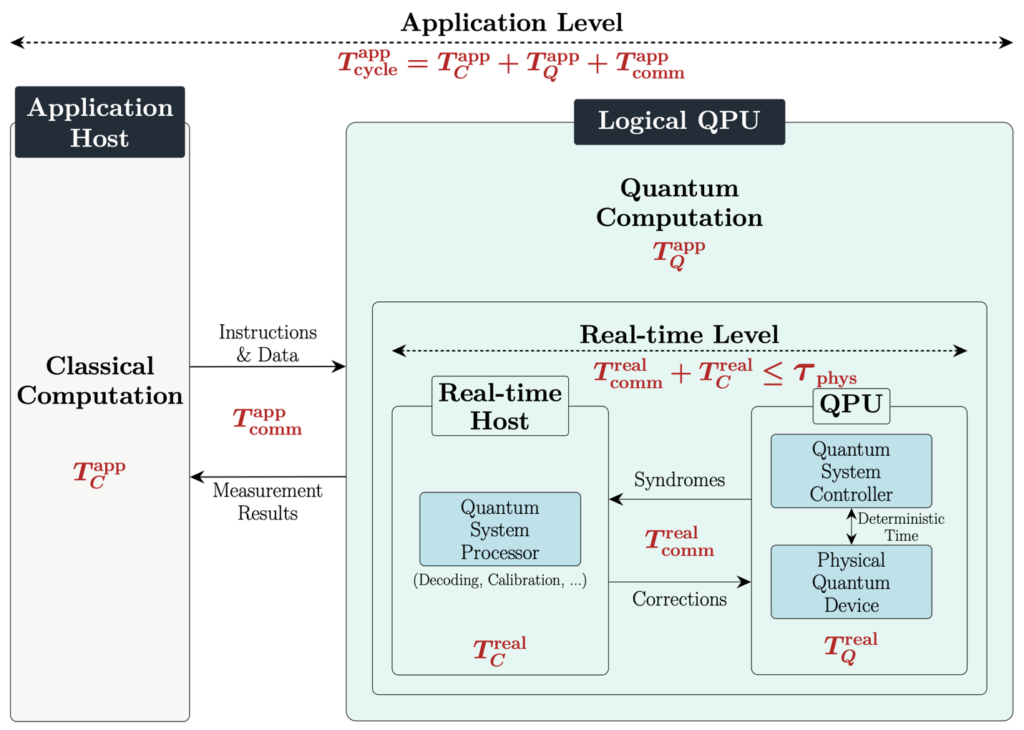
  1. Quantum‑HPC integration decisions now have a quantitative basis: The joint framework from AWS, NVIDIA, LBNL, and NASA provides a quantitative model for HPC centers to decide whether to tightly couple QPUs, directly influencing supercomputing‑center procurement strategies and quantum cloud‑service deployment forms[11].
  2. Israel’s multi‑technology‑route national infrastructure kicks off: The requirement to deliver services within 12 months and integrate at least three QPU technologies will force vendors to accelerate hardware maturity and may spur cross‑platform benchmarking standards[9][35].
  3. China’s rack‑mount neutral‑atom quantum computer debuts: If Zhongqi Wuliang’s "Qinghe‑1" achieves data‑center plug‑and‑play, it will change the physical paradigm of integrating quantum computing with classical HPC, creating differentiated competition with the superconducting route[10].
  4. First real‑data validation of quantum railway scheduling: Although the IQM–Deutsche Bahn demonstration did not disclose a classical comparison, it provides a reproducible baseline for quantum applications in transportation and logistics; the next steps require attention to solution quality and scalability[31][33].
  5. Helium‑3 Supply‑Chain Localization Attempt: If Interlune’s cryogenic purification technology can be scaled, it will reduce the dependence of quantum‑computing dilution refrigerators on imported helium‑3, affecting global cryogenic hardware costs[23].
07Editors

Editor's Note

This week’s developments show a clear "infrastructuralization" trend: from Israel’s national quantum facility to the quantum‑HPC integration framework, and on to rack‑mount quantum computers and supply‑chain building, the industry is shifting from a pure hardware race toward constructing a deployable ecosystem. Caution is warranted because several news items lack technical details (e.g., quantum materials discovery, railway scheduling result comparisons); when reporting, priority should be given to results with concrete data or peer review. The neutral‑atom route remains ahead in logical qubit count, but the hard constraint of cycle repetition rate is still unresolved, and there remains an essential gap to practical fault‑tolerant computing.