Quantum Research Brief

Quantum BriefBRIEF

07/21–07/22· Included 50 items· 12 sources

Jul 21 – Jul 22, 2026 Weekly

02Hardware

Hardware Frontiers

Room-temperature solid-state quantum computing

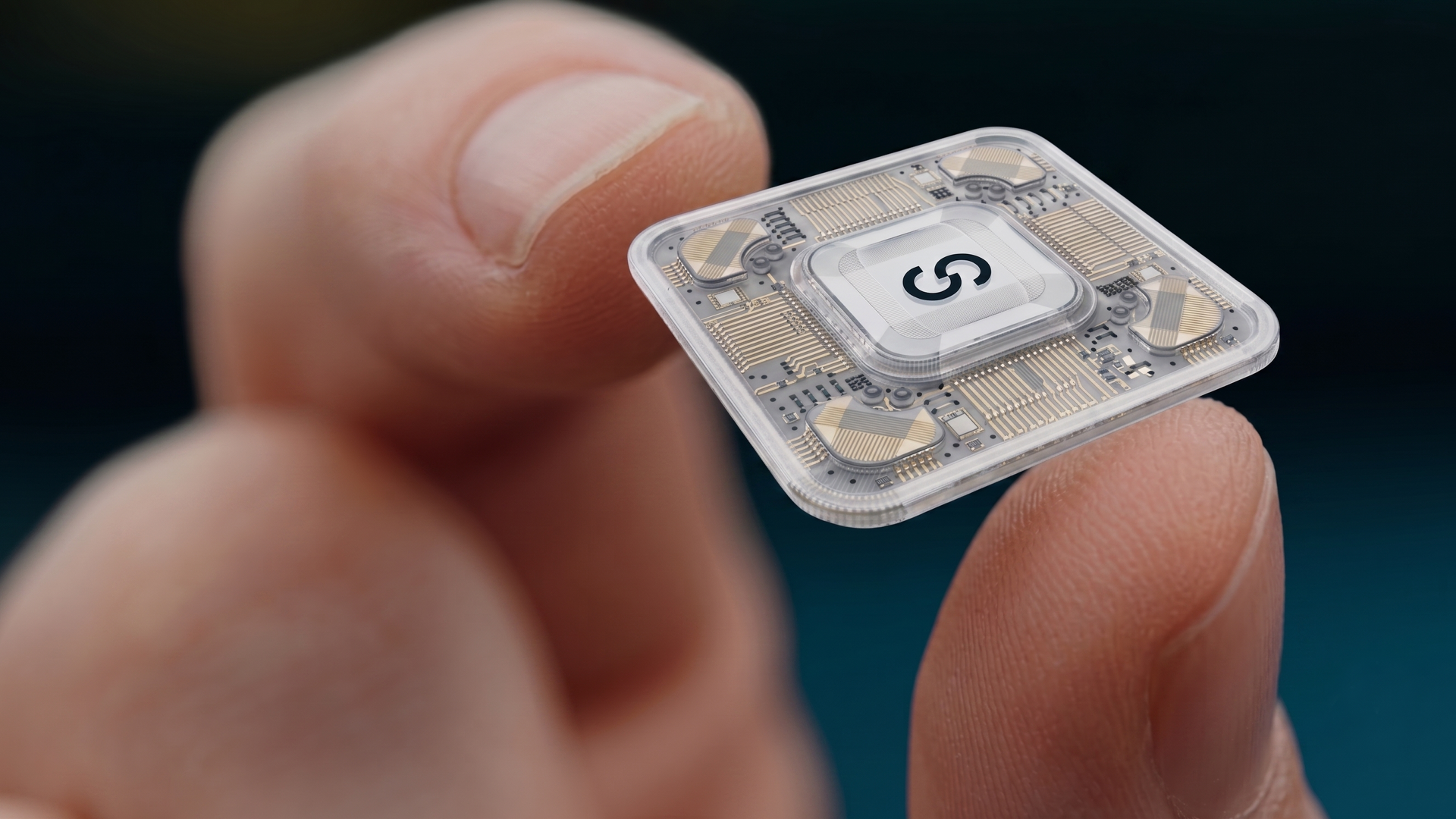
  • SAXON Q released the SXQ128 (128-qubit) and SXQ512 (512-qubit) diamond NV-center quantum processors, the first room-temperature diamond systems to exceed ten physical qubits.[10]. Why it mattersThis marks the first time the NV-center route has surpassed the ten-qubit scale and requires no cryogenic cooling, but core metrics such as gate fidelity remain undisclosed. There is still a gap of several orders of magnitude compared to the Quantinuum Helios trapped-ion system with 98 qubits all-to-all connectivity and 99.921% two-qubit gate fidelity, and NV-center gate fidelity is typically below 99%, pending independent replication.

Photonic quantum computing

  • QuantX Labs successfully completed the world's first in-orbit verification of a space-based optical frequency comb.[7]. Why it mattersThis is the first deployment of an optical frequency comb in a space environment, providing a high-precision clock source for future entanglement-photon-based satellite quantum networks, though the device itself is not a quantum processor but key infrastructure for quantum communication and sensing.

Cryogenic Infrastructure

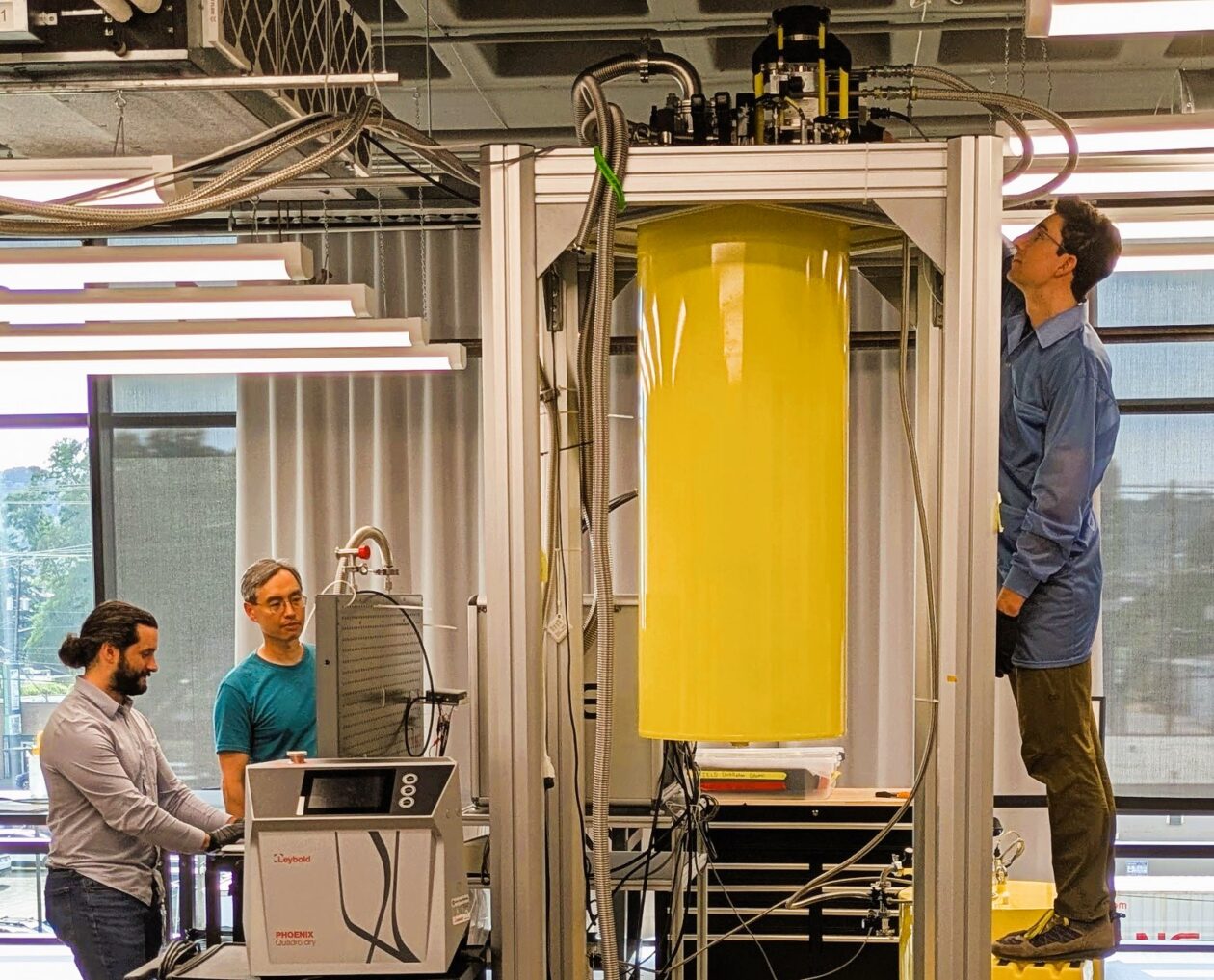
  • Maybell Quantum deployed four dilution refrigerators at the Roadrunner Quantum Laboratory in New Mexico, becoming the third major quantum equipment manufacturer at the lab.[12]. Why it mattersDilution refrigerators are core infrastructure for superconducting quantum computing. This deployment expands the hardware support capacity of the U.S. Midwest quantum cluster, but Maybell's refrigerator specifications (such as base temperature and cooling power) remain undisclosed, preventing direct comparison with leading products from Bluefors and Oxford Instruments.
03Algorithms

Algorithms & Software

  • Researchers proposed a design for bosonic error-correcting codes with finite stellar rank, proving that a stellar rank of 2 is sufficient to surpass the break-even point under all depolarizing noise strengths.[16]. Why it mattersStellar rank serves as a new metric for the complexity of bosonic error-correcting codes. This work establishes resource thresholds for the first time, providing a practical tool for balancing error-correction performance and state-preparation difficulty.
  • A CNRS team discovered reduction relations between nonlocal computation tasks, proving that the security of reoriented quantum systems is equivalent to more complex controlled single-qubit operations.[15]. Why it mattersThis offers a simpler implementation scheme for cryptographic protocols such as quantum position verification, potentially reducing the demand for entanglement resources.
  • A new study provides the asymptotic scaling of quantum state preparation with the optimal number of T gates.[26]. Why it mattersT gates are among the most expensive resources in fault-tolerant quantum computation. This result improves upon the previous bound by Low-Kliuchnikov-Schaeffer, providing a theoretical lower limit for compilation optimization.
  • QuEra validated a quantum thermodynamic sampling framework on a 78-qubit neutral-atom system, using nitrogen-doped graphene as a test case.[21]. Why it mattersThis is the first application of neutral-atom quantum annealing to extract material thermodynamic properties, but the 78-qubit scale remains far below classical simulation capabilities, and repetition rate (~1–10 Hz) is a major bottleneck for the neutral-atom route.
04Industry

Industry & Ecosystem

Funding and Policy

  • The U.S. state of New Mexico awarded $1.2 million in grants ($200,000 each) to six quantum startups.[8]. Why it mattersThis is the state's first dedicated quantum technology grant program, aimed at attracting hardware, optics, and software developers. However, the amount is small and belongs to seed-stage support, with limited impact on the overall landscape.
  • The Bloch Quantum Technology Center, managed by the Chicago Quantum Exchange, received a $30 million federal grant from the U.S. EDA and leveraged $25 million in matching funds, totaling $55 million to build the U.S. quantum supply chain.[50]. Why it mattersThis is one of the largest federal investments in a regional quantum cluster in the U.S. to date, set to accelerate manufacturing capabilities in the Illinois-Indiana-Wisconsin "Quantum Prairie," but details on fund allocation and specific projects have not yet been announced.
  • The Hewlett Foundation launched a $100 million Quantum and Emerging Technology Security Initiative.[41]. Why it mattersThis is one of the largest non-governmental quantum security dedicated funds, potentially spurring more independent research on post-quantum cryptography and quantum communication, but the direction of fund usage and evaluation criteria remain unclear.
  • The UK government dissolved DSIT (Department for Digital, Culture, Media and Sport) and elevated AI to cabinet-level status, raising concerns about the coordination of quantum strategy.[36]. Why it mattersDSIT was previously responsible for cross-departmental coordination of the UK quantum strategy. Its dissolution may lead to fragmentation of quantum policy, but whether the new AI cabinet will encompass quantum remains to be seen.

Partnerships and commercialization

  • Quantinuum and SoftBank jointly released a white paper mapping quantum chemistry and graph analytics workloads onto Quantinuum's hardware roadmap.[9][42]. Why it mattersThis is the first time a hardware manufacturer and a telecom giant have jointly proposed an application timeline from the near-term (NISQ) to the fault-tolerant era, providing an anchor for commercial expectations in the industry, but the performance predictions in the white paper lack experimental validation.
  • Singapore's defense agencies are collaborating with IBM to explore quantum computing for mission planning and logistics optimization.[37][48]. Why it mattersThis is the first time a Southeast Asian nation has incorporated quantum computing into defense application exploration, but the collaboration is still in an early evaluation stage with no concrete results yet.
  • Galaxy committed $5 million to Bitcoin's quantum-resistant upgrade.[35]. Why it mattersThis is the first major funding from a mainstream financial institution for Bitcoin post-quantum migration, but $5 million is extremely small relative to the total market cap of the Bitcoin ecosystem, and consensus on BIP-360/361 proposals has not yet been reached.
  • Photon Queue completed a $4 million seed funding round for the commercialization of room-temperature quantum memory.[11]. Why it mattersRoom-temperature quantum memory is a key component for building quantum repeaters, but the technology is still in the early laboratory stage, and the $4 million funding round is relatively small, insufficient to support productization.
  • A JLL report indicates that quantum real estate has become an emerging sector, with over 240 facilities globally and a $4 billion construction pipeline.[46]. Why it mattersThis reflects the physical space demand as quantum computing moves from the lab to industrialization, but the report's prediction of "commercial quantum advantage 2030–2032" is optimistic and should be viewed with caution.
  • AWS, NVIDIA, LBNL, and NASA jointly released a QPU-HPC integration framework, quantifying when tight coupling is required.[49]. Why it mattersThis provides the first quantitative performance model for quantum-classical hybrid computing, guiding data center architecture design, but the model parameters are based on current hardware assumptions and will need recalibration as QPU performance improves.
05Research

Research Frontiers

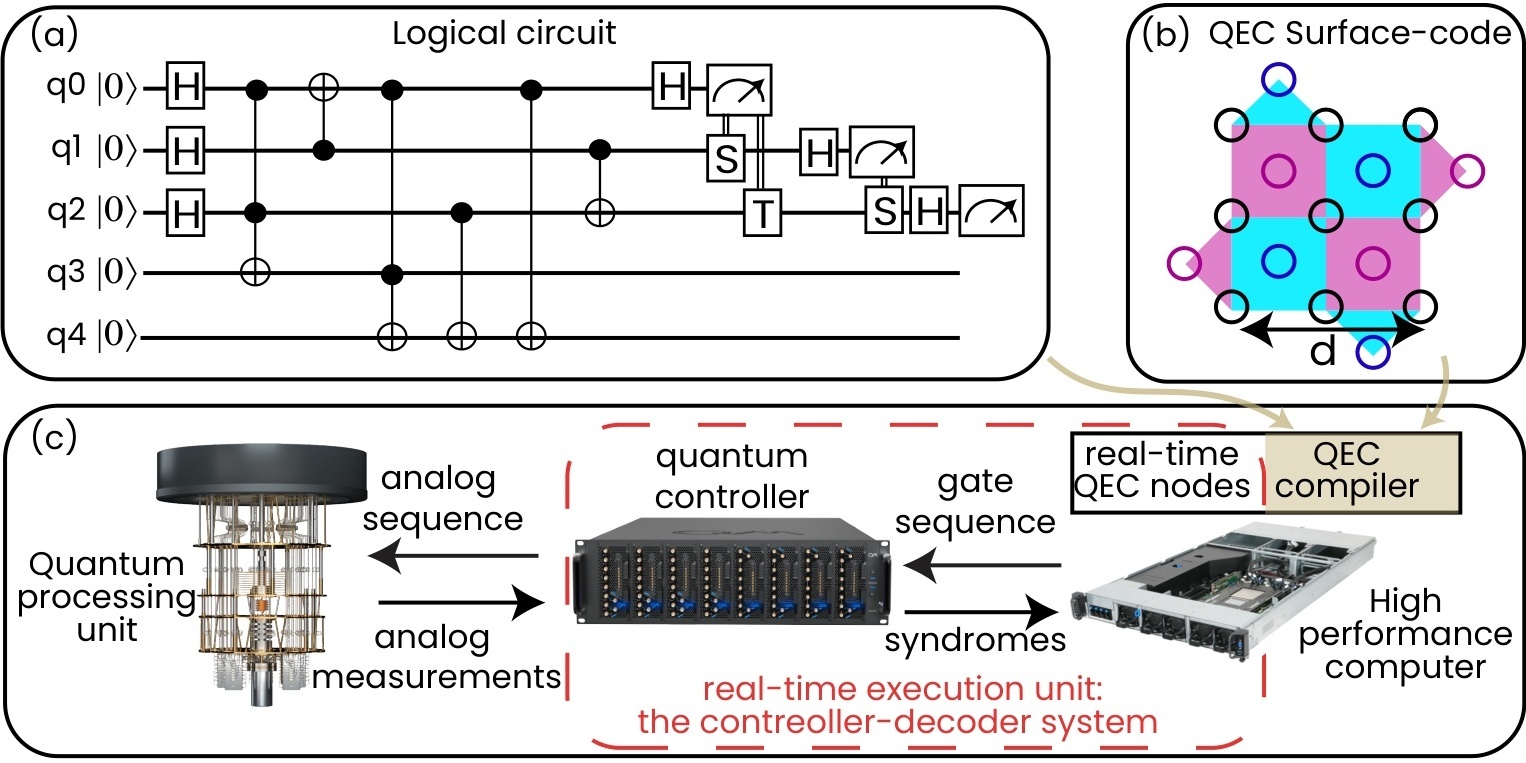
  • A study performed a requirements analysis of the controller-decoder system for implementing Shor's algorithm under the surface code.[24] (Quantum 10, 2170). Why it mattersThis is the first systematic quantification of the classical control and decoding resources required for a complete implementation of Shor's algorithm, providing design constraints for the engineering architecture of fault-tolerant quantum computers.
  • A paper presented a complete theory of Clifford commutators.[23] (Quantum 10, 2171). Why it mattersThe Clifford group is central to quantum error correction and randomized benchmarking. This completeness result may simplify proofs for many quantum information protocols.
  • Non-commutative polynomial optimization problems were introduced with differential constraints.[25] (Quantum 10, 2169). Why it mattersThis extends the NPO framework to continuous-variable systems, providing a new tool for optimal control problems in quantum control theory.
  • Blommaert et al. proposed an exact calculation method for spectral density in the de Sitter static patch.[13]. Why it mattersPreviously, this could only be calculated under extremely weak gravity approximations. This work achieves an exact solution using holographic duality, holding theoretical significance for research on quantum gravity and the black hole information paradox.
  • Gulbahar et al. introduced a 2^m phase dictionary for RIS (Reconfigurable Intelligent Surface) power optimization.[14]. Why it mattersThis is the first application of quantum optimization to a 16-element RIS system, achieving performance close to the classical optimal algorithm, but the scale is still far smaller than practical deployment requirements (hundreds of elements).
  • Entangled photons enhanced infrared spectroscopy signals by a factor of 21.8.[18]. Why it mattersThis is a significant enhancement from quantum-enhanced sensing in spectroscopy, but the technique remains confined to the laboratory environment; practical application requires solving issues of photon source efficiency and detector noise.
06Impact

This Week's Impact

  • Quantum computing cryogenics supply chainInterlune successfully extracted 99%-purity helium-3 from ordinary helium.[2][47]If deployed at existing liquefaction plants, this could triple the U.S. helium-3 supply, directly alleviating the dependence of superconducting quantum computers on this rare isotope. The next steps worth watching are Interlune's scaling costs and the timeline for its lunar mining plans.
  • Room-temperature quantum computing competitive landscapeSAXON Q released a 512-qubit room-temperature diamond quantum computer.[10]Although fidelity is unknown, the qubit count alone puts scaling pressure on the trapped-ion and superconducting routes. The superconducting route needs to accelerate dilution refrigerator integration, while the trapped-ion route must demonstrate that its high-fidelity advantage is irreplaceable at larger scales.
  • Quantum-classical hybrid computing architectureThe integration framework from AWS/NVIDIA/LBNL/NASA.[49]provides a quantitative basis for data center design, potentially prompting cloud service providers to preemptively deploy tightly coupled QPUs. The Quantinuum-SoftBank white paper.[9]offers a timeline from the application side; the combination of the two may accelerate the approval of enterprise quantum budgets.
  • Post-quantum cryptography standardization acceleratesGalaxy's $5 million funding.[35]and the Hewlett Foundation's $100 million initiative.[41]indicate that financial and philanthropic capital has begun betting on post-quantum migration, but the controversy within the Bitcoin community over BIP-360/361.[17]shows that standardization still faces the risk of community fragmentation.
  • Regional quantum cluster raceThe $55 million grant for the Bloch Center.[50]contrasts with the $1.2 million grant in New Mexico.[8]indicating that U.S. federal funds are concentrating in the Midwest, while the Southwest is still in an early cultivation stage. The European QOMPASS alliance's call for a European Quantum Initiative.[19]shows intensifying global quantum policy competition.
07Editors

Editor's Note

The most notable developments this week are two advances in room-temperature quantum computing: SAXON Q's diamond NV-center processor and Photon Queue's room-temperature quantum memory. The former achieved a breakthrough in qubit count, but core metrics such as fidelity and coherence time await verification; the latter secured seed funding, but the actual storage time and fidelity of room-temperature memory remain key challenges. If these two routes can solve performance issues, they will fundamentally change quantum computing's reliance on cryogenic infrastructure, but there is still a long way to go before practical utility.

Another trend is the framing of quantum-classical hybrid computing: the integration model from AWS/NVIDIA/LBNL/NASA and the application timeline from Quantinuum-SoftBank mark the industry's serious planning for the transition path from NISQ to fault tolerance. However, these frameworks are mostly based on current hardware assumptions; as the fidelities of superconducting and trapped-ion routes improve rapidly, model parameters will need frequent updates. Investors and policymakers should be wary of over-reliance on a single roadmap and maintain technological route diversity.