Quantum Research Brief

Quantum BriefBRIEF

07/23–07/24· Included 55 items· 14 sources

Jul 23 – Jul 24, 2026 Weekly

IBM acquires HRL Laboratories, merging silicon spin and superconducting approaches

02Hardware

Hardware Frontiers

Superconducting and spin qubit routes converge

IBM announced the acquisition of HRL Laboratories, incorporating the latter's accumulated expertise in silicon spin qubits (including 99.99% two-qubit gate fidelity and 300mm process compatibility) into its own superconducting roadmap.[6][15]This is the first time a leading quantum company has simultaneously held two physical routes — superconducting (IBM already has Willow-level surface code error correction) and silicon spin (HRL's atomically precise donor qubits have reported 99.99% F₂Q).

  • Why it mattersThe silicon spin route has long been constrained by qubit count (device-level ≤12 qubits) and N_ops (10²–10³, the lowest among the five routes), but its CMOS compatibility is crucial for large-scale manufacturing. IBM's move may indicate its judgment that the single superconducting route faces fundamental bottlenecks in scaling, and silicon spin can serve as a complementary path.
  • Landscape impactHRL was previously co-owned by Boeing and General Motors; this sale sees two traditional industrial giants exit quantum hardware R&D, while IBM gains a defense-grade research team.

Neutral-atom route: the first national-level deployment plan

Infleqtion宣布2027年向伊利诺伊量子与微电子公园(IQMP)交付Sqale中性原子量子计算机,目标>50 logical qubits, integrated with NVIDIA NVQLink, and accessible via the Superstaq platform[42][51].

  • Why it mattersThe neutral-atom route previously led the industry in logical qubit count (QuEra 96 logical qubits with [[16,6,4]] code, Nature 2026), but cycle repetition rate (1–10 Hz) and mid-circuit measurement capability are weak points. Entering enterprise-grade campus deployment means crossing from lab prototype to operational system, but will also expose engineering bottlenecks such as repetition rate.
  • What’s still missingThe state-of-the-art two-qubit gate fidelity for the neutral-atom route is approximately 99.5% (Harvard/Lukin), still an order of magnitude behind trapped ions' 99.99% and superconducting's 99.9%; the post-selection rate issue in logical error correction demonstrations (Bluvstein 2024 generation) still requires independent reproduction.

Hybrid supercomputing ROQUO launched

RIKEN launched ROQUO in Kobe, Japan, directly connecting the Quantinuum Reimei trapped-ion system with an NVIDIA Blackwell GPU cluster.[13].

  • Why it mattersThis is one of the few systems that integrate a quantum processor with HPC via high-speed interconnect, rather than merely calling over a network. Quantinuum's trapped-ion system has already achieved 48 logical qubit error correction (2:1 encoding ratio), and the combination with GPU decoders (NVIDIA GB200) has previously verified real-time error correction. ROQUO pushes this type of integration to the national supercomputing center level.

Silicon spin route gains Japanese government support

Hitachi, Intel, and Japan's National Institute of Advanced Industrial Science and Technology (AIST) launched a Japanese government-funded silicon quantum computing project.[49].

  • Why it mattersThe state-of-the-art two-qubit gate fidelity for the silicon spin route has reached 99.99% (SQC atomically precise donors), but scale remains at the device level (≤12 qubits). The Japanese government's entry, combined with Intel's manufacturing capability (300mm process), may accelerate the evolution of silicon spin from physical devices to multi-qubit integration.

Other hardware updates

  • Infleqtion won three U.S. Department of Energy Genesis Mission Phase I projects, involving fault-tolerant quantum computing and space applications.[51].
  • Zero Point Cryogenics opened its first U.S. innovation center at the Illinois Quantum Campus, supplying dilution refrigerators.[52].
03Algorithms

Algorithms & Software

Quantum decoding efficiency breakthrough

Yan et al. proposed NTU-Transformer, a quantum decoding method based on neural transport unification, surpassing the correlation-aware matching algorithm on the [[4,2,2]] code and also showing improvement on standard matching benchmarks.[16].

  • Why it matters:量子解码是实时纠错的瓶颈——Google Willow演示表面码实时纠错时使用匹配解码,其延迟限制了码距扩展。NTU-Transformer若能在更高码距上保持速度优势,或推动表面码向d>7 expansion.

Formal verification of quantum programs

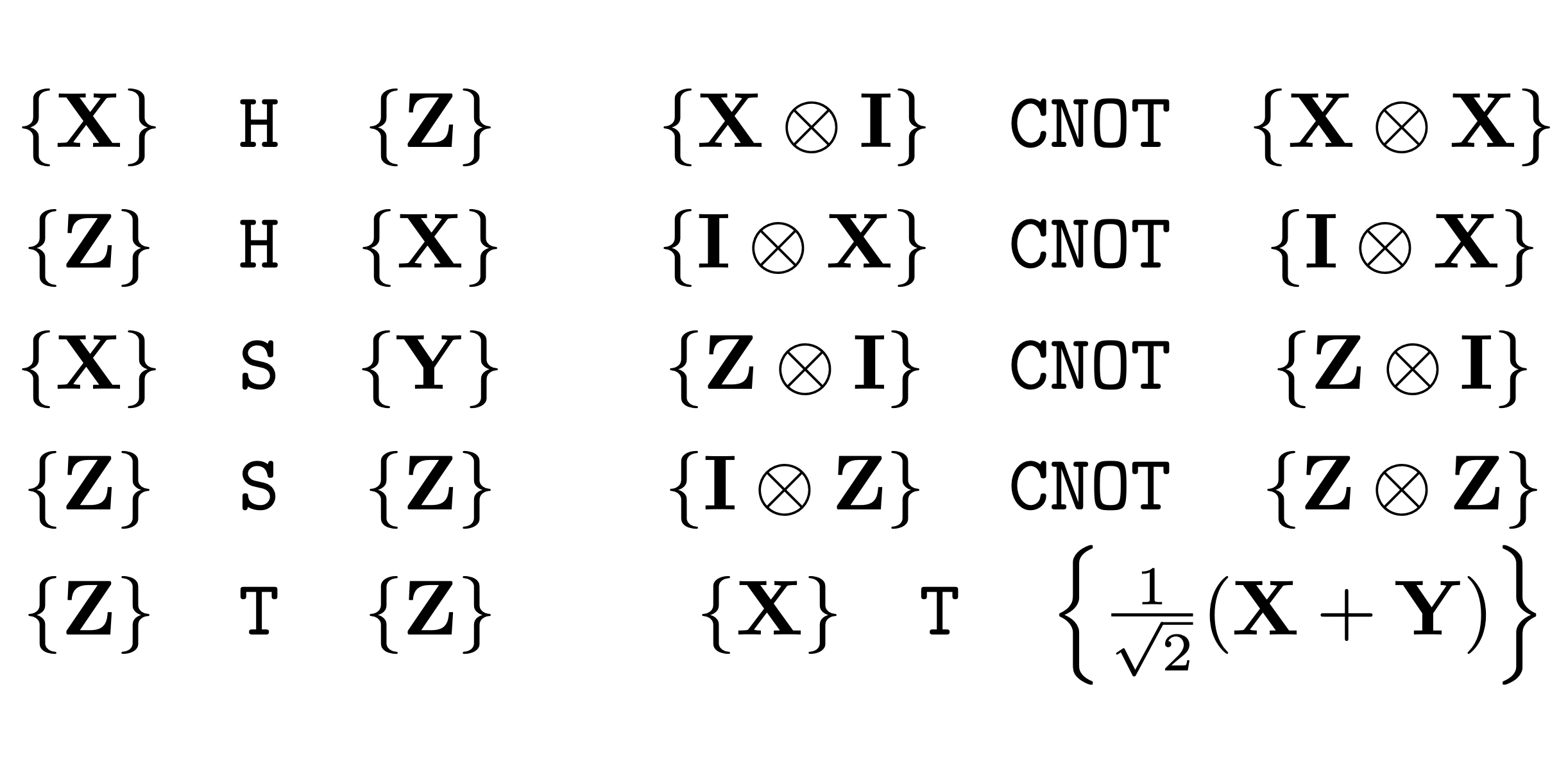
"Hoare meets Heisenberg" proposed a lightweight Hoare logic based on the Heisenberg representation, enabling efficient verification of Clifford-subset programs.[28].

  • Why it mattersQuantum program verification has long lacked automated tools; this work adapts the classical Hoare logic framework to the Heisenberg semantics of Clifford circuits for the first time, reducing verification complexity to polynomial level.

Deadlock-free quantum network programming language

The Qoreo language guarantees deadlock-free distributed quantum network programs through linear types.[21].

  • Why it mattersIn distributed quantum computing, multiple quantum processors cooperate via entanglement swapping, where deadlocks can lead to wasted entanglement resources. Qoreo eliminates such errors at the language level, serving as critical infrastructure for the quantum network software stack.

Other

  • Quantum Elements released the Orbit error suppression tool on IBM Qiskit.[43].
  • Qedma quantum error mitigation software integrated into the Quantinuum platform.[46].
  • Palsberg et al. proposed a quantum programming language classification framework, containing 50 benchmark programs across 10 languages.[25].
04Industry

Industry & Ecosystem

Quantum finance and Bitcoin security

  • Galaxy Digital launched a $5 million Bitcoin quantum readiness program.[7].
  • Nine institutions including BlackRock and Coinbase formed the Bitcoin Security Alliance, pledging $15 million for open-source development of quantum risk defense.[44][53].
  • Why it mattersBitcoin's ECDSA signatures can be broken under Shor's algorithm (requiring thousands of logical qubits). Current quantum hardware is far from that scale, but migrating to PQC signatures requires a multi-year transition period. Wall Street institutions' early positioning is essentially a governance game to drive Bitcoin protocol-layer upgrades.

National quantum strategies accelerate

  • The U.S. Department of Energy's Genesis Mission received over $5 billion in funding, covering AI and scientific computing, with quantum as a sub-direction.[18].
  • The new White House science strategy proposed a "quantum-style innovation model."[41].
  • The Illinois Quantum Campus and Japan's Q-STAR signed a memorandum of cooperation.[23][40].
  • Why it mattersQuantum is rising from single-point R&D to national-level infrastructure competition. The scale of the Genesis Mission ($5 billion) exceeds any previous single national quantum program and explicitly requires "integrated research platforms" (IBM has already pledged $50 million in QPU compute time).[14]).

Company news

  • Intel released its second-quarter earnings; the quantum business was not separately disclosed.[3].
  • D-Wave will announce its second-quarter results on August 6.[45].
  • Quantinuum appointed a new Chief Legal Officer and Chief People Officer.[48].
  • Bloq Quantum partnered with India's Sree Buddha College of Engineering to establish a quantum technology center.[50].
  • The Hewlett Foundation launched a $100 million emerging technology and security initiative, covering quantum security.[9].
  • Keyfactor upgraded its partner program to drive enterprise post-quantum cryptography migration.[11].

European quantum ecosystem

  • QPerfect partnered with the University of Strasbourg to support aQCess, France's first public neutral-atom quantum platform.[12].
  • Why it mattersEurope lags relatively behind in quantum hardware (no leading superconducting/trapped-ion companies), and neutral atoms, due to their lower barrier to entry, have become a key focus for European layout. aQCess, as the first public platform, may attract more European research institutions into neutral-atom algorithm development.
05Research

Research Frontiers

Quantum nonlocality and state discrimination

"Quantum nonlocality without entanglement and state discrimination measures" proved that the local distinguishability of certain product-state sets depends on the chosen discrimination measure.[26].

  • Why it mattersQuantum nonlocality without entanglement (QNLWE) is a fundamental concept in quantum information, previously thought to be an intrinsic property of the set. This work reveals its measure-dependence, potentially impacting optimality proofs in quantum communication protocols.

Classical simulator breakthrough: exact sampling of hundreds of qubits

"Pilot-Wave Simulator: Exact Classical Sampling from Ideal and Noisy Quantum Circuits up to Hundreds of Qubits" proposed a pilot-wave simulator capable of exact classical sampling for circuits with hundreds of qubits.[27].

  • Why it mattersThe scale boundary of classical simulation is key to quantum supremacy verification. Previously, exact simulation was limited to about 50 qubits (tensor network methods). This work extends exact sampling to hundreds of qubits, potentially redrawing the verification threshold for quantum advantage.

Strict anti-correlation between entanglement and uncertainty

Tree-level calculations of Bhabha scattering revealed a strict anti-correlation between dynamically generated entanglement and entropic uncertainty.[22].

  • Why it mattersEntanglement and uncertainty are two core features of quantum mechanics. This work establishes their quantitative correlation in a high-energy physics process for the first time, potentially providing new tools for information-theoretic analysis in quantum field theory.

Other papers

  • Cluster model reduction of parameters for erbium-doped GdVO4 spectra.[20].
  • The 2026 Fields Medal was awarded to four mathematicians.[36].
06Impact

This Week's Impact

  1. IBM roadmap overhaulThe acquisition of HRL gives IBM simultaneous ownership of both superconducting and silicon spin hardware routes. For superconducting suppliers (Rigetti, IQM), this means rising competitive pressure; for silicon spin startups (Diraq, Quantum Motion), it means a need for differentiated positioning. The next thing to watch: how IBM integrates the two routes — independent parallel paths or a hybrid architecture (e.g., superconducting for error correction, silicon spin for storage).[6][15]
  1. Neutral atoms enter deployment phaseInfleqtion's 50+ logical qubit deployment plan moves the neutral-atom route from academic demonstration to engineering delivery. This creates first-mover pressure on peers like QuEra and Atom Computing; for users (national labs, pharmaceutical companies), logical qubits will be accessible via Superstaq by 2027. Weak points lie in repetition rate (1–10 Hz) and gate fidelity (99.5% vs. trapped-ion 99.99%), so practical usability still needs observation.[42][51]
  1. Quantum-HPC convergence standardizationThe launch of RIKEN ROQUO establishes a reference architecture for quantum-classical hybrid computing — a quantum processor directly connected to a GPU cluster rather than called over a network. This has a demonstrative effect on procurement decisions for HPC centers (e.g., ORNL, Jülich); it is a crucial ecosystem positioning battle for NVIDIA (providing Blackwell+NVQLink) and Quantinuum (providing the trapped-ion system).[13]
  1. Bitcoin quantum risk becomes an industry issueThe $15 million fund from Galaxy Digital and the Bitcoin Security Alliance pushes the quantum threat from academic discussion to protocol governance. This has practical implications for Bitcoin developers (need to design PQC migration paths), miners (need to upgrade signature verification), and holders (need to watch for fork risk). However, the gap between current quantum hardware (thousands of logical qubits required) and the state-of-the-art (48 logical qubits) still exceeds two orders of magnitude, and the short-term market reaction may be excessive.[7][44][53]
  1. U.S. quantum policy enters "big science" modeThe $5 billion scale of the Genesis Mission and the new White House strategy place quantum alongside AI and biotechnology. For research institutions (MIT, Rice, etc., with selected projects), this means more funding, but small startups may face a siphon effect on talent and resources. The $50 million in compute time pledged by IBM will directly shape the algorithm R&D direction of DOE labs.[14][18][41]
07Editors

Editor's Note

The most noteworthy signal this week is IBM's acquisition of HRL — this is not just corporate M&A, but hints at the industry's wavering assumption of a "single optimal hardware route." The superconducting route has already demonstrated surface code threshold (Willow, Λ≈2.1) in error correction, but the manufacturing yield and coherence time uniformity required to scale to millions of physical qubits remain unsolved. The silicon spin route, while matching trapped ions in single-qubit fidelity (99.99%), still has weak points in inter-qubit coupling and readout. IBM's simultaneous bet on two routes essentially acknowledges that the hardware path to fault-tolerant quantum computing has not yet converged.

Meanwhile, the neutral-atom route's lead in logical qubit count (96 logical qubits) is translating into engineering deployment plans, but bottlenecks in gate fidelity and repetition rate may cause it to lose momentum in the "usable logical qubit" race. The trapped-ion route, with the highest fidelity (99.99% F₂Q) and a 2:1 physical-to-logical encoding ratio, remains the most economical scheme for current fault-tolerant computing, but qubit count scaling is limited by ion transport speed.

On the industry side, the formation of the Bitcoin Quantum Security Alliance shows the financial sector is beginning to take the quantum threat seriously, but the migration timeline still depends on quantum hardware progress — if logical qubit counts do not reach thousands within five years, PQC migration may be overly front-loaded. The scale and coordination of national quantum programs (Genesis Mission, Japan's JHPC-quantum) are improving, but how to avoid redundant investment and talent fragmentation remains a cross-government governance challenge.