Jul 30, 2026 – Jul 31 · Daily Brief

IBM 联合团队实现超越经典超算的量子优势验证

31 items · 8 sourcesPDFThis issue's roundup is free
02Hardware

Hardware Frontiers

Superconducting Qubits

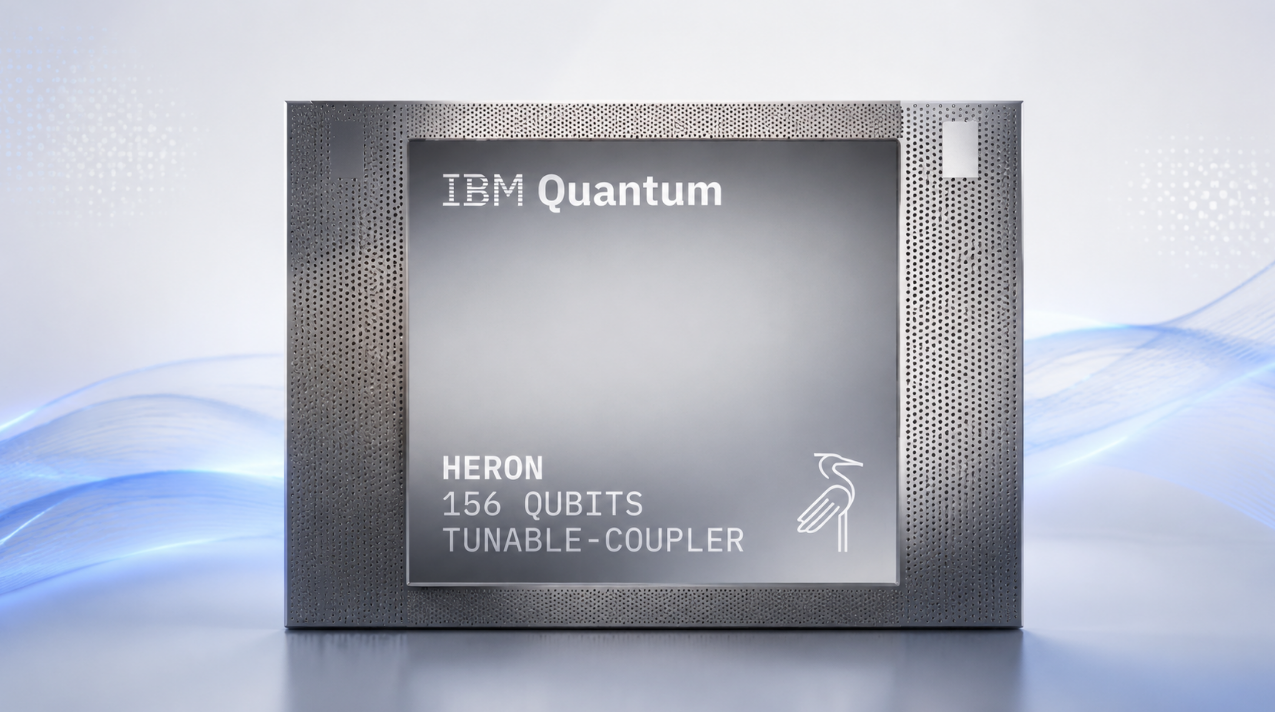
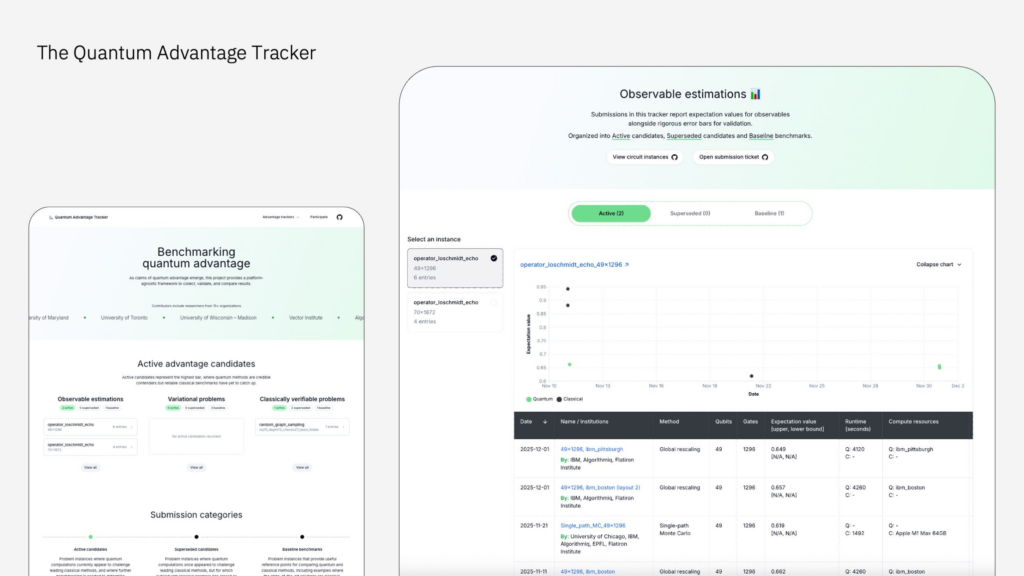
  • IBM and Qedma demonstrated error-mitigated quantum simulation beyond classical benchmarks: complex quantum simulations were run on IBM cloud quantum systems using error mitigation techniques, yielding results beyond the reliable verification range of classical supercomputers [25]. This is the first time error mitigation has been combined on a commercial quantum cloud platform to surpass classical simulation, offering a practical path for near-term quantum devices, though the scalability of error mitigation remains to be validated [25].
  • HRL Laboratories realized a self-controlled quantum processor: an 18-qubit device connected to custom control chips via high-density superconducting ribbon cables autonomously runs error correction [14]. This approach shrinks control electronics from rack-scale to near-chip, greatly reducing wiring complexity and providing a critical engineering path for scaling qubit count, but qubit fidelity and coherence times have not been disclosed, leaving a gap to fault-tolerance requirements [14].

Silicon Spin Qubits

  • University of California achieved 5 meV valley splitting in Si/SiGe quantum dots: by optimizing heterojunction design (narrow quantum well, Ge spike, Ge cap), valley splitting reached 5 meV, exceeding previously publicly reported values [31]. Valley splitting is a key bottleneck for initialization and readout consistency in Si/SiGe spin qubits; 5 meV may be approaching practical requirements, but this result is from a single-point device and uniformity has yet to be verified in multi-qubit arrays [31].

Hybrid Quantum Interconnects

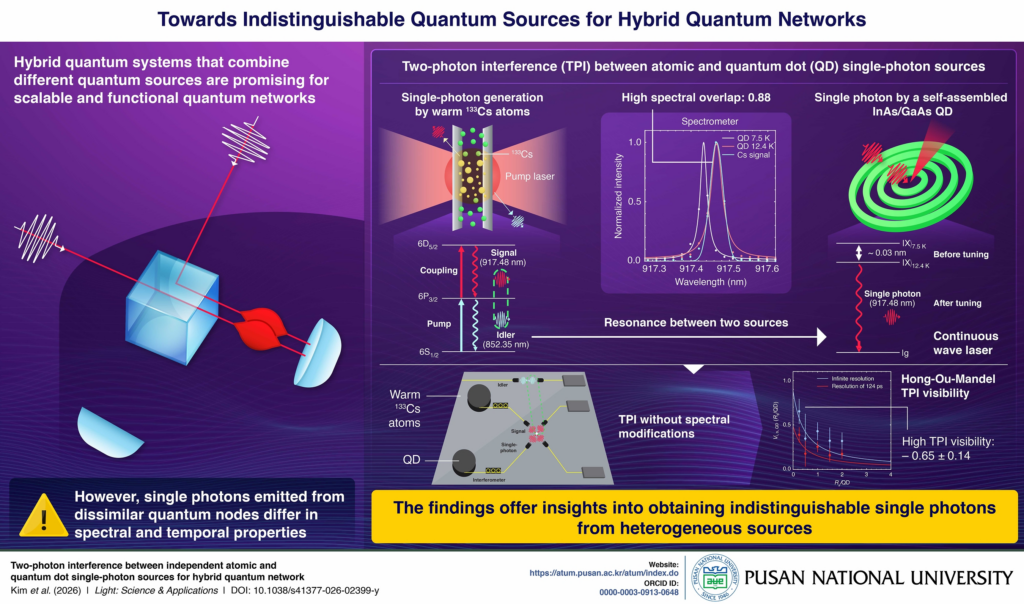
  • Pusan National University and UNIST achieved two-photon interference from hybrid quantum light sources: direct two-photon interference was realized for the first time between an unsynchronized warm cesium atomic ensemble and a semiconductor quantum dot, with photon indistinguishability reaching a practically usable level [6][24]. This breakthrough provides a key interface for building heterogeneous quantum networks, but system-level interconnect fidelity and scalability still need verification [6].
03Algorithms

Algorithms and Software

  • IBM and Algorithmiq developed a quantum computing verification framework: quantum computation results are verified using techniques such as classical shadow tomography in regimes beyond classical simulation [27]. This framework solves the problem of direct verification in "quantum advantage" claims, providing tools for trusted quantum computing, but computational overhead and scope of applicability still need expansion [27].
  • Cleveland Clinic and IBM built a quantum machine learning framework to predict neoantigen immune responses: quantum kernel methods were used to classify high-dimensional biological data, with preliminary results outperforming classical baselines [29]. If subsequently validated on real clinical data, this could accelerate cancer vaccine design, but it is currently still at the proof-of-concept stage [29].
  • AI learns to construct quantum circuits for drug molecules: researchers used AI to automatically generate quantum circuits for simulating molecular properties, reducing design time by several orders of magnitude [30]. This promises to lower the barrier for quantum chemistry simulation, but the fidelity and scalability of the generated circuits have not yet been evaluated on real hardware [30].
04Industry

Industry and Ecosystem

  • Booz Allen launched a quantum startup scouting program: the "Quantum Next Breakthrough Company" competition was introduced at the Quantum Congress, aiming to identify quantum technologies with defense and commercial potential [21]. This reflects defense contractors' emphasis on the quantum supply chain and may accelerate funding and validation opportunities for relevant startups [21].
  • NIST's Andrew Regenscheid outlined the post-quantum cryptography migration path: emphasizing that federal agencies need to complete critical system migration by 2030, and noting that hybrid certificates and agility are key during the transition period [22]. This interview provides a clear policy timeline for the quantum security industry, potentially pushing enterprises to accelerate their cryptographic migration plans [22].
  • U.S. Naval Research Laboratory expands quantum research: the NRL Quantum Science Institute focuses on three directions—sensing, computing, and networking—advancing military quantum technology in response to Executive Order 14413 [5][23]. This move indicates that quantum technology is moving from the lab to defense applications, potentially driving investment in areas such as underwater navigation and RF sensing [5].
  • Vexlum opens a lab in the UK: the Finnish quantum laser company appointed Stefan Truppe to head UK operations, targeting the European quantum sensing and computing market [26]. This shows the quantum enabling technology supply chain is regionalizing to meet localized demand [26].
  • SEALSQ chip advances toward quantum-safe hardware certification: its secure element is undergoing Common Criteria certification, aiming to resist quantum attacks [13]. As post-quantum cryptography standards are finalized, hardware security module certification will become a rigid demand for IoT and critical infrastructure [13].
05Other

Academic Frontiers

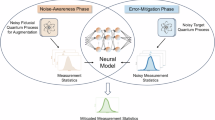
  • Neural network classifies multipartite continuous-variable entanglement structure: a neural network trained via data augmentation achieves classification of entanglement structures in multimode continuous-variable systems [3]. This method provides a new tool for large-scale quantum state verification, but training data still comes from traditional numerical simulations, and generalization capability needs testing [3].
  • Proof of density uniqueness for non-interacting quantum systems: the Hohenberg-Kohn theorem for discrete ground-state energy systems was proven using potential theory [7]. This provides a rigorous foundation for applying density functional theory in quantum information, but it applies only to non-interacting systems; extension to interacting systems remains an open problem [7].
  • Z boson decay reveals decoherence and entanglement growth: PITT PACC analysis reveals unexpected quantum behavior in radiative decays [8]. This result may offer new perspectives for quantum information methods in high-energy physics, but experimental verification remains extremely difficult [8].
  • CAS PQFA method reduces multimodal model parameters by 10x: Parallel Quantum Feature Enhancement reduces model parameters from 24.0K to 2.2K while maintaining comparable performance [9]. If quantum feature maps can generalize, this could significantly compress classical AI models, but it has only been verified on specific benchmarks so far [9].
  • Quantifiers and witnesses for nonclassicality of quantum measurements and states: a unified nonclassicality framework applicable to arbitrary quantum processes is proposed [15]. This theoretical work provides more robust tools for resource theories and may influence the definition of quantum metrology and computational advantage [15].
06Impact

This Week's Impact

  • Paradigm shift in quantum advantage verification: IBM's "trusted quantum advantage" demonstration shifts advantage verification from a single metric to an end-to-end pipeline; supercomputing centers and cryptographic agencies need to reassess quantum risk timelines [4][25][27].
  • Miniaturization of control electronics accelerates: HRL's self-controlled processor indicates that the "peripheral bottleneck" for qubits can be alleviated through 3D integration, potentially forcing other hardware routes to adopt similar solutions [14].
  • Silicon spin qubits approach fault-tolerance threshold: if 5 meV valley splitting can be reproduced in multi-qubit arrays, it will remove a major obstacle for the Si/SiGe route, potentially attracting more foundries to invest in quantum dot processes [31].
  • Defense quantum applications accelerate: actions by NRL and Booz Allen show the U.S. military is moving quantum technology from basic research to acquisition, which will influence product definition and compliance requirements for quantum startups [5][21].
  • Urgency of post-quantum cryptography migration escalates: NIST officials explicitly set a 2030 deadline; the financial and critical infrastructure sectors must immediately initiate hybrid cryptography deployment or face compliance risks [22].
07Other

Editor's Note

The most notable trend this week is "trusted quantum advantage" moving from concept to practical demonstration. The IBM-led team not only showed results surpassing classical simulation but also provided a supporting verification framework and public circuit library, marking a shift in quantum computing from "claimed advantage" to "auditable advantage." However, the scalability of error mitigation remains a weakness—the current demonstrations rely on specific noise models, and whether they can be generalized to larger systems is still questionable. On the hardware side, the miniaturization of control electronics (HRL) and breakthroughs in material bottlenecks (Si/SiGe valley splitting) indicate that engineering is catching up with physical metrics, but the uniformity of multi-qubit integration remains a common challenge. On the industry side, the urgency of defense and cryptographic migration is reshaping the quantum ecosystem; startups need to find a balance between technological breakthroughs and compliance capabilities. Worth watching in the coming weeks is whether IBM's advantage demonstration will trigger follow-ups or challenges from other superconducting teams, and whether specific project funding for NRL materializes.