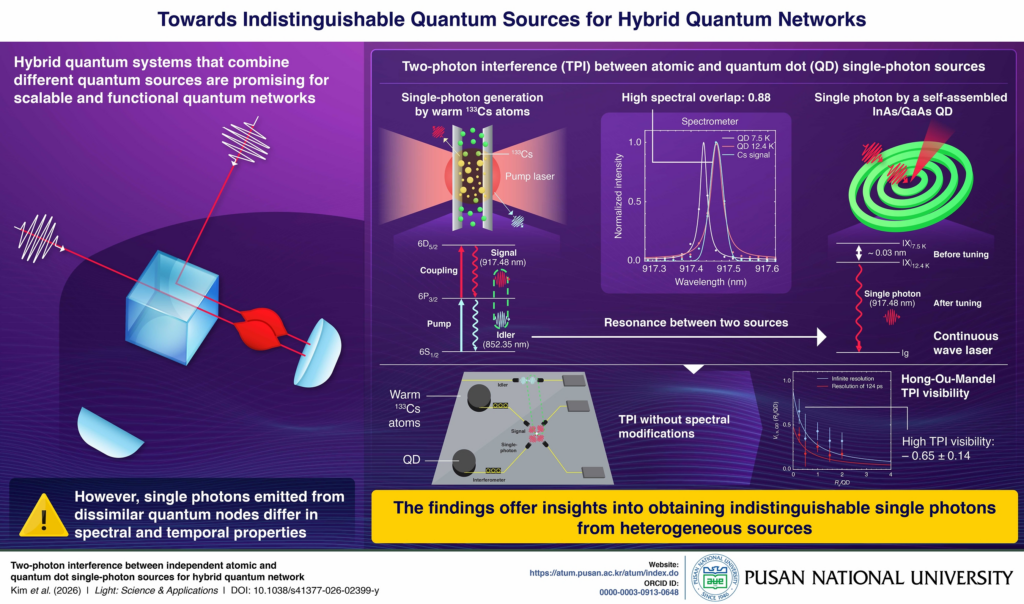
The most significant advancement this week is undoubtedly the demonstration of quantum advantage with 70 logical qubits by IBM and the University of Chicago. This is the first time error-corrected quantum computation has surpassed classical simulation on logical circuits, marking a transition from principle verification to credible computation in fault-tolerant computing. However, the result has not yet been published in a peer-reviewed format, and specific details like the error-correcting code distance, logical error rate, and comparison with the surface code Λ factor remain undisclosed. The choice of technical route (non-standard error-correcting codes) may spark controversy. Meanwhile, other hardware routes are also progressing: noise suppression in hybrid superconducting qubits, heterogeneous integration via photonic interconnects, and long-period observation of time crystals all point to improvements in quantum system control precision. The industry sector shows a trend of consolidation; IonQ's vertical acquisition and EY's on-premises deployment indicate that enterprises are shifting from exploration to building internal capabilities. However, caution is needed: the commercialization of quantum computing still faces an engineering gap. Near-term applications are mostly limited to specific optimization problems, and universal fault-tolerant computation still requires more experimental evidence. In the coming weeks, attention should be paid to the release of detailed data from the IBM results, responses from other error correction platforms, and the verification of ROI for quantum software in actual business scenarios.