Aug 3, 2026 – Aug 4 · Daily Brief

Caltech introduces a practical high-throughput fault-tolerant quantum error correction code

49 items · 11 sourcesPDFThis issue's roundup is free
02Hardware

Hardware Frontiers

Superconducting Qubits

The SQMS Center demonstrated a qudit-based Grover's search algorithm, using multi-level quantum systems to break through traditional qubit limitations, potentially opening a new path for efficient implementation of quantum search algorithms on superconducting platforms [1].

Photonic Quantum Computing

Researchers demonstrated a self-calibration method for Clements decomposition on a programmable photonic processor by identifying the operating points of Mach-Zehnder interferometers, marking a key step toward large-scale linear optical networks; this advance is significant for building the programmable linear optical units required for universal photonic quantum computers [24].

OptQC and NTT strengthened their collaboration to advance large-scale optical quantum computing, integrating their respective strengths in optical quantum gates and communication technology, which, if successful, could accelerate the photonic route toward practicality [43].

Quantum Sensing

ICFO researchers achieved tunable nonlinear electromechanical control at the scale of zero-point motion, pushing the manipulation of mechanical oscillators to the quantum limit and providing a new platform for quantum precision measurement and the study of macroscopic quantum phenomena [14].

Atomionics expanded its quantum gravimetry research to marine sensing, establishing an R&D center in Singapore, extending the application scenarios of quantum gravimeters from land to underwater, potentially impacting resource exploration and defense monitoring [47].

03Algorithms

Algorithms and Software

Quantum Algorithms

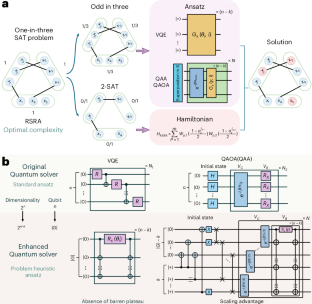
A study demonstrated a quantum scaling advantage on NP-complete problems: by combining a restricted space reduction algorithm with a quantum solver, quantum resource growth was slower than its classical counterpart, providing new evidence for quantum computing surpassing classical methods in combinatorial optimization [6].

JIJ upgraded Qamomile from an optimizer to a full-stack quantum language (v0.14.0), expanding it from a specialized optimization tool to a general-purpose quantum algorithm development platform, potentially lowering the barrier to quantum programming [13].

Quantum Error Correction

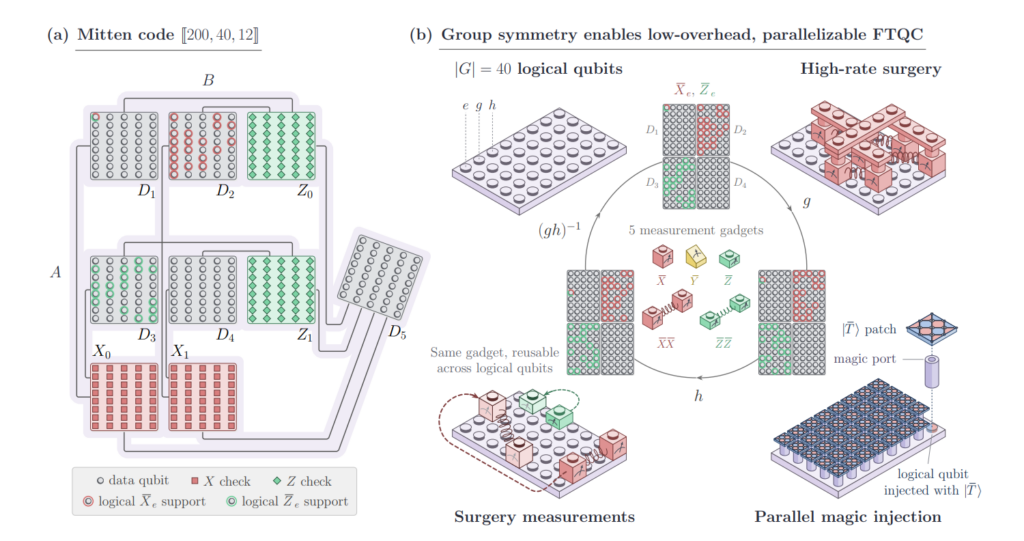
The mitten code from Caltech and Oratomic is a high-rate qLDPC code whose non-Abelian properties support transversal logical gates, promising more efficient fault-tolerant quantum processors and potentially significantly reducing physical qubit overhead compared to traditional surface codes [8].

04Industry

Industry and Ecosystem

Collaborations and Projects

Rigetti, HPE, and the Pittsburgh Supercomputing Center are building the "TangleLab" hybrid quantum-classical supercomputing testbed, funded by a $5 million NSF grant. This platform will explore the deep integration of quantum and high-performance computing, providing infrastructure for practical application development [10].

UC Berkeley and QuantrolOx signed a five-year memorandum of understanding to industrialize superconducting quantum computing, combining Berkeley's open architecture with QuantrolOx's automation software, potentially accelerating the large-scale production of superconducting quantum processors [11].

D-Wave and Nasdaq Verafin are collaborating to develop quantum machine learning applications focused on financial crime detection. If breakthroughs occur, this could establish early use cases for quantum computing in areas like anti-money laundering [17][44].

Policy and Standards

China established a Quantum Standards Committee to coordinate quantum technology standardization efforts, a move that will strengthen China's voice in global quantum standard-setting and may influence the international competitive landscape of the quantum industry [41].

IISS analysis indicates that Western quantum export controls are evolving into an industrial strategy, expanding from technology embargoes to supporting domestic supply chains, which could reshape the global quantum supply chain in the long term [42].

Post-Quantum Cryptography and Security

Anchorage Digital released a post-quantum migration strategy, providing an operational blueprint for institutional crypto assets to counter quantum decryption threats, reflecting substantive preparation in the financial industry for quantum security risks [12].

DigiCert released the second edition of "Post-Quantum Cryptography for Dummies," offering organizations a practical guide for PQC migration, reflecting that post-quantum cryptography deployment is moving from concept to implementation [21].

SEALSQ emphasized the role of cryptographic agility in addressing future cryptographic threats; hardware-level crypto-agile solutions could be key for IoT devices to defend against quantum attacks [40].

Education and Talent Development

PsiQuantum invested $250,000 in STEM and quantum education programs in South Chicago, aiming to cultivate the local quantum workforce and potentially build a talent pipeline for the photonic quantum computing route [38].

QNu Labs and SRMIST established a quantum communication lab in India and trained the first cohort of quantum communication instructors, supported by the National Quantum Mission, which will aid in building India's quantum communication talent pipeline [9].

Qubitrium supported NATO's quantum technology training program, focusing on dual-use quantum technologies, indicating the rising strategic importance of quantum skills in the defense sector [46].

05Other

Academic Frontiers

Quantum Information Theory

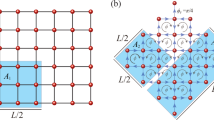
Research revealed universal entanglement growth along the imaginary time direction in quantum critical systems, providing new insights into the entanglement characteristics of higher-dimensional quantum matter, potentially impacting the understanding of entanglement structures in quantum phase transitions and quantum field theory [5].

The work "Universal entanglement growth in the dark intervals of a locally monitored free-fermion chain" explored the entanglement dynamics in the "dark intervals" of a locally monitored free-fermion chain, finding that entanglement entropy grows over time to a steady state, adding a new case to the study of measurement-induced entanglement phase transitions [28].

The paper "On the quantum computational complexity of classical linear dynamics with geometrically local interactions" studied the quantum computational complexity of classical linear dynamics, demonstrating quantum exponential speedup under certain conditions but also revealing cases that can be dequantized by classical algorithms, providing a more refined characterization of the boundaries of quantum advantage [29].

Quantum Networks and Communication

A microcomb-driven, large-scale, fully connected quantum network was constructed, using microcombs to generate multi-wavelength entangled photon pairs, enabling simultaneous connections among all users and solving the scalability challenge of fully connected networks, offering a new scheme for quantum internet architecture [7].

Pusan National University built a hybrid quantum network, demonstrating two-photon interference between a warm atomic ensemble and a quantum dot, overcoming the wavelength mismatch problem between quantum memories and single-photon sources, marking significant progress in heterogeneous quantum network integration [26].

Fraunhofer ISI and Saarland University released a technology roadmap for quantum repeaters, comparing various platforms such as diamond color centers, trapped atoms, and rare-earth crystals, pointing out that no dominant platform exists yet, providing a systematic reference for quantum repeater R&D [48].

Quantum Simulation and Computation

Simulations showed that polynomial signals can evade classical optical methods; in passive linear optics, certain expectation values avoid exponential concentration but retain polynomial-order signal components, offering a systematic path for finding quantum advantage [27].

Convolutional structures can reduce the complexity of solving dense optimization problems for Spatial Photonic Ising Machines (SPIMs), using spatial convolution properties to enhance computational efficiency, potentially making SPIMs more competitive in combinatorial optimization [16].

Quantum Materials and Physics

A Rice University team discovered possible altermagnetism in the two-dimensional quantum material ultrathin ruthenium dioxide, a new type of magnetism featuring zero net magnetization like antiferromagnets but spin-split band characteristics like ferromagnets, opening a new direction for spintronics and quantum materials research [20].

Research achieved scalable universal photonic quantum computing, implementing a universal quantum gate set through nonlinearity, completed by Imperial College London and other institutions, marking a significant step for the photonic route toward universal quantum computing [18].

A 20-attosecond delay measurement demonstrated quantum behavior beyond the photon coherence limit, using Hong-Ou-Mandel interference to achieve single-shot path-delay sensing with attosecond precision, providing a new tool for ultrafast quantum metrology [25].

06Impact

This Week's Impact

  1. Quantum Error Correction Researchers: The mitten code [8] offers a new high-rate qLDPC option; its non-Abelian properties may simplify logical gate implementation. Its performance comparison with existing surface codes and concatenated codes, as well as specific hardware implementation requirements, warrant attention.
  2. Fintech Companies: If the D-Wave and Nasdaq Verafin collaboration [17][44] successfully demonstrates the advantage of quantum machine learning in anti-money laundering, it could trigger an investment boom in quantum computing applications within the financial sector. Benchmark results on real-world datasets need to be tracked.
  3. Quantum Network R&D Teams: Progress in microcomb-based fully connected networks [7] and hybrid quantum networks [26] indicates that quantum networks are evolving from point-to-point to multi-user architectures. The technological maturity of related components will influence the timeline for the realization of the quantum internet.
  4. Quantum Industry Policymakers: The dynamics of China's Quantum Standards Committee [41] and Western export controls [42] show that quantum technology is being incorporated into the framework of great power competition. Standards and supply chain autonomy will become key variables in industrial development in the coming years.
  5. Post-Quantum Cryptography Deployers: Anchorage Digital's migration strategy [12] and DigiCert's guide [21] indicate that the practical deployment of post-quantum cryptography is accelerating. Enterprises should promptly initiate cryptographic asset inventorying and migration planning to address the threat quantum computing poses to existing encryption systems.
07Other

Editor's Note

This week, the quantum computing field shows a trend of parallel progress in error correction theory and application exploration. At the hardware level, the photonic route continues to demonstrate its advantages in programmability and networkability, but there is still a gap to the loss thresholds required for fault tolerance; superconducting and neutral atom routes saw no reports of major breakthroughs, possibly being in a period of technical accumulation. It is noteworthy that qLDPC codes are becoming a hotspot in error correction theory, and the proposal of the mitten code further enriches the options for high-rate fault-tolerant schemes. However, how to achieve the required connectivity and gate operations in actual physical systems remains a huge challenge.

At the industry level, collaborative projects in the finance, defense, and education sectors are increasing, indicating that quantum technology is moving from the lab to vertical industry applications. However, most of these collaborations are still in the early exploratory stage, and whether they can generate actual commercial value remains to be tested over time. The impact of geopolitical factors on quantum technology is increasingly significant. The establishment of China's standards committee and the escalation of Western export controls both indicate that quantum technology has become part of national strategic competition, which may accelerate technological divergence or promote the formation of regional innovation ecosystems. Overall, quantum computing is still in a critical transition period from fundamental research to engineering. Expecting a killer application in the short term is premature, but the continuous progress of various technical routes and the gradual improvement of the industrial ecosystem lay the foundation for long-term development.