Aug 10, 2026 · Daily Brief

University of Waterloo Uses Single Molecule as Quantum Sensor, Promising to Measure Protein Structure

10 items · 1 sourcesPDFThis issue's roundup is free
02Hardware

Hardware Frontier

Molecular Quantum Sensor

Researchers at the University of Waterloo’s Institute for Quantum Computing have developed a new quantum sensing technique that uses individual molecules as quantum sensors, potentially enabling measurement of single-protein structures [1]. Sources indicate the technique could map single-protein structures and lead to medical breakthroughs; specific measurement mechanisms and technical details were not disclosed in the report [1].

Technical Implications: This research directs molecular quantum sensing toward single-protein structure determination. Compared to traditional methods (such as cryo-EM or X-ray crystallography), it potentially eliminates the need for bulk sample crystallization and can probe dynamic conformational changes of individual molecules. The current SOTA in quantum sensing is mostly based on diamond NV centers (nitrogen-vacancy centers), whose biocompatibility is limited; molecular sensors can be chemically designed for specific biological targets, expanding the application boundaries of quantum sensing. Specific sensitivity and resolution metrics have not yet been published, nor has the source provided a quantitative comparison with NV centers. Based on available information, this represents a novel approach rather than a performance record.

Landscape Impact: If matured, this technology will directly impact the structural biology and drug discovery fields — protein structure is key to understanding disease mechanisms and designing drugs, and single-molecule dynamic measurements can reveal transient conformations that traditional methods cannot capture. In the short term (3–5 years), it may spawn new biophysical research tools; in the long term, it could influence the validation segment for cryo-EM and protein structure prediction (such as AlphaFold). Investors should monitor the emergence of related startups and potential quantum sensing collaborations established by pharmaceutical companies.

03Algorithms

Algorithms & Software

Quantum Information Recovery Inspired by Generative Models

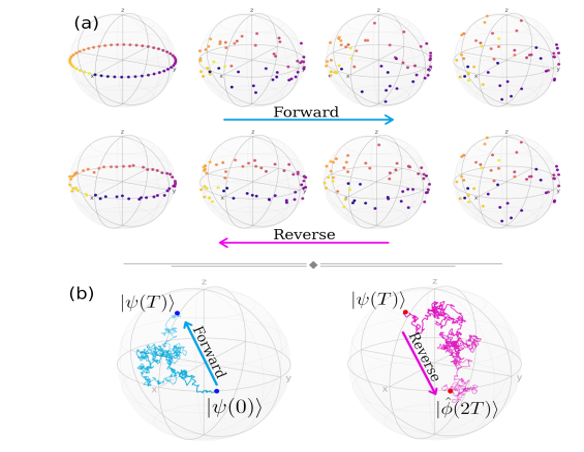
University of Waterloo doctoral student Einar Gabbassov, inspired by image generation models, explores methods for quantum information recovery [5]. The research addresses information loss caused by qubit interaction with noisy environments, attempting to leverage machine learning experience to achieve quantum information recovery; the specific implementation path was not disclosed in the report summary [5].

Technical Implications: Quantum information recovery is one of the key challenges for fault-tolerant quantum computing. Traditional methods rely on quantum error correction codes, which require significant physical qubit overhead. This research borrows the "denoising" concept from classical generative models, offering a new paradigm for quantum information recovery. It is currently at the theoretical exploration stage, with no reported specific recovery fidelity or resource overhead comparison. Compared to mainstream quantum error correction technical routes, this method does not directly compete on error correction performance but provides a potentially hardware-efficient recovery pathway that could reduce reliance on quantum error correction codes.

Landscape Impact: If experimentally validated, this method will influence resource assessments for quantum computing hardware roadmaps — especially for spin-qubit platforms with short coherence times (N_ops only 10²–10³), such recovery techniques could mitigate coherence time limitations. Financial practitioners should monitor subsequent experimental demonstrations of this direction, particularly prototype validation integrated with specific hardware platforms.

04Industry

Industry & Ecosystem

Canadian Federal Funding Injects into Quantum Research

Five faculty members at the University of Waterloo’s Institute for Quantum Computing received funding from the Natural Sciences and Engineering Research Council of Canada (NSERC) Discovery Research Program for theoretical and applied quantum research [3]. This funding is part of NSERC’s annual grants; specific amounts were not disclosed, but it continues the Canadian government's long-term support for quantum science [3].

Commercial Implications: Federal funding provides stable, non-dilutive capital for foundational quantum research, helping sustain continuous academic team output and talent development. For investors, while such funding does not directly create commercial value, it serves as a signal of technology reserves and talent pools — Canada has established clear advantages in quantum cryptography and quantum sensing, potentially incubating more startups in the future.

Internationalization of Quantum Cryptography Talent

Recent graduates from the University of Waterloo’s Institute for Quantum Computing presented novel research at an international cryptography conference, focusing on quantum-safe cryptography [6]. The specific content of the research was not disclosed, but sources indicate Canada's expertise in quantum cryptography continues to exert influence [6].

Landscape Impact: Quantum-safe cryptography is central to post-quantum cryptographic standardization, with relevant standards still in an ongoing evolution process. Canada's continuous output of talent in this field may influence the future global supply chain and standard-setting for quantum security technologies. Financial practitioners should track the flow of these talents (to academia, startups, or large tech enterprises) to assess the competitive landscape of the quantum security market.

05Other

Academic Frontier

Diamond Nanostructures Enhance Light Collection and Control

Researchers at the University of Waterloo’s Institute for Quantum Computing have developed a novel nanoscale diamond structure capable of generating "nanojet" light for better light collection and control [9]. Sources indicate the device could advance scalable quantum technologies; specific application targets and performance parameters were not disclosed in the report summary [9].

Technical Implications: Diamond NV centers are one of the leading platforms for quantum sensing and quantum networks, but photon collection efficiency has long been limited by diamond's high refractive index (causing total internal reflection). This structure improves light collection and control through the nanojet effect, representing optical interface optimization rather than qubit performance enhancement; the extent of improvement was not reported. In comparison, this research does not directly compete with photonic computing routes, but if integrated with NV centers, it could increase the entanglement distribution rate of quantum network nodes.

Landscape Impact: This technology is expected to accelerate the practical application of diamond-based quantum devices, particularly quantum repeaters and distributed quantum computing nodes. In the short term (3–5 years), it may influence the technology selection of quantum network startups; in the long term, it could reduce optical interconnect losses for the quantum internet. Investors can monitor whether this structure can be reproduced in commercial diamond samples and whether it is compatible with existing CMOS processes.

06Impact

Today's Impact

  • Structural Biology Researchers: If the molecular quantum sensor technology matures, it will provide a dynamic single-molecule structural analysis tool, potentially changing drug target discovery workflows; subsequent experimental validation and commercialization timelines require attention [1].
  • Quantum Sensing Startups: Diamond nanostructures improving light collection and control could reduce optical losses in quantum sensors and quantum network nodes, affecting product performance roadmaps; relevant enterprises should assess integration possibilities [9].
  • Quantum Cryptography Standard Setters: Canada's continuous output of quantum security talent may strengthen its voice in post-quantum cryptography standardization; subsequent standard updates require attention [6].
  • Canadian Quantum Ecosystem Investors: Stable federal funding injected into foundational research and the sustained output of the University of Waterloo’s Institute for Quantum Computing may incubate new startups; early-stage investors should track their technology transfer progress [3].
  • Quantum Information Theory Researchers: The generative-model-inspired quantum information recovery method offers new ideas for error correction, potentially affecting quantum computing hardware resource overhead assessments; the academic community should monitor subsequent experimental validation [5].
07Other

Editor's Note

Today's news highlights the intersection of quantum sensing and quantum information processing in the biomedical field. The progress in molecular quantum sensors marks a potential path for quantum technology to extend from physics laboratories into life science scenarios — if single-protein structure determination succeeds, it will directly challenge traditional structural biology methods, with an impact potentially no less than the cryo-EM revolution. However, the technology is still in its early stages; the source only describes it as "potentially enabling," and engineering challenges such as sensitivity, reproducibility, and biological environment compatibility remain unresolved. Investors should guard against excessive hype, but companies laying long-term groundwork at the intersection of quantum sensing and drug discovery merit attention.

On the other hand, Canada's sustained investment in foundational quantum research, through talent output and academic achievements, is solidifying its global position in quantum cryptography and quantum sensing. The stability of federal funding and the output capacity of academic institutions (such as the University of Waterloo’s Institute for Quantum Computing) provide a solid innovation base for the quantum industry. Against the backdrop of intensifying competition in the quantum computing hardware race, this "soft power" could become a key variable in future technology standard-setting and supply chain control.