Partnerships & Commercialization
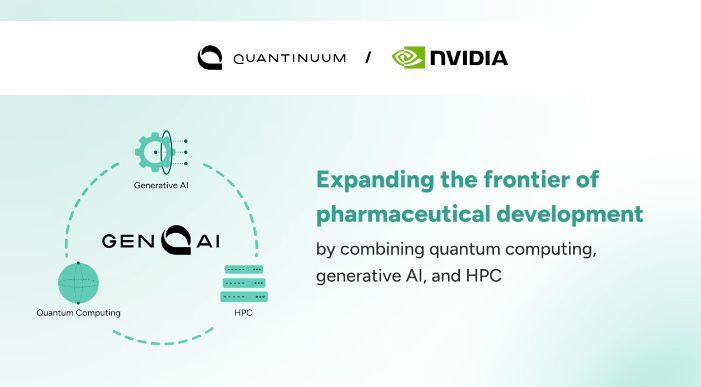
Quantinuum×NVIDIA×Pfizer validate GenQAI The three parties jointly validated a generative quantum framework that combines classical HPC with Transformer models to automatically synthesize quantum circuits for molecular ground-state preparation[9]. Compared with hand-designed circuits, automation can accelerate electronic-structure calculations in drug discovery. Pfizer participated as a co-author in the validation, giving quantum pharmaceutical applications empirical engagement from an end-user pharma company.
Tamil Nadu signs four quantum enterprises The Indian state of Tamil Nadu signed memoranda with four quantum technology enterprises at an investment summit to establish operational bases, R&D centers, and control-system manufacturing facilities[5]. The state government is directly attracting quantum hardware and software investment, strengthening the regional ecosystem. However, company names and investment amounts are undisclosed, and implementation timelines remain to be seen.
Mountain West regional quantum alliance Innosphere, Montana Photonics & Quantum Alliance, and Headwaters Tech Hub signed a memorandum to establish a unified Mountain West technology test network[6]. The agreement formally connects federally funded regional initiatives spanning Colorado, Wyoming, and Montana. It can lower testing costs for startups, but requires coordination across different state policies.
Quantum Australia economic impact report According to a press release, independent modeling shows the Quantum Australia national program created $83.1 million in economic value (original text marks the figure as $83.1 million without specifying currency) and added 15 quantum companies[35]. As a national-level cluster, the scale remains small, but the growth rate indicates an active ecosystem.
Diraq calls for workforce expansion Silicon spin-qubit company Diraq published a blog post arguing that quantum computing needs a broader workforce beyond PhDs[36]. This is a corporate viewpoint rather than industry statistics, but the skills gap could become an industrialization bottleneck, requiring vocational training and certification systems.
Policy & Investment
White House authorizes private-sector hack-back A signed commentary in PostQuantum (the author states opposition to the policy) notes that an August 12 memorandum places vetted U.S. companies into the federal offensive cyber-operations pipeline[3]. The author argues that during the post-quantum cryptography migration, the party repeatedly hit is the United States itself.
DARPA funds Qunnect polarization compensation DARPA awarded Qunnect a contract to advance the next-generation polarization-compensation module for the Carina quantum entanglement distribution system[40]. Carina is already deployed in New York, Bozeman, Berlin, and Albuquerque. Real-time correction of fiber polarization drift improves quantum-network reliability.
BTQ Technologies Q2 update Following the previous day's report, BTQ completed its acquisition of QPerfect, the QSSN mainnet processed over 100,000 transactions, and a stablecoin proof-of-concept led by a Korean bank is advancing; Bitcoin Quantum mining progress[39]. Commercialization is penetrating from platform to application layer.
Florida State University quantum certificate FSU launched Florida's first graduate certificate in Quantum Information Science and Technology—14 credit hours, application deadline October 1, 2026[7]. It provides an entry path for working professionals, though as a non-degree program its depth is limited.
Columbia quantum funding The Columbia Quantum Initiative held 31 active research grants from July 2025 to June 2026; the source headline states approximately $62 million while the body abstract states over $66 million—figures to be reconciled; 37 core faculty and 39 PhD graduates in 2024 and 2025[21]. A top-tier academic cluster continues to attract funding.