Superconducting
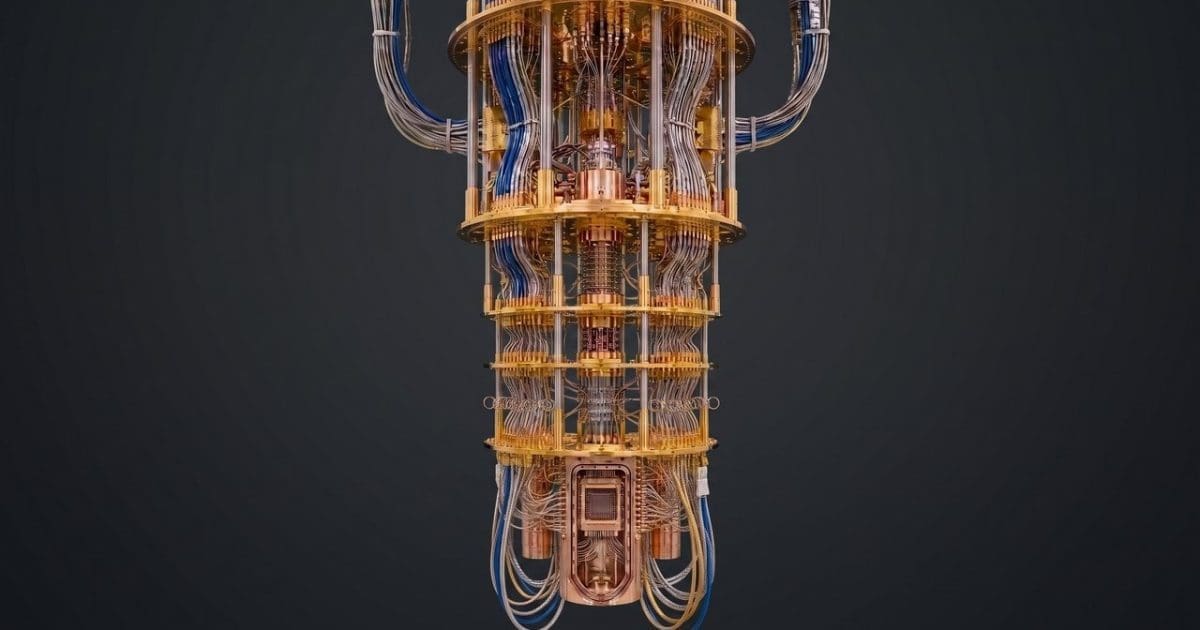
QpiAI 8-inch quantum chip foundry begins production QpiAI has officially launched its 8-inch quantum processing unit manufacturing facility in Jakkur, Bengaluru, India, as part of Phase II of its 70,000-square-foot R&D center. The facility can manufacture flip-chip superconducting quantum processors with up to 128 physical qubits, with Phase III expansion planned for completion by 2027[8]. The source does not claim this is India's first such production line, nor does it provide any process-level benchmarking; compared with leading superconducting players such as IBM and Google, no public qubit fidelity or coherence time data is available, making it impossible to assess proximity to SOTA. India's domestic quantum supply chain is being built from scratch and may attract government and defense orders, but commercial-grade chips still require validation.
Neutral Atoms
Shanxi University simulates Rydberg-atom CZ gate at 0.9999 fidelity A Shanxi University team has reported in numerical simulation a two-qubit controlled-Z gate fidelity of 0.9999 for Rydberg atoms, surpassing previous methods, and maintaining this precision under ±2% Rabi frequency fluctuations and ±1% detuning[22]. This result is a numerical simulation rather than an experimental measurement; the source provides no experimental verification and no cross-platform comparison with other technology routes. If subsequent experiments can reproduce and extend this to multiple qubits, it would enhance the competitiveness of the neutral-atom route near fault-tolerance thresholds.
Trapped Ions
Oregon team cools ion crystals to ground state An Oregon team has demonstrated single-species cooling of mixed qubit states, enabling trapped-ion quantum computers to cool their own components mid-computation without losing information[21]. Previous approaches to such cooling required multi-species ion systems or lacked methods for re-cooling qubits. This technique unlocks non-destructive readout, paving the way for scalable error-corrected computation on the trapped-ion route. The source does not provide gate fidelity or coherence time metrics for the trapped-ion platform, but cooling overhead is one of the scaling bottlenecks, and this advance directly improves cycle repetition rates.
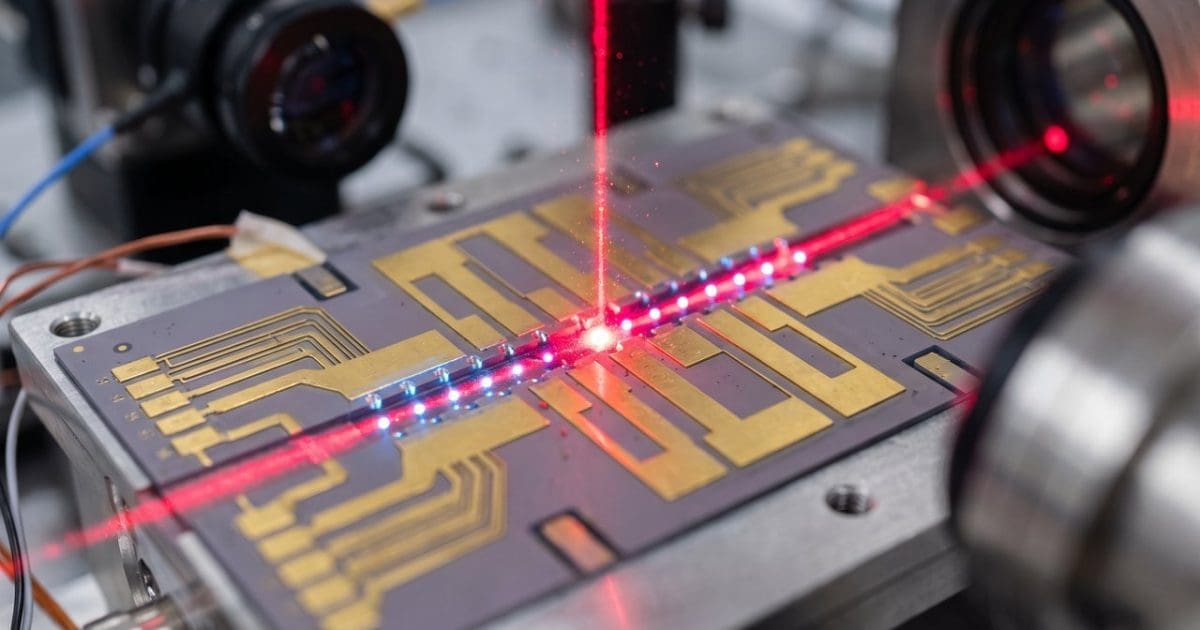
Integrated waveguides for trapped ions Researchers have integrated curved waveguides with a 6 mm radius of curvature into ion traps, achieving single-mode optical transmission at 405 nm, which was previously difficult to realize[20]. Using borosilicate glass and femtosecond laser writing, this provides a more compact photonic integration solution for trapped-ion systems. This advance reduces optical system volume and alignment complexity, benefiting the engineering and miniaturization of trapped-ion quantum computers.
Photonic
Virginia team achieves 3 dB squeezing on a photonic chip A monolithic photonic chip simultaneously generates, routes, and detects squeezed light, achieving 3 dB squeezing across 34 quantum modes[19]. Previously, squeezed-light generation and measurement were separated due to conflicting material requirements. This unified architecture lays the foundation for fully integrated quantum photonic systems, but the source does not relate this squeezing level to fault-tolerance thresholds, nor does it report an end-to-end loss budget. Integrated squeezed-light sources remain a weak point for the photonic route.
Spin Qubits
Spin nonlinearity enables dense qubits Researchers have proposed a scheme exploiting spin nonlinearity to achieve fidelities exceeding 0.98 in dispersively prepared even/odd cat states, with single-shot optical spin readout fidelity of 0.95[10]. This scheme eliminates reliance on larger, less coherent components such as transmons, proposing a bosonic (cat-state) encoding for nanomechanical spin qubits; it is currently at the proposal stage. The source provides no metric comparison with other spin routes; the result is early-stage but demonstrates the potential of spin-photon interfaces for scaling.
Inductive protection extends qubit coherence Inductively protected Andreev spin qubits separate spin states into different potential wells, nearly eliminating wavefunction overlap and enhancing protection against energy loss[17]. This design combines long coherence times with the operational advantages of spin degrees of freedom, improving upon existing qubits. No specific coherence time is given, making direct comparison with SOTA (silicon spin T₂ of approximately 10–100 µs) difficult, but it offers a new direction for superconducting-spin hybrid routes.