Aug 17, 2026 – Aug 18 · Daily Brief

QpiAI's 8-inch quantum chip fab in Bengaluru begins production

35 items · 11 sourcesPDFThis issue's roundup is free
02Hardware

Hardware Frontier

Superconducting

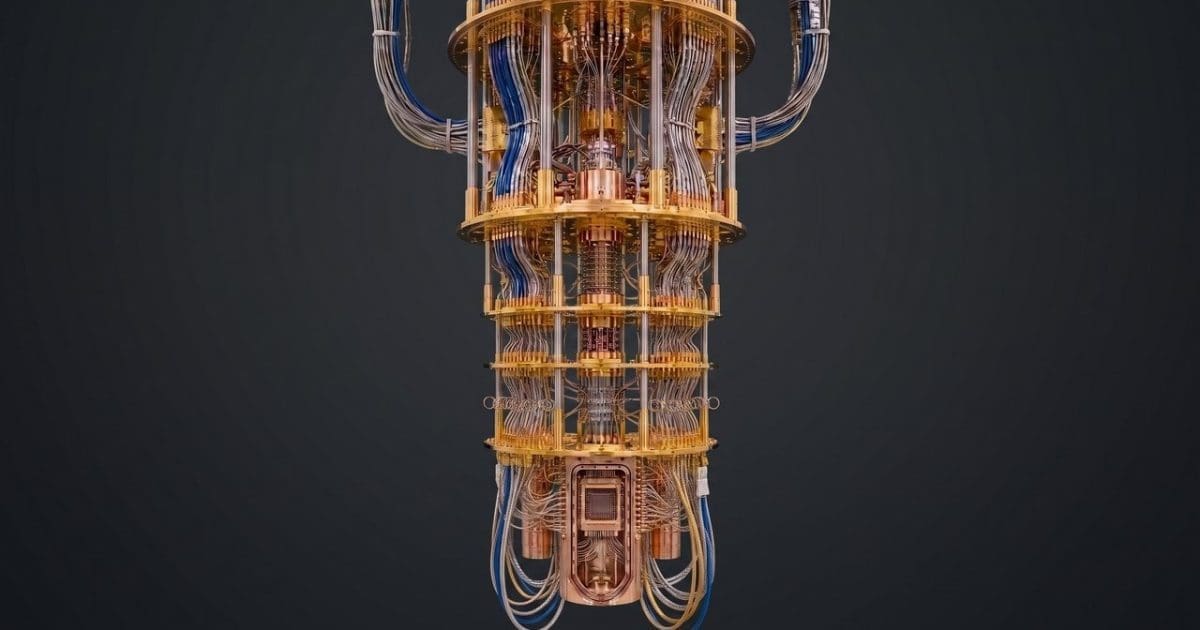
QpiAI 8-inch quantum chip foundry begins production QpiAI has officially launched its 8-inch quantum processing unit manufacturing facility in Jakkur, Bengaluru, India, as part of Phase II of its 70,000-square-foot R&D center. The facility can manufacture flip-chip superconducting quantum processors with up to 128 physical qubits, with Phase III expansion planned for completion by 2027[8]. The source does not claim this is India's first such production line, nor does it provide any process-level benchmarking; compared with leading superconducting players such as IBM and Google, no public qubit fidelity or coherence time data is available, making it impossible to assess proximity to SOTA. India's domestic quantum supply chain is being built from scratch and may attract government and defense orders, but commercial-grade chips still require validation.

Neutral Atoms

Shanxi University simulates Rydberg-atom CZ gate at 0.9999 fidelity A Shanxi University team has reported in numerical simulation a two-qubit controlled-Z gate fidelity of 0.9999 for Rydberg atoms, surpassing previous methods, and maintaining this precision under ±2% Rabi frequency fluctuations and ±1% detuning[22]. This result is a numerical simulation rather than an experimental measurement; the source provides no experimental verification and no cross-platform comparison with other technology routes. If subsequent experiments can reproduce and extend this to multiple qubits, it would enhance the competitiveness of the neutral-atom route near fault-tolerance thresholds.

Trapped Ions

Oregon team cools ion crystals to ground state An Oregon team has demonstrated single-species cooling of mixed qubit states, enabling trapped-ion quantum computers to cool their own components mid-computation without losing information[21]. Previous approaches to such cooling required multi-species ion systems or lacked methods for re-cooling qubits. This technique unlocks non-destructive readout, paving the way for scalable error-corrected computation on the trapped-ion route. The source does not provide gate fidelity or coherence time metrics for the trapped-ion platform, but cooling overhead is one of the scaling bottlenecks, and this advance directly improves cycle repetition rates.

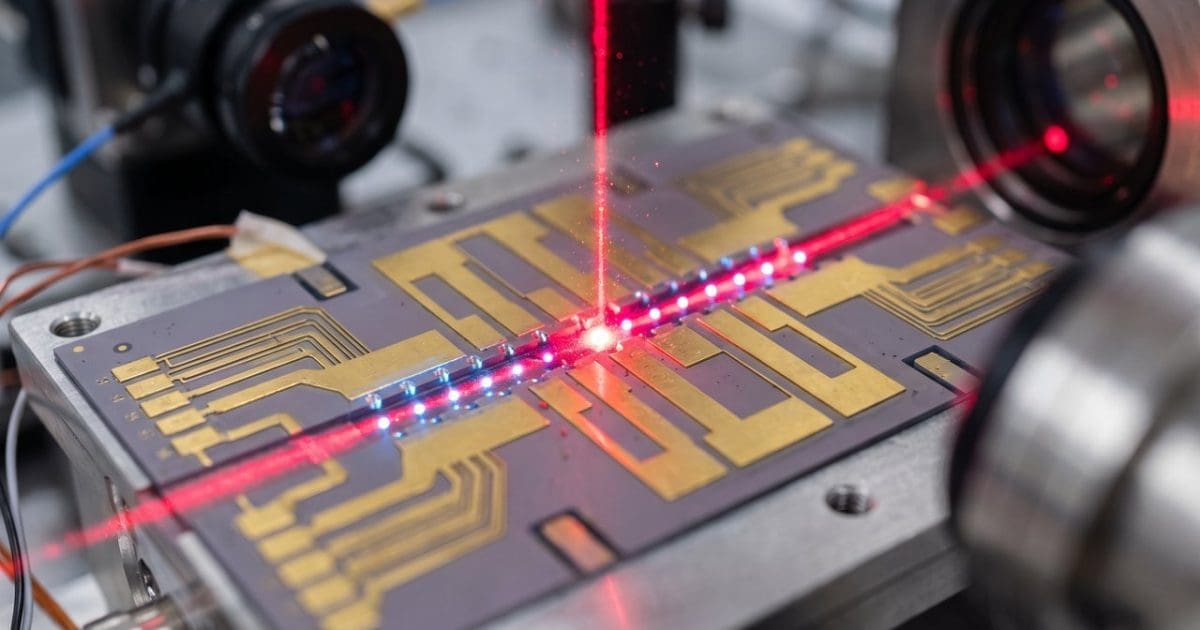
Integrated waveguides for trapped ions Researchers have integrated curved waveguides with a 6 mm radius of curvature into ion traps, achieving single-mode optical transmission at 405 nm, which was previously difficult to realize[20]. Using borosilicate glass and femtosecond laser writing, this provides a more compact photonic integration solution for trapped-ion systems. This advance reduces optical system volume and alignment complexity, benefiting the engineering and miniaturization of trapped-ion quantum computers.

Photonic

Virginia team achieves 3 dB squeezing on a photonic chip A monolithic photonic chip simultaneously generates, routes, and detects squeezed light, achieving 3 dB squeezing across 34 quantum modes[19]. Previously, squeezed-light generation and measurement were separated due to conflicting material requirements. This unified architecture lays the foundation for fully integrated quantum photonic systems, but the source does not relate this squeezing level to fault-tolerance thresholds, nor does it report an end-to-end loss budget. Integrated squeezed-light sources remain a weak point for the photonic route.

Spin Qubits

Spin nonlinearity enables dense qubits Researchers have proposed a scheme exploiting spin nonlinearity to achieve fidelities exceeding 0.98 in dispersively prepared even/odd cat states, with single-shot optical spin readout fidelity of 0.95[10]. This scheme eliminates reliance on larger, less coherent components such as transmons, proposing a bosonic (cat-state) encoding for nanomechanical spin qubits; it is currently at the proposal stage. The source provides no metric comparison with other spin routes; the result is early-stage but demonstrates the potential of spin-photon interfaces for scaling.

Inductive protection extends qubit coherence Inductively protected Andreev spin qubits separate spin states into different potential wells, nearly eliminating wavefunction overlap and enhancing protection against energy loss[17]. This design combines long coherence times with the operational advantages of spin degrees of freedom, improving upon existing qubits. No specific coherence time is given, making direct comparison with SOTA (silicon spin T₂ of approximately 10–100 µs) difficult, but it offers a new direction for superconducting-spin hybrid routes.

03Algorithms

Algorithms & Software

Hybrid boson sampling–neural network architecture A new architecture combining boson sampling with neural networks for classification tasks has been published in npj Quantum Information[4]. The source provides only the paper title and DOI, without disclosing architectural details or performance data; if subsequent validation proves effective, it may offer near-term application scenarios for photonic quantum computing. However, boson sampling itself lacks universal computational capability, and its classification advantages must be rigorously compared with classical methods on real datasets.

Magic-state concentration from arbitrary unknown qubits A new protocol distills a target magic state from six copies of unknown input states, requiring no prior knowledge[13]. Achieving exact distillation, it provides a new pathway for scalable fault-tolerant quantum computing. Magic-state distillation is a core resource-preparation step in fault-tolerant computation, and this advance relaxes input-state requirements, potentially simplifying future logical circuit design.

Quantum eigensolver shot count scales linearly A new thresholding scheme reduces the number of shots per matrix element in non-orthogonal quantum eigensolvers from O(M³) to O(M)[16]. This substantially lowers resource requirements for near-term quantum simulation of materials and drugs. The source states that this scheme brings near-term quantum simulation closer to reality, but provides no quantitative conclusion on hardware time costs.

Quantum resource reduction for power-grid islanding A new sequential quantum computing framework achieves Gurobi-optimal partitioning on 11 IEEE systems (9 to 300 buses), reducing quantum resource requirements and circuit complexity[14]. The improvement is relative to previous quantum methods; the source provides no speed comparison with classical solvers, and the number of qubits used is not disclosed. This work provides a benchmark for quantum algorithms in power-system applications.

Signal-learning measurement count drastically reduced A single controllable qubit coupled to a conventional sensor reduces the number of measurements required to learn signal properties such as Fourier amplitudes by approximately 10 million times (the source headline states 7 million times, inconsistent with the body text; the original text prevails)[15]. This is a concrete example of quantum-enhanced sensing moving from theoretical advantage toward practical use. If reproducible on real sensors, it would disrupt the precision-measurement field.

Distributed quantum circuit nonlocal operation reduction An MIT team has implemented CNOT circuits within CSS codes requiring only O(nk) inter-block transversal CNOTs and intra-block Pauli measurements, outperforming previous teleportation-based methods[18]. This achieves asymptotic optimality for distributed circuits under arbitrary restricted connectivity, minimizing nonlocal operations. This is critical for quantum computer networks and modular architectures.

Decoder cost limits in fault-tolerant computing Transversal CNOT gates reduce the number of error-correction rounds between logical operations from O(d) to near zero, but place enormous pressure on classical decoders. The PACE scheduling framework directly addresses this bottleneck[23]. This advance reconciles the imbalance between quantum acceleration and classical decoding speed, offering a new solution for real-time error correction.

Realistic quantum algorithm benchmarks Following prior reports, scientists have proposed more realistic quantum algorithm benchmarks incorporating hardware noise, connectivity, and compilation overhead[32]. The new benchmarks will more accurately assess the practical performance of near-term quantum devices and may influence investor expectations regarding quantum-advantage timelines.

04Industry

Industry & Ecosystem

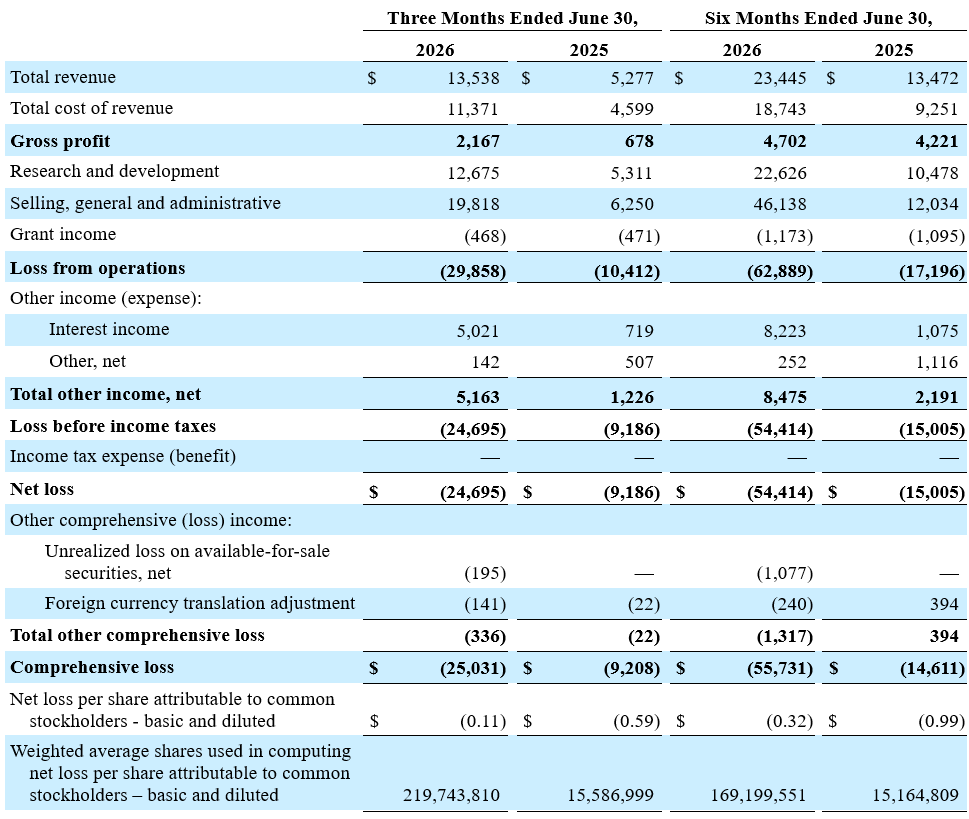
Infleqtion updates FY2026 Q2 financials Infleqtion reported Q2 revenue growth from $12.6M to $13.5M, with full-year revenue guidance raised from approximately $43M to approximately $45.1M, reflecting changes in revenue recognition timing for two government contracts; the increase is partially offset by corresponding reductions in revenue already recognized in 2024 and 2025, with no impact on cash or fundamentals[2]. The company has filed Form 10-Q. The accounting adjustment for government contract revenue recognition does not change business substance, but revenue fluctuations may affect market sentiment.

D-Wave appoints new board member D-Wave has appointed Kevan Krysler to its Board of Directors and Audit Committee[30]. The source only announces the appointment itself, without introducing his background or making any judgment on audit committee independence; board strengthening has a positive effect on enhancing corporate governance image.

Serendipity Capital interview In a podcast, Serendipity Capital founder Rob Jesudason discusses how to evaluate cross-modality quantum companies; its $1.3 billion evergreen fund has invested in Quantinuum, Monarch Quantum, Delta g, and QuantX[7]. The interview provides institutional investors with a framework for evaluating quantum companies and may influence subsequent capital allocation.

Columbia materials center receives third NSF award Columbia University has received its third NSF MRSEC award, totaling $18 million, for advanced electronic materials research[9]. This is a continuation of prior coverage; the new development is confirmation of the specific amount and direction of the third round of funding, further consolidating its position in quantum materials.

International Workshop on Quantum Computing, Privacy, and Security The IWQPS2026 workshop will focus on quantum computing, privacy, and security[6]. The conference provides a platform for academic and industry exchange and may catalyze new collaborations and standards discussions.

05Other

Academic Frontier

Cross-moiré orbitals in rhombohedral graphene moiré superlattices In rhombohedral graphene, the renormalization strength of moiré-period flat bands is hundreds of times larger than previously estimated, forcing electrons into newly observed "cross-moiré orbitals" that disappear at twist angles above 1°, consistent with the disappearance of the fractional quantum anomalous Hall effect[11]. This discovery deepens understanding of correlated electronic states in moiré materials and may provide a new material platform for topological quantum computing.

Quantum processor simulates fluid dynamics Multi-timestep accurate simulation has been achieved on quantum hardware for convection-dominated fluids at Reynolds numbers around 10², surpassing previous methods limited by circuit depth[12]. This extends quantum simulation beyond linear processes, opening a path for modeling complex physical systems. The current demonstration is small-scale, with orders-of-magnitude gaps remaining before practical engineering fluid problems.

Topological material quantum transport study Published in Nature Communications in May, this study identifies an unusual class of quantum oscillation regimes in three-dimensional topological insulators[31]. Such fundamental research provides key data for the feasibility of topological qubits.

Quantum-as-a-service pipeline threat model A University of Jyväskylä team has released a six-stage STRIDE threat model mapping the full attack surface of quantum-as-a-service pipelines used by IBM Quantum, Amazon Braket, and IonQ, identifying three cross-stage risk chains[33]. Full technical details and the threat matrix are available in an arXiv preprint (accepted as a poster at QCE26), not yet peer-reviewed. This model provides a systematic framework for quantum cloud service security assessment and may drive industry security standard development.

Zero-knowledge proofs for cryptographic inventories Four research teams built privacy-preserving verification systems for bills of materials, but none could prove that the records describe the assets they claim to represent[5]. This work identifies a fundamental limitation of zero-knowledge proofs in cryptographic inventory applications, with cautionary implications for post-quantum cryptography and blockchain security.

06Impact

Today's Impact

  1. Indian quantum manufacturing QpiAI's production line launch gives India domestic quantum chip manufacturing capability, potentially altering the geopolitical landscape of the global quantum supply chain; its subsequent orders and yield data merit attention[8].
  2. Government contract accounting Infleqtion's revenue guidance adjustment illustrates the complexity of government contract revenue recognition; investors must distinguish accounting changes from real business growth[2].
  3. Quantum sensing practicalization Signal-learning measurement counts show order-of-magnitude reductions (the source headline and body text state 7 million and 10 million times, respectively); if validated on industrial sensors, this would open a commercialization window for quantum sensing[15].
  4. Quantum cloud security The six-stage threat model sounds an alarm for quantum-as-a-service providers; IBM, Amazon, and IonQ need to review their pipeline security[33].
  5. Algorithm benchmark updates More realistic quantum algorithm benchmarks will affect the credibility of quantum-advantage claims and may curb overly optimistic market expectations[32].
07Other

Editorial Commentary

Today's news reveals two distinct trends: first, the geographic diffusion of hardware manufacturing—QpiAI's 8-inch line in India signals that quantum chip fabrication is no longer confined to the US, Europe, and Japan, intensifying competition in Asian supply chains; second, quantum algorithms and software are shifting from proof-of-principle to resource optimization, with multiple works focused on reducing measurement counts, shot counts, and circuit depth, indicating that the field is moving from qubit-count pursuit toward improving the practicality of near-term devices.

Notably, several hardware stories today lack direct comparison data against SOTA—for example, QpiAI has not disclosed fidelity, and the spin-nonlinearity scheme reports only 0.98 fidelity. In the quantum computing hype cycle, investors and researchers should insist on reproducible, fully distributed metrics rather than isolated best values. The order-of-magnitude reduction in measurement counts in quantum sensing, if independently verified, could become the first commercial application to deliver on quantum advantage and merits continued tracking.