Aug 20, 2026 – Aug 21 · Daily Brief

Crypto4A quantum-safe hardware receives world's highest security certification for the first time

46 items · 12 sourcesPDFThis issue's roundup is free
02Hardware

Hardware Frontier

Neutral Atoms

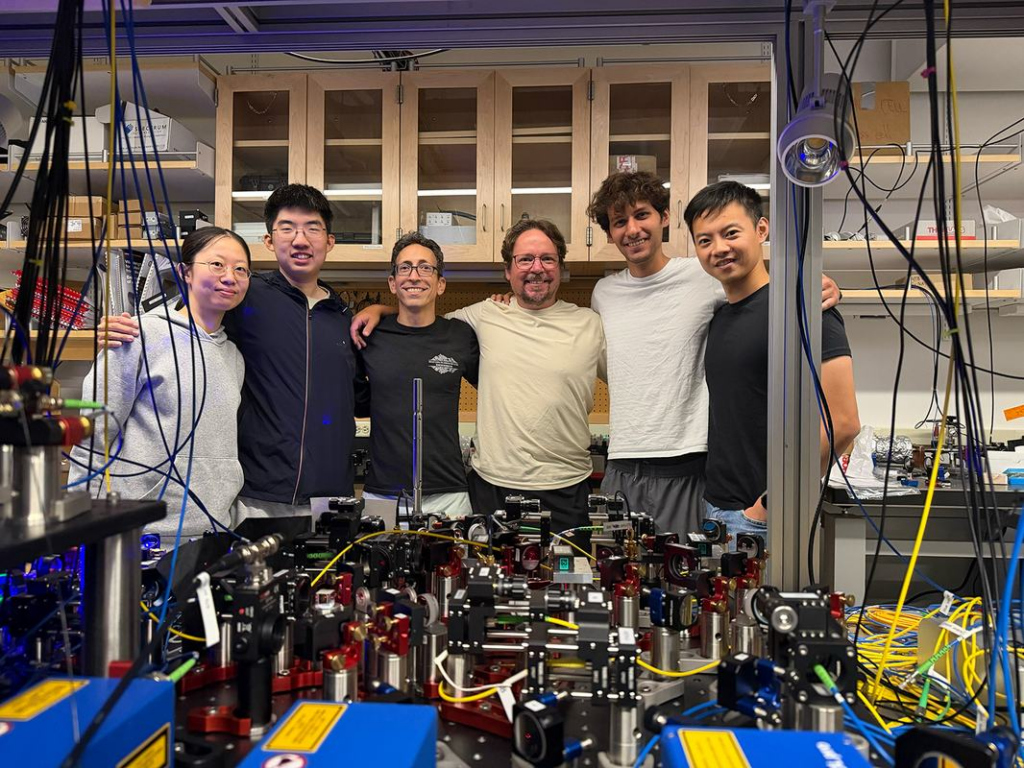
  • Caltech Team Achieves First Direct Measurement of 2D Conformal Field Theory Spectra on a Cold-Atom Quantum Simulator Manuel Endres's experimental group and Jason Alicea's theoretical group at Caltech, in collaboration with theorists from Université Paris-Saclay and Technical University of Munich, have achieved the first direct experimental measurement of finite-size excitation spectra of two-dimensional conformal field theory (CFT) on a neutral-atom quantum simulator[9]. Previously, CFT spectra were only obtained through numerical or analytical calculations. This experiment validates CFT predictions and opens a new pathway for using quantum simulators to study strongly correlated systems. Impact: provides an experimental platform for CFT in condensed matter and high-energy physics, potentially accelerating understanding of quantum critical phenomena; however, it remains far from fault-tolerant quantum computing—the current SOTA for the neutral-atom route is QuEra's 96 logical qubits, and this experiment is physical simulation rather than error-corrected computation.

Superconducting

  • Rigetti Establishes Dedicated Systems Delivery Division, Separating Commercial Deployment from Core R&D Rigetti Computing has reorganized its operational structure, creating a Systems Delivery organization responsible for manufacturing, commercial sales, and customer engineering, while hardware R&D is consolidated into a separate division[10]. The move aims to scale field deployments, but no specific qubit counts or fidelity data were disclosed. Technical implications: the superconducting route is further dividing labor on the engineering side, but Rigetti's current publicly disclosed two-qubit gate fidelity is approximately 99.5% (Cepheus-1, 108 qubits), still short of Google Willow's surface code threshold of Λ≈2.1. Landscape impact: for Rigetti customers, delivery efficiency may improve; however, the company's stock price is sensitive to organizational changes, and subsequent quarterly deployment numbers warrant attention.

Other

  • Metallic Particles Limit Quantum Circuit Coherence Research has found that metallic particles in solid-state devices cause decoherence, a key factor limiting quantum system performance[19]. The result does not provide specific quantitative metrics, but it highlights that materials engineering remains a common bottleneck for both superconducting and spin qubit routes—current superconducting T1 is approximately 100 µs, and spin qubit T2 is approximately 10–100 µs, with particulate impurities potentially further suppressing these values.
03Algorithms

Algorithms & Software

Quantum Algorithms & Simulation

  • CNRS Researchers Construct New Lie Group Path Integral Framework for Quantum Systems CPHT-RR020.072026 details advances in quantum dynamics on Lie groups, constructing path integrals for transition amplitudes[14]. This framework may provide a unified treatment of quantum evolution under symmetry constraints, offering mathematical tools for quantum simulation and quantum field theory. Technical implications: a theoretical methodology innovation; novelty pending verification; still some distance from practical algorithms.
  • Sparse Interactions Simplify Learning of 8-Qubit Time-Dependent Hamiltonians For characterizing time-dependent quantum processor Hamiltonians, exploiting sparse interactions can simplify the learning task[15]. This work targets an 8-qubit scale, far below current neutral-atom systems with 1,180 physical qubits or ion-trap systems with 98 qubits, but provides algorithmic approaches for quantum calibration.
  • NIAR Demonstrates Quantum Fisher Information Improves Quantum Continual Learning Using quantum Fisher information (QFI) for elastic weight consolidation in variational quantum classifiers mitigates catastrophic forgetting[16]. The result does not report specific performance improvement magnitudes, but provides a regularization method for quantum machine learning.
  • Tensor Networks Solve Complex Advection-Diffusion-Reaction Equations Researchers at Aalborg University and University of Porto have developed tensor network methods using quantum-inspired representations to solve partial differential equations[21]. The method may be more efficient than classical numerical approaches for high-dimensional problems, but no specific speedup ratios or error comparisons were reported.
04Industry

Industry & Ecosystem

Funding & Listings

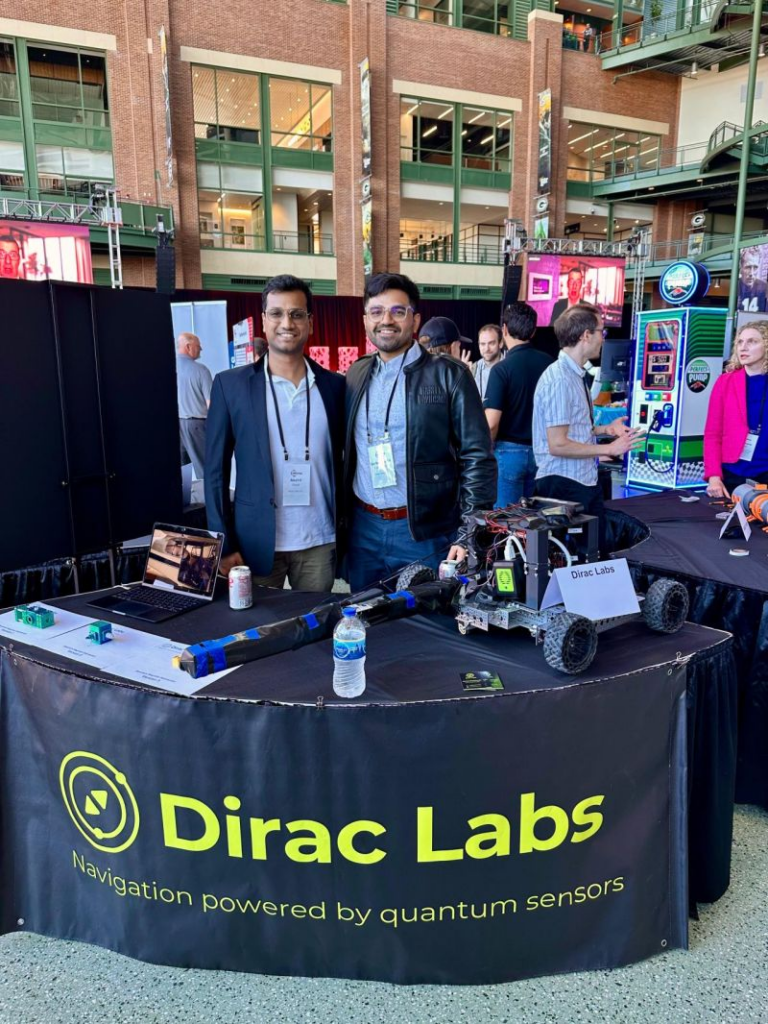
  • Dirac Labs Secures $1.8 Million Pre-Seed Round Dirac Labs, a University of Wisconsin–Madison spin-off, has completed a $1.8 million pre-seed financing round led by TitletownTech (a joint venture between Microsoft and the Green Bay Packers), with additional investors including Automotive Ventures and Riceberg Ventures[11]. Funds will be used for prototyping and field testing of diamond quantum positioning sensors. Commercial implications: quantum sensing has clear demand in navigation (GPS-denied environments), but diamond NV-center sensor sensitivity and cost have not yet reached the threshold for large-scale adoption in automotive or defense applications.
  • Pasqal-Bleichroeder Shareholder Vote Set for August 25 Following previous reports, the SPAC merger between Pasqal and Bleichroeder Acquisition Corp. II (Nasdaq: BBCQ) will proceed to a shareholder vote on August 25[39]. Incremental information: the specific voting date has been confirmed. If approved, Pasqal will become a publicly listed quantum computing company, though post-SPAC-merger stock performance has generally been weak, and redemption rates warrant attention.

Partnerships & Education

  • Superpositions Partners with EBU Luxembourg European quantum software company Superpositions has entered a strategic educational partnership with the European Business Institute of Luxembourg (EBU) to incorporate quantum computing and hybrid quantum-classical algorithms into business school curricula[12]. Commercial implications: quantum skills training is expanding from physics departments to business schools, building talent reserves for future quantum finance applications.
  • FormationQ Partners with STFC Hartree Centre Quantum enablement company FormationQ is collaborating with the UK's STFC Hartree Centre to drive commercial adoption of quantum computing and HPC across UK industry, the public sector, and research institutions[13]. The partnership did not disclose specific funding amounts or project counts, but the Hartree Centre is a UK national-level HPC facility that may provide compute resources and user channels.
  • GMV Builds Broad Quantum Portfolio Spanish company GMV is building a quantum portfolio across computing, space, communications, and cybersecurity domains[42]. Specific products and customers were not disclosed, but this indicates European systems integrators are actively positioning in quantum technologies.
  • Quantinuum Expands Albuquerque Research Operations Following previous reports, Quantinuum is expanding research operations in Albuquerque, New Mexico[41]. Incremental information: this expansion has received endorsement from the State of New Mexico and the City of Albuquerque. Specific scale or new positions were not disclosed, but it indicates the ion-trap route is expanding in the US.
  • Symmatrics Appoints Joe Reddix as VP of Federal Symmatrics has appointed Joe Reddix as Vice President of Federal, responsible for quantum security modernization[40]. Commercial implications: quantum security companies are strengthening sales capabilities targeting the US federal government, which is an early adopter of quantum security.
  • Quanome Technologies Forms Global Quantum Advisory Board Quanome Technologies has established an advisory board to provide guidance on quantum technologies[37]. Member names were not disclosed, but it indicates the company is seeking external technical endorsement.
05Other

Academic Frontier

Quantum Information Theory

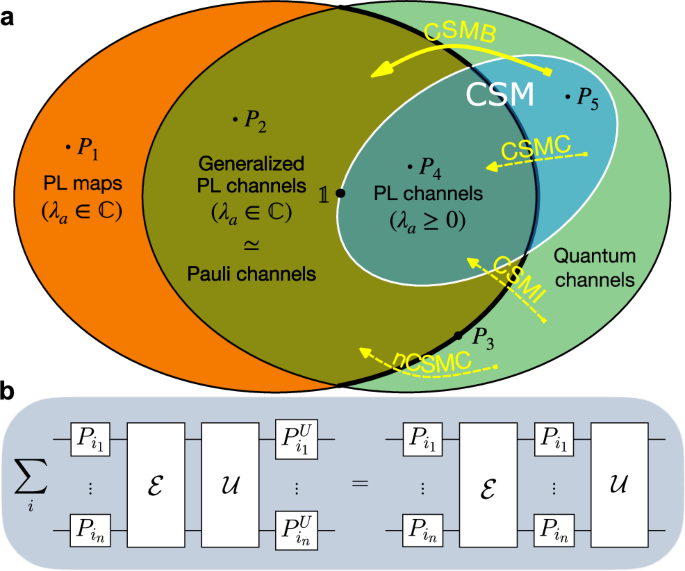
  • Pauli Twirling Induces Non-Markovianity A paper published in npj Quantum Information shows that Pauli twirling can induce non-Markovian dynamics[6]. Technical implications: this result has direct impact on noise models in quantum error correction—Pauli twirling is typically assumed to simplify noise to Markovian form, but this finding suggests it may introduce non-Markovian effects. Landscape impact: error correction schemes relying on Pauli twirling (such as surface codes) may need to reassess noise assumptions.
  • Quantum Reference Frame Relations Study A paper published in Quantum clarifies the relationships among perspectival neutrality, algebraic, and effective quantum reference frames[27]. This work provides a unified framework for symmetry treatment in quantum gravity and gauge theory, with greater theoretical significance than near-term applications.
  • Super Mutual Information Captures Operator Correlations Introducing one-particle and two-particle super reduced density matrices and super mutual information (SMI) enables direct quantification of coupling between operators on different single-mode subspaces[18]. This framework provides a new tool for analyzing many-body quantum systems.
  • Non-Hermitian Holographic Flow and Little Rip Cosmology Spain's IFT UAM/CSIC maps non-Hermitian holographic flow to Little Rip cosmological models, revealing new physical regimes inside black holes[25]. This is theoretical work at the intersection of quantum gravity and cosmology, far from experimental verification.
  • Positive Translation-Invariant Solutions on Cayley Trees A proof that the mixed Ising-XY model on a second-order semi-infinite rooted Cayley tree admits a unique positive translation-invariant solution, ensuring a unique quantum Markov chain[26]. A mathematical physics result providing rigorous foundations for quantum statistical mechanics.
  • Adiabatic Light-Matter Coupling for Excited State Preparation A paper published in npj Quantum Information demonstrates excited state preparation on quantum computers via adiabatic light-matter coupling[4]. This method may offer new pathways for quantum chemistry simulation, though no specific molecules or accuracy levels were reported.
  • Polarization Entanglement Recovery from Solid-State Photon Sources Following previous reports, a Technion team has demonstrated a method for recovering polarization entanglement from solid-state photon sources[23]. Incremental information: the new paper was published in npj Quantum Information[5], presenting a time-dependent photon control scheme. Technical implications: solid-state quantum dot photon sources typically suffer from fine-structure splitting that degrades entanglement; this scheme can restore entanglement, with utility for quantum communication and distributed quantum computing.
06Impact

Today's Impact

  • Crypto4A Certification Drives Quantum-Safe Hardware Procurement The world's first FIPS 140-3 Level 3 quantum-safe HSM certification[8] provides government and enterprise buyers with a clear compliance benchmark for quantum-safe hardware procurement, potentially accelerating post-quantum cryptography migration.
  • Dirac Labs Funding Validates Quantum Navigation Market The $1.8 million pre-seed round, though small, comes from a Microsoft-affiliated fund, indicating potential demand for quantum sensing in navigation and positioning[11].
  • Pasqal Shareholder Vote Approaches The August 25 vote will determine whether the neutral-atom route gains another publicly listed company. If approved, Pasqal will become yet another publicly traded quantum computing company[39].
  • Quantum Education Penetrates Business Schools The Superpositions-EBU partnership[12] means future finance professionals will encounter quantum algorithms earlier, potentially fostering talent for quantum finance applications.
  • Rigetti Reorganization Signals Accelerated Deployment Separating systems delivery from R&D[10] may improve customer field deployment efficiency, though attention is needed on whether long-term R&D investment is affected.
07Other

Editor's Note

Today's news traces a clear trajectory of quantum technology moving from the laboratory toward compliance and commercialization. Crypto4A's FIPS 140-3 certification is not merely a product milestone—it marks post-quantum cryptography migration entering a verifiable phase. When security hardware has independent certification, procurement parties can confidently replace existing cryptographic infrastructure. Meanwhile, Dirac Labs' funding and Pasqal's shareholder vote remind us that quantum technology companies are pursuing diverse capital pathways: small, focused sensing startups coexist with large SPAC mergers. Notably, quantum education is beginning to penetrate business schools, which may accelerate industrial adoption more effectively than training quantum physicists alone, since finance and management talent will understand the commercial value of quantum algorithms earlier. However, on the hardware front, today lacked SOTA-refreshing advances—Rigetti's organizational adjustment and Caltech's CFT measurement are not performance breakthroughs—indicating that quantum computing remains in an engineering-focused phase, still years away from fault-tolerant practical utility.