Pasqal Lists on Nasdaq
Neutral-atom quantum computing company Pasqal has completed its SPAC merger with Bleichroeder Acquisition Corp. II and begins trading today on Nasdaq under ticker PSQL, with an enterprise valuation of approximately $2 billion and $360 million in cash[13][28][47]. Commercial implication: following IonQ and Rigetti, another pure-play quantum computing company has gone public, providing a public-market valuation anchor for the neutral-atom route. Strategic impact: the capital exit path is clear and may accelerate IPOs of other quantum companies; however, post-SPAC share price volatility risk warrants attention.
Pasqal Board Announced
Pasqal announced its board of directors ahead of the listing[44]. Commercial implication: governance structure is complete, paving the way for institutional investor entry. Strategic impact: governance standardization for neutral-atom route companies enhances market confidence.
Infleqtion Receives NASA Follow-On Contract
Infleqtion has received a $20 million NASA follow-on contract to advance the quantum gravity gradiometer pathfinder mission, bringing total funding to $40 million[10]. Technical implication: entering the next hardware phase, space-based quantum gravity sensing is moving from concept to engineering. Strategic impact: quantum sensing in aerospace receives sustained funding, validating feasibility of space deployment, with a 3–5 year timeline.
Q-CTRL GPS-Free Quantum Navigation Sea Trial
Q-CTRL has completed the world's first open-water demonstration of GPS-free quantum gravity navigation in the Coral Sea, achieving 1-nautical-mile positioning accuracy on a 29-meter vessel[11]. Technical implication: quantum gravity navigation has moved from the laboratory to real ocean environments, with bounded accuracy. Strategic impact: provides a new solution for GPS-denied navigation, with significant potential in military and civilian maritime markets, but accuracy improvement and miniaturization are needed.
California Quantum Workforce Network
California has allocated $9.7 million to build a Southern California quantum workforce and industry network[40]. Commercial implication: regional quantum ecosystem investment to cultivate talent and supply chains. Strategic impact: interstate quantum competition in the U.S. intensifies, and California consolidates its quantum talent advantage.
Quantum Legal Market Concentration
Three law firms account for nearly two-thirds of recorded quantum legal work[41]. Commercial implication: legal services in the quantum sector are highly concentrated, with high professional barriers. Strategic impact: quantum companies' legal needs are growing, and specialized law firms have established first-mover advantages.
Quantum-Safe Cross-Chain Protocol
Postquant Labs has launched QuipSwap, a bridge-less cross-chain swap protocol that the company says is designed to eliminate bridge vulnerabilities and mitigate quantum decryption risks[5]. Commercial implication: provides quantum-safe transactions for multi-blockchain workflows without centralized intermediaries. Strategic impact: blockchain quantum security solutions are moving from theory to product, but ecosystem adoption is needed.
Quantum-Safe Bitcoin Transaction
StarkWare says the first quantum-safe Bitcoin transaction was mined on mainnet on August 26, resisting quantum attacks without a soft fork[22]. Commercial implication: Bitcoin holders can securely store and transfer assets without changing protocol rules. Strategic impact: provides a path for Bitcoin quantum migration, but network-wide upgrade still takes time.
Quantum Laser Funding
Quintessent has raised a $40 million Series A round and begun sampling DWDM comb lasers,[20] positioning them as a new light source for AI clusters. Commercial implication: optical interconnects are a key data center component, but[20] does not mention any use of the product in quantum data centers, nor power consumption or cost-benefit. Strategic impact: the data center optical interconnect supply chain receives capital support, but product maturity remains to be validated.
India Quantum University
Andhra Pradesh has approved India's first quantum and AI university campus, to be established by NIELIT with 100% government funding[12]. Commercial implication: India's quantum talent cultivation is entering a scaling phase. Strategic impact: global quantum talent competition intensifies, and India may become a quantum workforce supplier.
Finland Defense Technology Hub
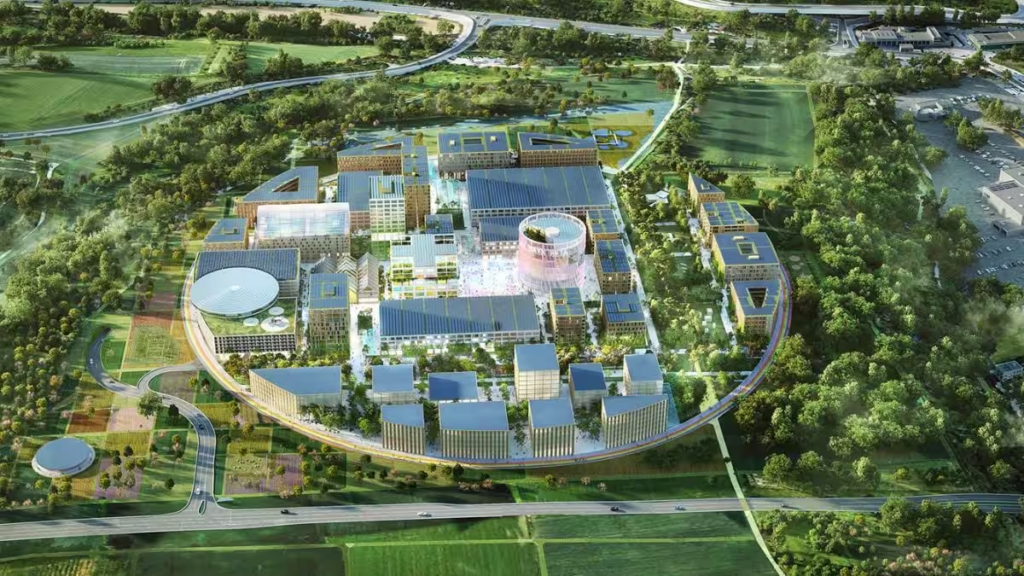
The City of Espoo and Enter Espoo are expanding a defense technology hub, bringing together more than 100 companies, research institutions, and defense stakeholders, covering quantum computing, space SAR satellites, and autonomous systems[8]. Commercial implication: a dual-use deep-tech ecosystem with quantum computing as a core direction. Strategic impact: European defense quantum technology accelerates, and Finland becomes a Nordic quantum hub.
Quantum-Ready Infrastructure
A guest article emphasizes that quantum readiness must begin with infrastructure surrounding the QPU[42]. Commercial implication: quantum computing deployment requires not only processors but also cryogenics, control, networking, and other supporting systems. Strategic impact: infrastructure suppliers see opportunities, but standards remain undefined.
Quantum Computer Types Overview
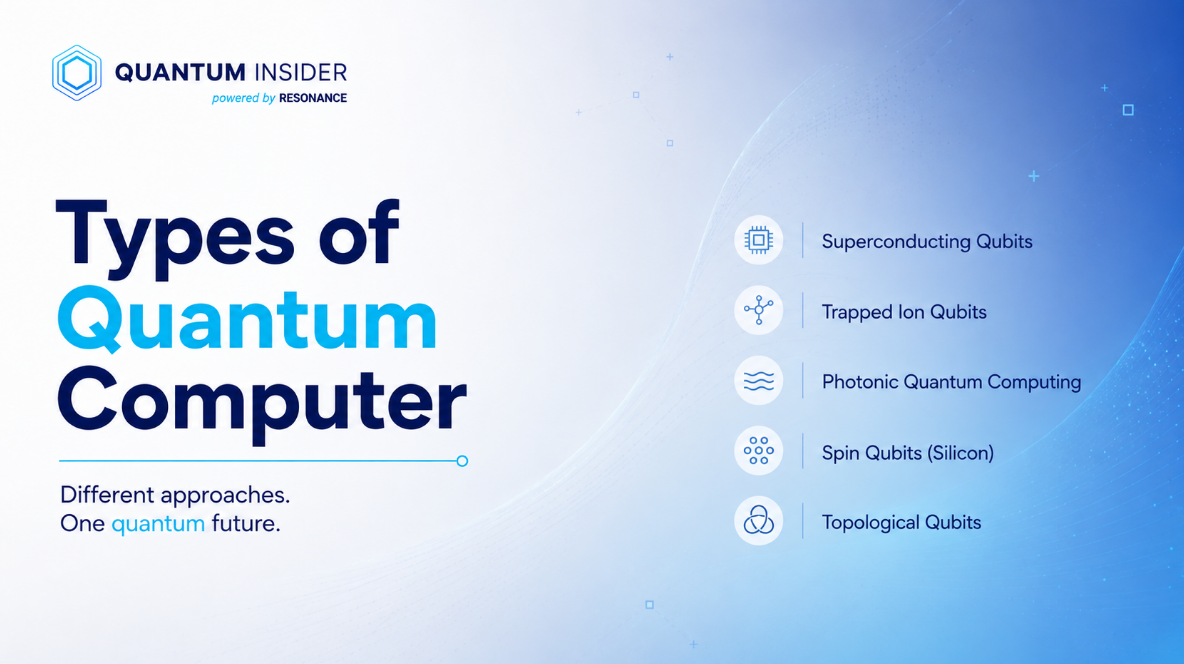
An article introduces six major quantum computing approaches[43]. Commercial implication: educational content to help investors understand differences among technology routes. Strategic impact: raises market awareness, but no direct commercial impact.
Bridgewater State University Quantum Lab
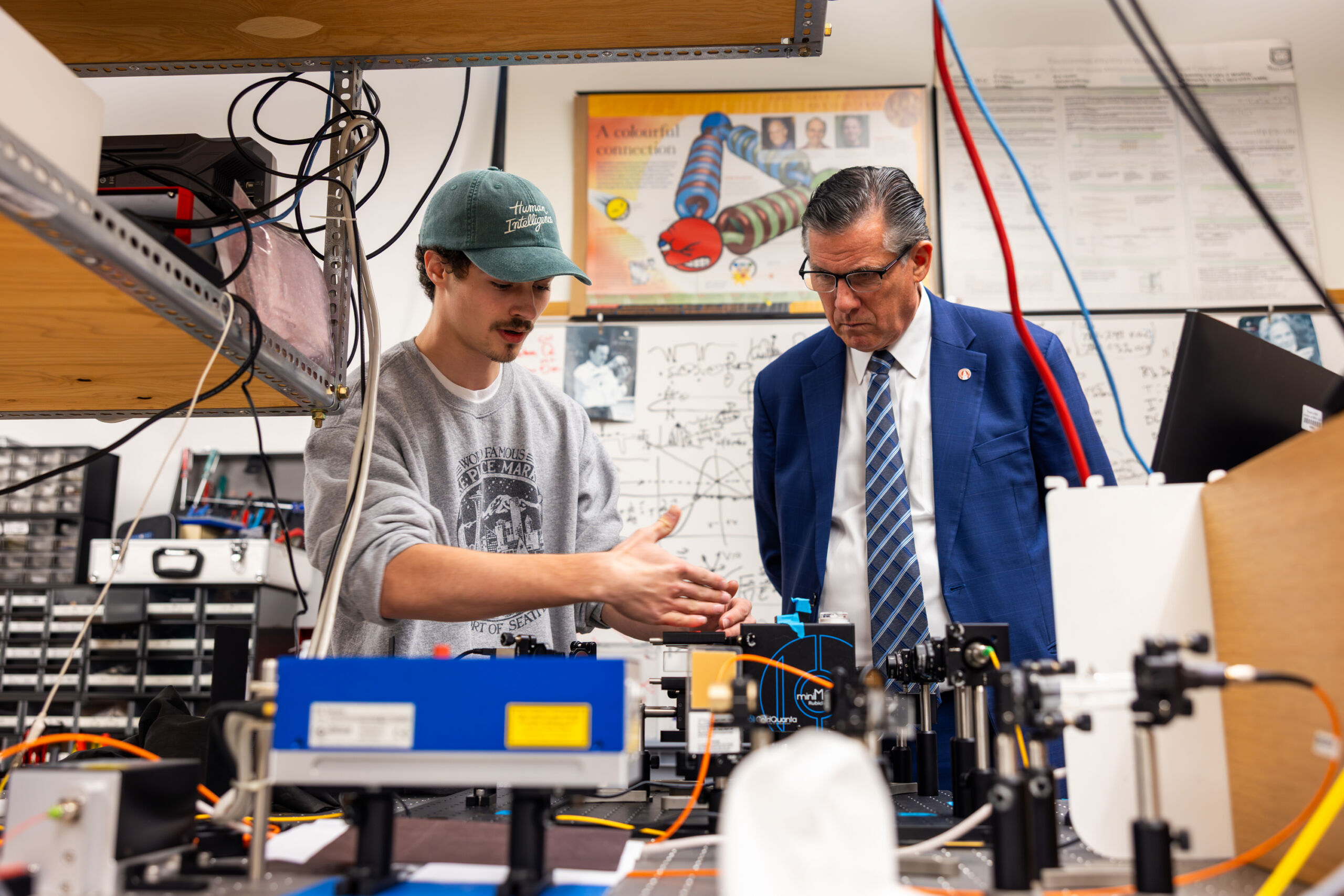
Bridgewater State University has received a $380,000 MassTech grant to purchase three commercial-grade quantum systems for undergraduate education[6]. Commercial implication: the quantum education equipment market is growing. Strategic impact: cultivates the quantum workforce, but the amount is small.
UCLA Quantum Computing Institute
UCLA computer scientists play key roles in a $75 million quantum computing program, with two professors, Jason Cong and Jens Palsberg, each co-leading two different institutes, each funded by NSF at $37.5 million over five years[16]. Commercial implication: federal funding supports foundational quantum computing research. Strategic impact: the U.S. quantum research network expands, and UCLA becomes an important node.
University of Maryland Quantum Simulation Institute
The University of Maryland's Robust Quantum Simulation Institute has received a $37.5 million NSF grant[17]; whether this grant is one of the two $37.5 million institutes described in[16] is not stated in the source, and there is a possibility of double counting. Commercial implication: foundational quantum simulation research receives long-term funding. Strategic impact: the quantum simulation roadmap accelerates and may spawn new algorithms.
Quantum Laser Auto-Tuning
QuEra reports that Anthropic's Claude agent wrote software that recovers a critical laser system, reducing subsystem recovery from expert-operated minute-scale to second-scale[19][45]. Commercial implication: operational costs decrease and system availability improves. Strategic impact: automated operations and maintenance of quantum computers becomes a trend, reducing expert dependency.
Quantum Network Wireless Link
A 161-mile free-space optical link has been established among Brookhaven National Laboratory, Stony Brook University, and Yale University, adding a wireless component to the longest U.S. quantum network[27]. Technical implication: the first permanent free-space quantum link, spanning Long Island and the New York metropolitan area. Strategic impact: quantum networks extend from fiber to free space, paving the way for intercity quantum communication.