Aug 27, 2026 – Aug 28 · Daily Brief

Bitcoin can defend against quantum coin theft without changing its rules

52 items · 10 sourcesPDFThis issue's roundup is free
02Hardware

Hardware Frontier

Silicon Spin Qubits

Diraq has published a roadmap targeting the integration of more than 2 million spin qubits on a single silicon chip by 2031[25]. The roadmap is based on silicon spin qubits, and details on compatibility with existing semiconductor fabrication lines were not disclosed. Technical implication: if realized, this would lift spin qubits from current device-scale levels by multiple orders of magnitude, reaching the million-scale physical qubit count required for fault tolerance. Strategic impact: a strong boost for the silicon-based route, potentially attracting more foundry and equipment vendor collaboration; however, the timeline is five years, and the shortfall of spin qubit N_ops at only 10²–10³ must be addressed (internal SOTA baseline, not from today's sources).

Quantum Dot Hole Spins

Hole spin qubits in silicon have achieved 99.8% accuracy on a standard silicon process,[18] without specifying which gate type the figure corresponds to. Compared with SOTA: spin quantum dot F₁Q leaders are at ≥99.9% (internal SOTA baseline: Diraq reports 99.85% @1K). If the 99.8% figure is for single-qubit gates, it is close to the leaders but does not set a new record; hole spins are more compact due to all-electrical control but are more affected by disorder. What is still missing: two-qubit gate fidelity was not disclosed, and N_ops is low, leaving an orders-of-magnitude gap to fault tolerance.

Magnetically Levitated Qubit Chip

A new chip uses magnetic levitation to position electron-on-neon qubits, avoiding random defects in nanoscale features[21]. Technical implication: magnetically levitated precise positioning of qubits may improve yield and uniformity. Strategic impact: a process improvement for the electron-on-neon route, but that route is still in early stages and far from practical use.

Mid-Infrared On-Chip Light Source

A lithium niobate optical parametric oscillator generates 22 THz mid-infrared light on-chip with voltage control[23]. Technical implication: an on-chip voltage-tunable optical parametric oscillator can output mid-infrared light for spectroscopy and sensing. Strategic impact: provides a new light source for quantum sensing, but integration level and power remain to be validated.

Vibration-Enhanced Coherence

Harvard researchers used mechanical vibrations (acoustic waves) to enhance qubit coherence[24]. Technical implication: acoustic wave coupling can protect quantum information and extend coherence time. Strategic impact: offers a new approach for coherence improvement across multiple platforms, but the specific improvement factor was not disclosed.

High-Energy X-Ray Quantum Sensing

Higher-energy X-rays may enable new forms of quantum sensing[46]. Technical implication: laser irradiation of certain atoms can produce high-frequency pulses in the X-ray band, breaking through the energy upper limit predicted by previous theoretical models. Strategic impact: opens a new frequency band for quantum sensing, but remains at proof-of-concept stage.

03Algorithms

Algorithms and Software

Real-Time Error Correction Decoding

IonQ has completed end-to-end real-time quantum error correction decoding on a single Apple M4 Max CPU (12 cores), handling MegaQuOp-scale workloads[14]. Technical implication: a MegaQuOp-scale real-time decoding demonstration on a consumer-grade CPU, where decoding previously required specialized hardware or GPU clusters. Strategic impact: the pipeline targets large-scale trapped-ion quantum computers, substantially lowering the hardware barrier for error correction decoding and making it possible to integrate error correction into quantum computing systems, with a 1–2 year timeline.

Quantum Simulation Software Funding

French company ColibriTD has completed a €4 million ($4.66 million) seed round led by Earlybird Venture Capital, to expand multiphysics quantum simulation software[7]. Technical implication: algorithm stack expansion, focused on multiphysics simulation. Strategic impact: a European quantum software startup receives capital support, but the amount is small and the commercialization path remains to be validated.

Quantum Machine Learning for Cardiac Prediction

Florida Atlantic University has developed a quantum machine learning framework for heart disease prediction with over 90% accuracy[15]. Technical implication: quantum machine learning achieves over 90% accuracy on medical prediction,[15] with no comparison against classical machine learning disclosed. Strategic impact: early validation of quantum algorithms on medical data, but dataset size and quantum advantage remain unclear.

Molecular Simulation Encoding Breakthrough

Researchers have designed a distance-5 GSE code for molecular simulation, achieving code distance 6 on a 20-mode instance, surpassing the previous distance-3 encoding scheme[26]. Technical implication: code distance improved from 3 to 6,[26] with no logical error rate data provided; actual improvement depends on physical error rates being below threshold. Strategic impact: provides stronger encoding for fault-tolerant quantum chemistry simulation, but hardware implementation still needs to be matched.

Quantum Simulation of EUV Lithography

Xanadu and Mitsubishi Chemical are extending quantum simulation of extreme ultraviolet lithography[29]. Technical implication: quantum algorithms simulate semiconductor lithography processes, potentially optimizing light sources and photoresists. Strategic impact: quantum computing enters core chip manufacturing processes; if validated, it could shorten lithography process development cycles.

04Industry

Industry and Ecosystem

Pasqal Lists on Nasdaq

Neutral-atom quantum computing company Pasqal has completed its SPAC merger with Bleichroeder Acquisition Corp. II and begins trading today on Nasdaq under ticker PSQL, with an enterprise valuation of approximately $2 billion and $360 million in cash[13][28][47]. Commercial implication: following IonQ and Rigetti, another pure-play quantum computing company has gone public, providing a public-market valuation anchor for the neutral-atom route. Strategic impact: the capital exit path is clear and may accelerate IPOs of other quantum companies; however, post-SPAC share price volatility risk warrants attention.

Pasqal Board Announced

Pasqal announced its board of directors ahead of the listing[44]. Commercial implication: governance structure is complete, paving the way for institutional investor entry. Strategic impact: governance standardization for neutral-atom route companies enhances market confidence.

Infleqtion Receives NASA Follow-On Contract

Infleqtion has received a $20 million NASA follow-on contract to advance the quantum gravity gradiometer pathfinder mission, bringing total funding to $40 million[10]. Technical implication: entering the next hardware phase, space-based quantum gravity sensing is moving from concept to engineering. Strategic impact: quantum sensing in aerospace receives sustained funding, validating feasibility of space deployment, with a 3–5 year timeline.

Q-CTRL GPS-Free Quantum Navigation Sea Trial

Q-CTRL has completed the world's first open-water demonstration of GPS-free quantum gravity navigation in the Coral Sea, achieving 1-nautical-mile positioning accuracy on a 29-meter vessel[11]. Technical implication: quantum gravity navigation has moved from the laboratory to real ocean environments, with bounded accuracy. Strategic impact: provides a new solution for GPS-denied navigation, with significant potential in military and civilian maritime markets, but accuracy improvement and miniaturization are needed.

California Quantum Workforce Network

California has allocated $9.7 million to build a Southern California quantum workforce and industry network[40]. Commercial implication: regional quantum ecosystem investment to cultivate talent and supply chains. Strategic impact: interstate quantum competition in the U.S. intensifies, and California consolidates its quantum talent advantage.

Quantum Legal Market Concentration

Three law firms account for nearly two-thirds of recorded quantum legal work[41]. Commercial implication: legal services in the quantum sector are highly concentrated, with high professional barriers. Strategic impact: quantum companies' legal needs are growing, and specialized law firms have established first-mover advantages.

Quantum-Safe Cross-Chain Protocol

Postquant Labs has launched QuipSwap, a bridge-less cross-chain swap protocol that the company says is designed to eliminate bridge vulnerabilities and mitigate quantum decryption risks[5]. Commercial implication: provides quantum-safe transactions for multi-blockchain workflows without centralized intermediaries. Strategic impact: blockchain quantum security solutions are moving from theory to product, but ecosystem adoption is needed.

Quantum-Safe Bitcoin Transaction

StarkWare says the first quantum-safe Bitcoin transaction was mined on mainnet on August 26, resisting quantum attacks without a soft fork[22]. Commercial implication: Bitcoin holders can securely store and transfer assets without changing protocol rules. Strategic impact: provides a path for Bitcoin quantum migration, but network-wide upgrade still takes time.

Quantum Laser Funding

Quintessent has raised a $40 million Series A round and begun sampling DWDM comb lasers,[20] positioning them as a new light source for AI clusters. Commercial implication: optical interconnects are a key data center component, but[20] does not mention any use of the product in quantum data centers, nor power consumption or cost-benefit. Strategic impact: the data center optical interconnect supply chain receives capital support, but product maturity remains to be validated.

India Quantum University

Andhra Pradesh has approved India's first quantum and AI university campus, to be established by NIELIT with 100% government funding[12]. Commercial implication: India's quantum talent cultivation is entering a scaling phase. Strategic impact: global quantum talent competition intensifies, and India may become a quantum workforce supplier.

Finland Defense Technology Hub

The City of Espoo and Enter Espoo are expanding a defense technology hub, bringing together more than 100 companies, research institutions, and defense stakeholders, covering quantum computing, space SAR satellites, and autonomous systems[8]. Commercial implication: a dual-use deep-tech ecosystem with quantum computing as a core direction. Strategic impact: European defense quantum technology accelerates, and Finland becomes a Nordic quantum hub.

Quantum-Ready Infrastructure

A guest article emphasizes that quantum readiness must begin with infrastructure surrounding the QPU[42]. Commercial implication: quantum computing deployment requires not only processors but also cryogenics, control, networking, and other supporting systems. Strategic impact: infrastructure suppliers see opportunities, but standards remain undefined.

Quantum Computer Types Overview

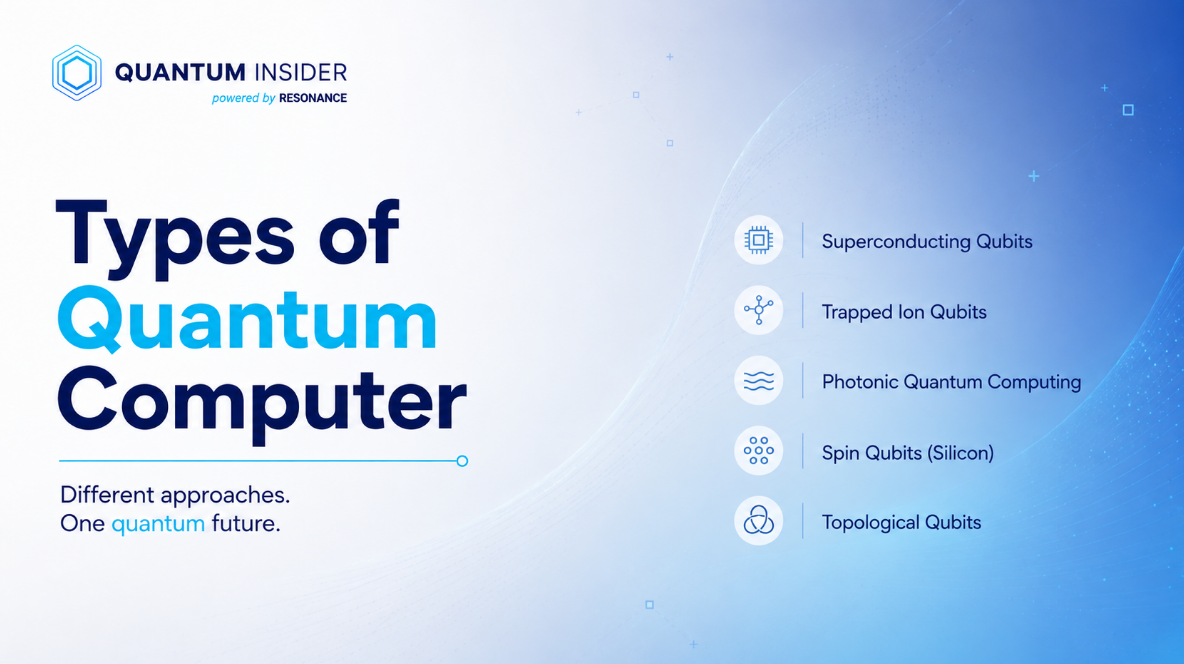
An article introduces six major quantum computing approaches[43]. Commercial implication: educational content to help investors understand differences among technology routes. Strategic impact: raises market awareness, but no direct commercial impact.

Bridgewater State University Quantum Lab

Bridgewater State University has received a $380,000 MassTech grant to purchase three commercial-grade quantum systems for undergraduate education[6]. Commercial implication: the quantum education equipment market is growing. Strategic impact: cultivates the quantum workforce, but the amount is small.

UCLA Quantum Computing Institute

UCLA computer scientists play key roles in a $75 million quantum computing program, with two professors, Jason Cong and Jens Palsberg, each co-leading two different institutes, each funded by NSF at $37.5 million over five years[16]. Commercial implication: federal funding supports foundational quantum computing research. Strategic impact: the U.S. quantum research network expands, and UCLA becomes an important node.

University of Maryland Quantum Simulation Institute

The University of Maryland's Robust Quantum Simulation Institute has received a $37.5 million NSF grant[17]; whether this grant is one of the two $37.5 million institutes described in[16] is not stated in the source, and there is a possibility of double counting. Commercial implication: foundational quantum simulation research receives long-term funding. Strategic impact: the quantum simulation roadmap accelerates and may spawn new algorithms.

Quantum Laser Auto-Tuning

QuEra reports that Anthropic's Claude agent wrote software that recovers a critical laser system, reducing subsystem recovery from expert-operated minute-scale to second-scale[19][45]. Commercial implication: operational costs decrease and system availability improves. Strategic impact: automated operations and maintenance of quantum computers becomes a trend, reducing expert dependency.

Quantum Network Wireless Link

A 161-mile free-space optical link has been established among Brookhaven National Laboratory, Stony Brook University, and Yale University, adding a wireless component to the longest U.S. quantum network[27]. Technical implication: the first permanent free-space quantum link, spanning Long Island and the New York metropolitan area. Strategic impact: quantum networks extend from fiber to free space, paving the way for intercity quantum communication.

05Other

Academic Frontier

Quantum Compression for Biomolecular Docking

Researchers at A*STAR and the National University of Singapore have implemented qubit compression on IBM hardware for structure-based drug discovery, published at arXiv:2608.19868[9]. Technical implication: a hybrid quantum-classical framework compresses the qubit footprint, enabling biomolecular docking to run on existing hardware. Strategic impact: a step forward for practical quantum computing applications in drug discovery, but larger-scale validation is needed.

Real-Time Error Correction Decoding Paper

IonQ's Min Ye, Andrii Maksymov, and Nicolas Delfosse have published an end-to-end real-time QEC decoding pipeline at arXiv:2608.25027, handling MegaQuOp scale on an Apple M4 Max[14]. Technical implication: a MegaQuOp-scale real-time decoding demonstration on a consumer-grade CPU, targeting large-scale trapped-ion quantum computers. Strategic impact: the hardware barrier for error correction decoding is lowered, accelerating fault-tolerant quantum computing research.

Cardiac Prediction Quantum Machine Learning

Research led by Arslan Munir at Florida Atlantic University has developed a quantum machine learning framework with over 90% accuracy in heart disease prediction[15]. Technical implication: accuracy exceeds 90%, with no comparison against classical machine learning disclosed. Strategic impact: early validation of quantum algorithms on medical data, but larger datasets are needed.

Molecular Simulation GSE Code

Researchers have designed a distance-5 GSE code, achieving code distance 6 on a 20-mode instance, surpassing the previous distance-3[26]. Technical implication: code distance improved, with logical error rate data not disclosed. Strategic impact: provides stronger encoding for fault-tolerant quantum chemistry simulation.

Spin Qubit Roadmap

Diraq has published a roadmap targeting 2 million qubits on a single chip by 2031; the publication channel was not specified[25]. Technical implication: the silicon spin route's scaling path is clarified. Strategic impact: attracts semiconductor industry collaboration, but coherence time and gate fidelity issues must be addressed.

Hole Spin Fidelity

Hole spin qubits in silicon have achieved 99.8% accuracy, with gate type unspecified[18]. Technical implication: close to leading levels, but two-qubit gates were not disclosed. Strategic impact: the feasibility of the hole spin route is enhanced.

High-Energy X-Ray Quantum Sensing

Higher-energy X-rays may enable new forms of quantum sensing[46]. Technical implication: laser irradiation of certain atoms can produce high-frequency pulses in the X-ray band, breaking through the energy upper limit predicted by previous theoretical models. Strategic impact: opens a new frequency band for quantum sensing.

06Impact

Today's Impact

  1. Quantum error correction decoding costs drop sharply: IonQ's real-time decoding on a consumer-grade CPU means small and mid-sized quantum computing systems can also integrate error correction without expensive specialized hardware[14]. Next to watch: whether decoding latency and error rates meet fault-tolerance thresholds.
  2. Quantum company IPO wave continues: Pasqal's Nasdaq debut gives the neutral-atom route public-market pricing and may drive more quantum company IPOs[13][47]. Next to watch: share price performance and follow-on financing.
  3. Quantum navigation moves from lab to ocean: Q-CTRL's successful GPS-free navigation sea trial provides a new solution for GPS-denied environments, with significant potential in military and civilian maritime markets[11]. Next to watch: accuracy improvement and miniaturization progress.
  4. Bitcoin quantum-safe path emerges: the first quantum-safe transaction was mined on mainnet without a soft fork, providing protection for Bitcoin holders[22]. Next to watch: network-wide adoption rate and standardization.
  5. Quantum workforce competition intensifies: California, India, Finland, and others are investing in quantum education and ecosystems, and the global quantum talent race is heating up[40][12][8]. Next to watch: talent mobility and regional cluster effects.
07Other

Editor's Note

The most noteworthy item in this issue is the migration of quantum error correction decoding from specialized hardware down to consumer-grade chips. IonQ's MegaQuOp-scale real-time decoding on an Apple M4 Max not only lowers the hardware barrier but also suggests substantial room for co-optimization between error correction algorithms and classical hardware. If decoding latency can be further compressed, fault-tolerant integration of quantum computers will no longer be the exclusive domain of large laboratories.

Another main thread is the quantum fervor in capital markets. Pasqal's listing at a $2 billion enterprise valuation with $360 million in cash provides a public-market anchor for the neutral-atom route. Together with earlier listings by IonQ and Rigetti, quantum computing companies have formed a tiered public-market presence. However, caution is warranted regarding post-SPAC share price volatility and valuation divergence amid technology route competition. Quantum navigation, quantum security, quantum simulation, and other applications are also accelerating toward deployment, as quantum technology moves from the laboratory into real-world scenarios.