Aug 28, 2026 – Aug 29 · Daily Brief

Quantum fund threshold lowered to $25,000 but still limited to accredited investors

20 items · 6 sourcesPDFThis issue's roundup is free
02Hardware

Hardware Frontier

Photonics

Xanadu signs Canadian federal funding agreement, launches CAD 893 million quantum manufacturing facility Photonic quantum computing company Xanadu (NASDAQ/TSX: XNDU) has signed a final agreement with the Canadian government, securing CAD 195 million (USD 140.2 million) in federal funding through the Strategic Response Fund, which anchors the CAD 893 million (USD 642.2 million) "Inception" quantum manufacturing facility project[6]. Technical implications: This is a national-level manufacturing investment by the Canadian government in the photonics route, to be used for scaling production of Xanadu's programmable photonic chips and interconnect architecture, directly targeting production yield and inter-chip loss budgets (photonics route weakness PH-01). Strategic impact: Xanadu, as a publicly listed photonics company, receives national-level capacity endorsement; Canada's quantum manufacturing ecosystem and local supply chain benefit; timeline 3–5 years.

Two-Dimensional Semiconductors

Institute of Metal Research, CAS achieves growth of monolayer MoSi₂N₄ single-crystal films The team led by Wencai Ren at the Institute of Metal Research, Chinese Academy of Sciences, has achieved wafer-scale epitaxial growth of monolayer MoSi₂N₄ single crystals, a high-performance p-type two-dimensional semiconductor, published in Nature Materials on July 8[8]. Technical implications: Obtaining single-crystal p-type two-dimensional semiconductors at wafer scale provides the missing p-type material for complementary metal-oxide-semiconductor (CMOS) integration; prior research on two-dimensional semiconductors has focused predominantly on n-type, and the absence of p-type single-crystal films has constrained the construction of complementary logic circuits. Strategic impact: Two-dimensional materials enter the CMOS process roadmap, with potential implications for the material foundation of cryogenic quantum device control circuits and classical-quantum interface chips; timeline 5+ years.

03Algorithms

Algorithms and Software

Quantum Information Theory

Upper bound of 3 proven for entanglement-breaking index of a large class of PPT maps Researchers have proven that every positive partial transpose (PPT) map now possesses a definite finite entanglement-breaking index, resolving a long-standing challenge in quantum information theory; previously requiring restrictive assumptions, the entanglement-breaking index of this large class of maps has now been proven to have an upper bound of 3, independent of dimension[7]. Technical implications: The entanglement-breaking index characterizes how many compositions of a quantum channel are needed to completely destroy entanglement; an upper bound of 3 means that PPT channels within this family become entanglement-breaking after at most three self-compositions, providing a unified tool for quantum channel classification and entanglement quantification. Strategic impact: Affects quantum capacity calculations, channel simulation, and quantum cryptographic security analysis, and provides strong evidence for the PPT-cubed conjecture; timeline immediate.

Open-Source Software

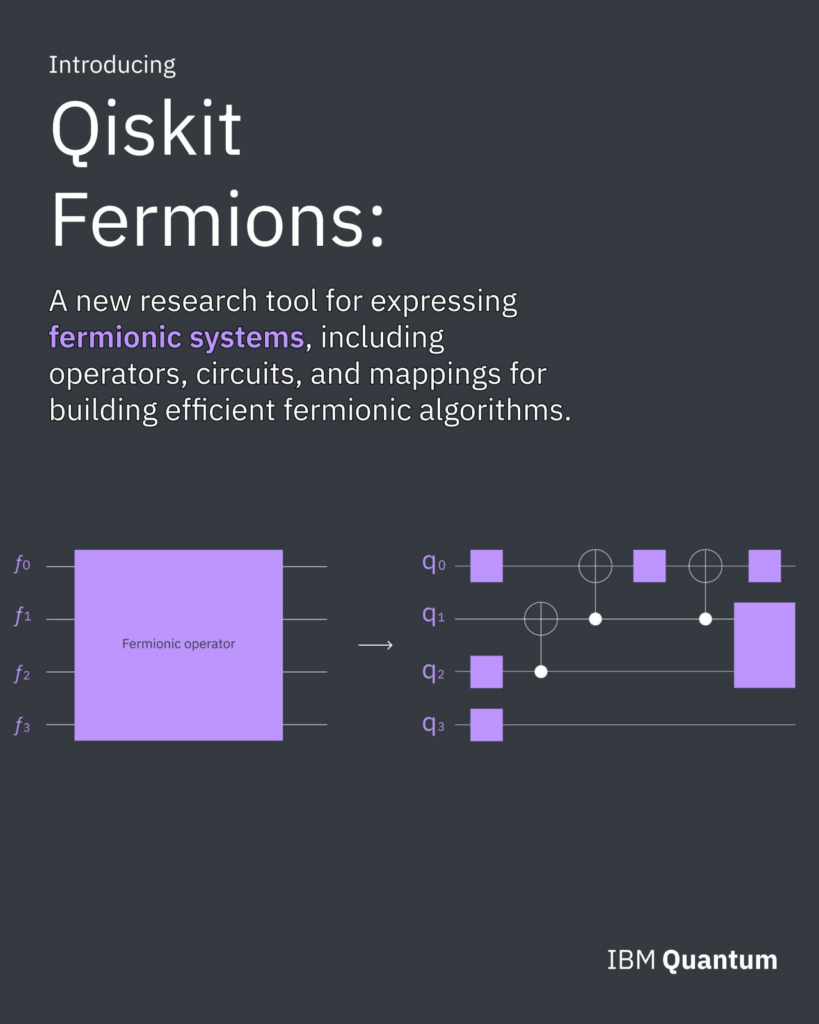
IBM releases Qiskit Fermions 0.1.0 IBM Quantum has officially launched Qiskit Fermions (v0.1.0), an open-source software library and transpiler extension for expressing fermionic operators, constructing domain-specific fermionic circuits, and optimizing mappings to qubit architectures; built on a high-performance Rust core with Python and C bindings[3]. Technical implications: Fills the gap between interacting particle systems and qubit compilation, directly supporting domain-specific expression and transpilation of fermionic operators within the Qiskit ecosystem, capable of preserving system structure (such as particle number conservation and symmetries). Strategic impact: Researchers in quantum chemistry and condensed matter physics gain a more efficient toolchain; IBM's quantum software stack further binds research users; timeline within months.

04Industry

Industry and Ecosystem

Financing and Investment

iAccess Partners and QAI Ventures collaborate to lower quantum VC fund entry threshold Swiss fintech company iAccess Partners has established a strategic partnership with Basel-based venture capital firm QAI Ventures to lower the minimum investment threshold for qualified and professional investors to USD 25,000 through bankable International Securities Identification Numbers (ISINs), expanding access to early-stage quantum technology and advanced computing investments[4]. Business implications: Quantum VC funds are securitized via ISINs, lowering the entry threshold for qualified and professional investors to USD 25,000, expanding the pool of investors who can allocate to this asset class. Strategic impact: Funding channels for quantum startups broaden; European private capital accelerates into the quantum sector; timeline 6–12 months.

Government Funding

New Mexico expands federal matching grants to DARPA QBI Stage C and QuantumEAGLe The New Mexico Economic Development Department's Office of Technology and Innovation (TIO) has expanded its targeted federal matching grant solicitation to include DARPA's Quantum Benchmarking Initiative (QBI) Stage C and the Army Research Office/NSA Physical Sciences Laboratory QuantumEAGLe program, providing matching state funds[5]. Business implications: State-level funding matching reduces the cost of landing federal quantum projects, attracting defense quantum programs to New Mexico. Strategic impact: New Mexico becomes a new player in the competition for quantum defense projects, vying with other states for federal quantum funding; timeline 1–2 years.

Legal and Contracts

Italy's Supreme Administrative Court upholds revocation of IBM Campania quantum contract Italy's highest administrative court has upheld the ruling revoking the EUR 61.2 million Campania quantum contract awarded to IBM[14]. Business implications: IBM faces legal uncertainty on this quantum contract in Italy, and the contract execution timeline is disrupted. Strategic impact: Legal risk in European quantum public procurement rises; suppliers need to strengthen compliance review; timeline within months.

IPO and Personnel

Pasqal's stock price nearly doubles on Nasdaq debut Following the August 28 report of Pasqal's Nasdaq listing, its stock price nearly doubled on the first trading day, closing at USD 19 on Friday[15]. Incremental information: Strong first-day market performance indicates elevated secondary-market sentiment toward the neutral-atom quantum computing route. Strategic impact: Pasqal's market capitalization rises significantly, providing strong currency for subsequent equity financing and M&A; timeline immediate.

Quantum Sky appoints Sean Thompson as Chief Growth Officer Quantum Sky (formerly Tyto Athene, LLC) has appointed Sean Thompson as Chief Growth Officer; he brings over 25 years of defense and federal technology operations executive experience, having served as Chief Growth Officer at CBRE Government & Defense Services and IDEMIA North America, and led Unisys Federal sales[2]. Business implications: Quantum Sky brings in a senior federal sales executive to accelerate government procurement penetration. Strategic impact: Commercialization of the quantum defense sector accelerates; timeline 6–12 months.

Industry Perspectives

Quantum Machines product solutions physicist on classical computing and HPC integration Michaela Eichinger, product solutions physicist at Quantum Machines, stated in an interview with Yuval Boger that classical computing and high-performance computing (HPC) integration will define practical quantum computing[16]. Business implications: The convergence of quantum control stacks and HPC infrastructure becomes a critical path to practical deployment, affecting quantum computing deployment models. Strategic impact: Data centers and cloud service providers need to redesign quantum-classical hybrid architectures; timeline 2–3 years.


05Other

Academic Frontier

Quantum Information Theory

Upper bound of 3 for entanglement-breaking index of a large class of PPT maps Researchers have proven that every positive partial transpose (PPT) map possesses a definite finite entanglement-breaking index, with a large class of maps having an upper bound of 3 independent of dimension[7]. Technical implications: Provides a unified finite upper bound on the entanglement-breaking index of this class of PPT channels without restrictive assumptions, offering strong evidence for the PPT-cubed conjecture, which itself remains unproven. Strategic impact: Provides new tools for quantum channel capacity, entanglement distillation protocols, and quantum cryptographic security analysis.

Two-Dimensional Materials

Wafer-scale epitaxial growth of monolayer MoSi₂N₄ single-crystal films The team led by Wencai Ren at the Institute of Metal Research, CAS, has achieved wafer-scale epitaxial growth of monolayer MoSi₂N₄ single crystals, a high-performance p-type two-dimensional semiconductor, published in Nature Materials[8]. Technical implications: Obtaining single-crystal p-type two-dimensional semiconductors at wafer scale provides the missing p-type material for CMOS integration. Strategic impact: Two-dimensional materials enter the CMOS process roadmap, with potential implications for the material foundation of cryogenic quantum device control circuits and classical-quantum interface chips.

06Impact

Today's Impact

  1. Quantum VC entry threshold lowered: Through ISIN securitization, qualified and professional investors can participate in early-stage quantum funds starting at USD 25,000, broadening funding channels for quantum startups[4]. Next to watch: the fundraising size and investment targets of the first iAccess Partners and QAI Ventures fund.
  2. Photonics manufacturing capacity receives national-level endorsement: Xanadu receives CAD 195 million in Canadian funding for a CAD 893 million manufacturing facility[6]. Next to watch: the facility's production timeline and chip yield and loss budget data.
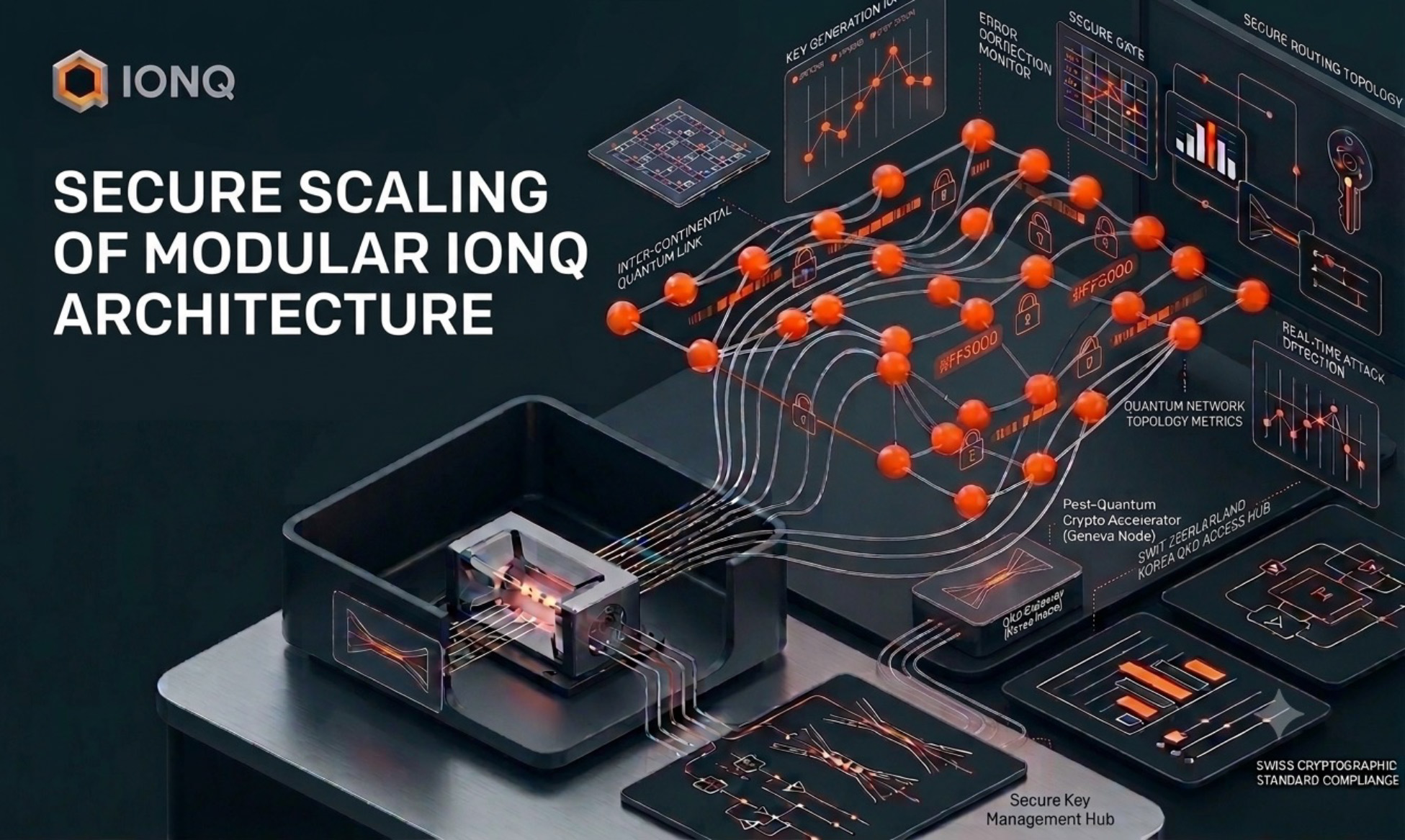
  3. Enterprise quantum security solutions take shape: IonQ releases a quantum security blueprint integrating QKD and PQC[1]. Next to watch: enterprise customer adoption cases and compliance certification progress.
  4. Regional competition for defense quantum projects intensifies: New Mexico expands federal matching grants to DARPA QBI Stage C and QuantumEAGLe[5]. Next to watch: which quantum companies establish facilities or win contracts in the state.
  5. IBM's Italian contract blocked: Court upholds revocation of IBM's Campania quantum contract[14]. Next to watch: whether IBM appeals or adjusts contract terms.
07Other

Editorial Commentary

The capital structure of the quantum industry is shifting from institutional dominance toward broader penetration of qualified and professional investor segments. iAccess and QAI Ventures have lowered the threshold to USD 25,000 via ISINs, and Pasqal's stock nearly doubled on its first trading day—together signaling that quantum assets are being packaged into more readily tradable securities. This brings liquidity dividends, but also tests valuation discipline—secondary-market sentiment may run ahead of technical milestones.

Meanwhile, government funding continues to anchor hardware capacity. Canada's CAD 195 million grant to Xanadu anchors a CAD 893 million photonics manufacturing facility, while New Mexico uses matching funds to compete for defense quantum projects. National competition extends from laboratories to manufacturing bases and supply chains, and the quantum geo-economic landscape is accelerating into shape.