Aug 30, 2026 – Aug 31 · Daily Brief

Quantum computers take another step closer to cracking Bitcoin

39 items · 11 sourcesPDFThis issue's roundup is free
02Hardware

Hardware Frontier

Superconducting

S-Transistors raised €2.6 million (approximately $3 million) in a pre-seed round led by Nordic VC Lifeline Ventures, to build a pilot line for superconducting quantum control motherboards and a cryogenic laboratory[8]. The startup spun out of Finland's VTT Technical Research Centre, targeting control and readout electronics for superconducting quantum computers. With funding in place, the supply-chain bottleneck for superconducting quantum control hardware may ease, though the release gives no mass-production timeline.

Ion Trap

No significant new developments.

Neutral Atom

No significant new developments.

Photonic

CollPlant acquired LightSolver, entering the photonic computing track, with laser processing units (LPUs) as the core asset[11]. LightSolver previously developed photonics-based solvers for optimization problems; CollPlant itself is a biomaterials company, and this cross-sector acquisition marks photonic computing's penetration into vertical applications. Commercially, if LPUs can demonstrate reproducible performance advantages on specific optimization tasks, they will attract financial and logistics customers.

Topological

Researchers used intense circularly polarized 1550 nm light to manipulate electrons in graphene, constructing Floquet topological insulators and controlling their electronic properties[16]. This work dynamically tunes graphene's topological properties via optical fields, providing a new experimental platform for topological qubits and ultrafast electronics. Practical topological qubits still require solving material-defect and coherence-time problems.

03Algorithms

Algorithms and Software

Quantum Error Correction

Researchers constructed quantum error-correcting codes with circuit depth O(log n), compared to the previous best of O(log³ n)[13]. The protocol achieves the same asymptotic rate-distance trade-off under k/n<1, H(d/n), (d/n)log₂3, δ conditions, but with substantially reduced depth. This result compresses the encoding-circuit depth required to achieve the same rate-distance trade-off from O(log³ n) to O(log n), with practical implications for circuit overhead in large-scale fault-tolerant architectures. The next step is validation on real hardware and handling noise.

Quantum Algorithms

A new proof demonstrates unconditional quantum advantage for sampling from constant-depth quantum circuits[23]. This means that, without additional assumptions, shallow quantum circuits surpass classical computers on sampling tasks. The result provides a firmer theoretical foundation for quantum advantage, though the practical application value of sampling tasks remains limited.

Researchers detailed the Pauli propagation algorithm for classical simulation of digital quantum systems[24]. The algorithm may accelerate verification and debugging of quantum computers, with direct tool value for hardware vendors and algorithm developers.

Quantum Software

The most general fragment of ZX-diagrams permitting efficient circuit extraction received a complete set of rewrite rules, enabling fully graphical reasoning[18]. The method simplifies complex diagrams using only flow-preserving rules, a step toward automated quantum circuit optimization. For quantum compiler developers, it can be integrated into existing toolchains.

04Industry

Industry and Ecosystem

Financing and Investment

SEALSQ Corp announced a $24.5 million investment in a pure-play quantum computing company, advancing its SEALQUANTUM program[10]. SEALSQ itself is a post-quantum cryptography chip vendor, and this investment aims to build a quantum-safe ecosystem. Financially, the investment may bring orders and integration opportunities to the investee.

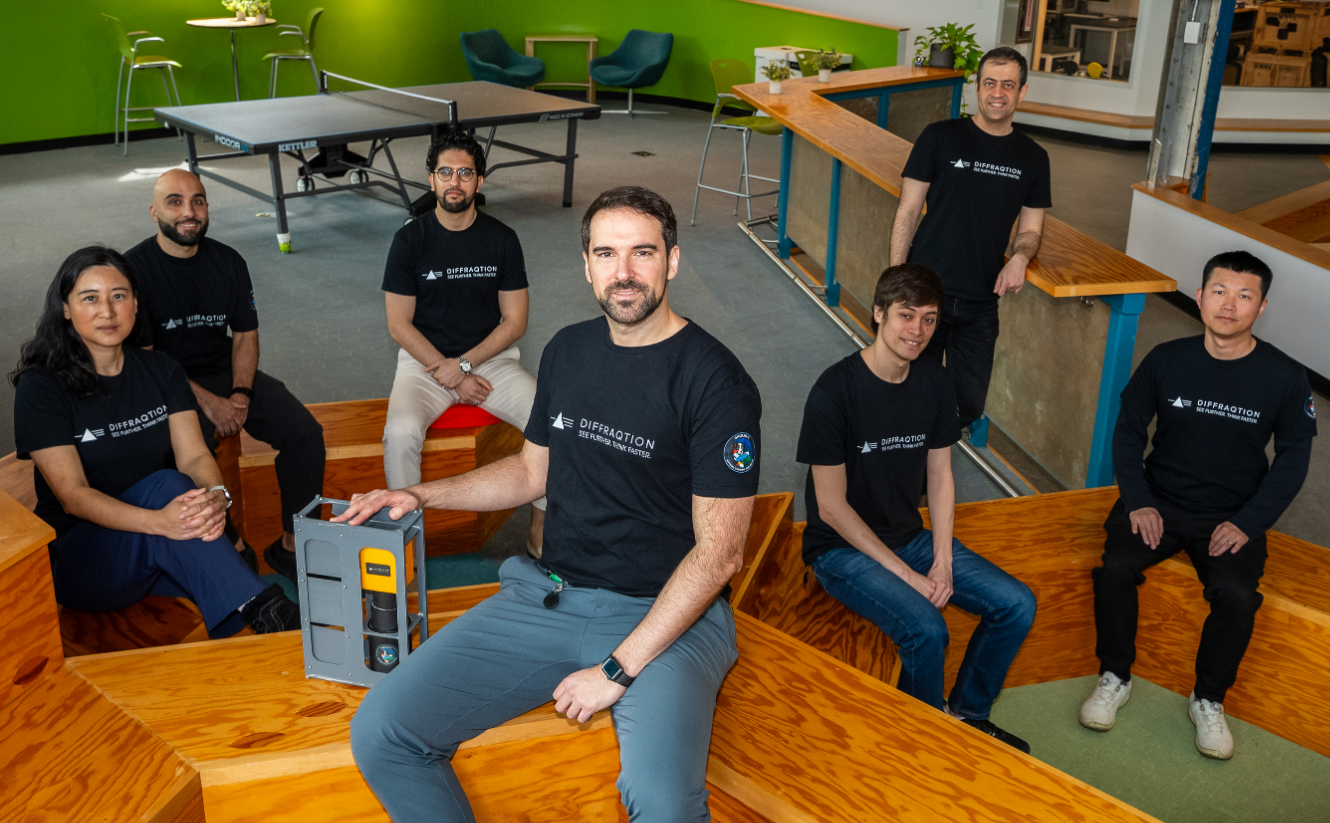
Diffraqtion completed a financing round of over $10 million to develop quantum cameras, with investors including Lockheed Martin Ventures and Presidio[32]. Quantum imaging is used in defense and remote sensing; the entry of defense capital indicates recognized application prospects.

Partnerships and Deployment

Diraq and Equinix (Nasdaq: EQIX) announced plans to deploy a Diraq quantum computer at an Equinix data center in Sydney, Australia[28]. This marks quantum computing's move toward enterprise-grade IT infrastructure, with low-latency access for customers. For Equinix, quantum computing as a differentiated service may attract high-end customers.

Anyon Systems and KMT Technologies formed a partnership to expand quantum computing deployment[29]. KMT is a Matrix Group company; the two call it a strategic partnership, with specific deployment content and regions undisclosed in the release.

Saudi Arabia's KACST (represented by its National Center for Quantum Technology, NCQT) signed a research collaboration agreement with Pasqal on quantum-safe cryptography[33]. Specific research content and technical routes were not disclosed in the release.

Talent and Policy

Atom Computing appointed Kevin Messerle as Chief Financial Officer[30]. A CFO appointment typically signals preparation for fundraising or an IPO; as a leading neutral-atom company, Atom Computing may accelerate capital operations with this move.

Yaqumo was selected for Japan's NEDO R&D program and launched joint research with SCREEN Holdings[36]. Japanese government funding supports quantum-related technologies; SCREEN is a semiconductor equipment manufacturer, and the collaboration may focus on quantum device manufacturing.

05Other

Academic Frontier

Quantum Information Theory

Researchers proved that hidden entanglement vanishes with scale: unrestricted visible entanglement grows at a rate of Ω(N/log N), but disappears in stabilizer subsystems as the number of qutrits tends to infinity[14]. This reveals that distillable quantum information becomes asymptotically invisible under common operational constraints, with far-reaching implications for quantum resource theory.

Quantum Simulation

First-principles calculations identified a possible pathway to 50 K superconductivity in layered nickelates via heterostructure electronic doping[12]. The result provides a route for high-temperature superconducting material design; if experimentally verified, it will influence superconducting qubit material selection.

Researchers exploited the connection between polymer physics and magnetism to establish strengthened theoretical bounds for high-temperature spin-system behavior[15]. This makes previously intractable magnetic-material calculations feasible, with methodological value for quantum materials research.

Quantum Sensing

Using frequency tracking of electron spins in hexagonal boron nitride, researchers increased magnetic-field imaging speed tenfold, from hours to minutes, and achieved micrometer-scale three-dimensional mapping[17]. The technique enables real-time magnetic-field monitoring, with application potential for semiconductor defect inspection and biological imaging.

Quantum Networks

South China Normal University and other institutions developed a high-performance quantum memory for storing high-dimensional qubits[22]. The memory is intended for quantum interconnects, where high-dimensional encoding can increase channel capacity. Practical quantum networks still require solving remote entanglement distribution and storage-lifetime issues.

Quantum Dots

Researchers mapped the energy spectra of up to seven electrons in GaAs quantum dots[21]. This provides foundational data for quantum-dot-based qubit research and helps understand multi-electron spin dynamics.

Quantum Computing Theory

npj Quantum Information published a Publisher Correction on August 31 for the paper "Superiority of Krylov shadow tomography in estimating quantum Fisher information"[4]. This is an erratum notice rather than a new result; the original conclusions should be rechecked against the formal version.

06Impact

Today's Impact

  1. Reduced quantum error-correction overhead: The new O(log n)-depth error-correcting code[13] substantially lowers the theoretical resource requirements for fault-tolerant quantum computers, affecting all hardware routes that rely on error correction, with validation on superconducting and ion-trap platforms possible within the next 2–3 years.
  2. Quantum-security investment heating up: SEALSQ's $24.5 million investment[10] and the Pasqal–KACST collaboration[33] show quantum security shifting from standards-setting to capital and geopolitical positioning; post-quantum cryptography migration may accelerate.
  3. Photonic computing cross-sector consolidation: CollPlant's acquisition of LightSolver[11] indicates that photonic computing's commercial value on specific optimization problems is being recognized; LPU performance benchmarks warrant attention going forward.
  4. Quantum data centers taking shape: Diraq and Equinix plan to deploy a quantum computer at a Sydney data center[28]; if delivered on schedule, enterprise users can access quantum compute nearby, though cooling and operations issues remain to be solved.
  5. Quantum sensing speed gains: Magnetic-field imaging dropping from hours to minutes[17] may be adopted first in semiconductor manufacturing defect inspection, shortening wafer-inspection cycles.
07Other

Editor's Note

The most noteworthy item today is the breakthrough in quantum error-correcting code circuit depth. The improvement from O(log³ n) to O(log n) may look like a mere change in a logarithmic exponent, but for real-time error correction in fault-tolerant quantum computers, it means the overhead of logical operations drops from hypercubic to linear scale—a substantive impact on the feasibility of large-scale systems. Combined with the recent progress by IonQ researchers running MegaQuOp-scale error-correction decoders on a MacBook Pro[35], the software and theoretical bottlenecks in the error-correction stack are being broken down one by one.

On the industry side, cross-sector capital continues to pour in: a biomaterials company acquires a photonic computing startup, defense capital invests in quantum cameras, and data-center giants admit quantum computers. These moves indicate that quantum technology is moving from the lab into concrete application scenarios. But caution is warranted: the gap between pure-play quantum computing companies' valuations and actual revenue remains enormous, and whether SEALSQ's investment can deliver technical synergy rather than merely financial returns remains to be seen.