Quantum Algorithms
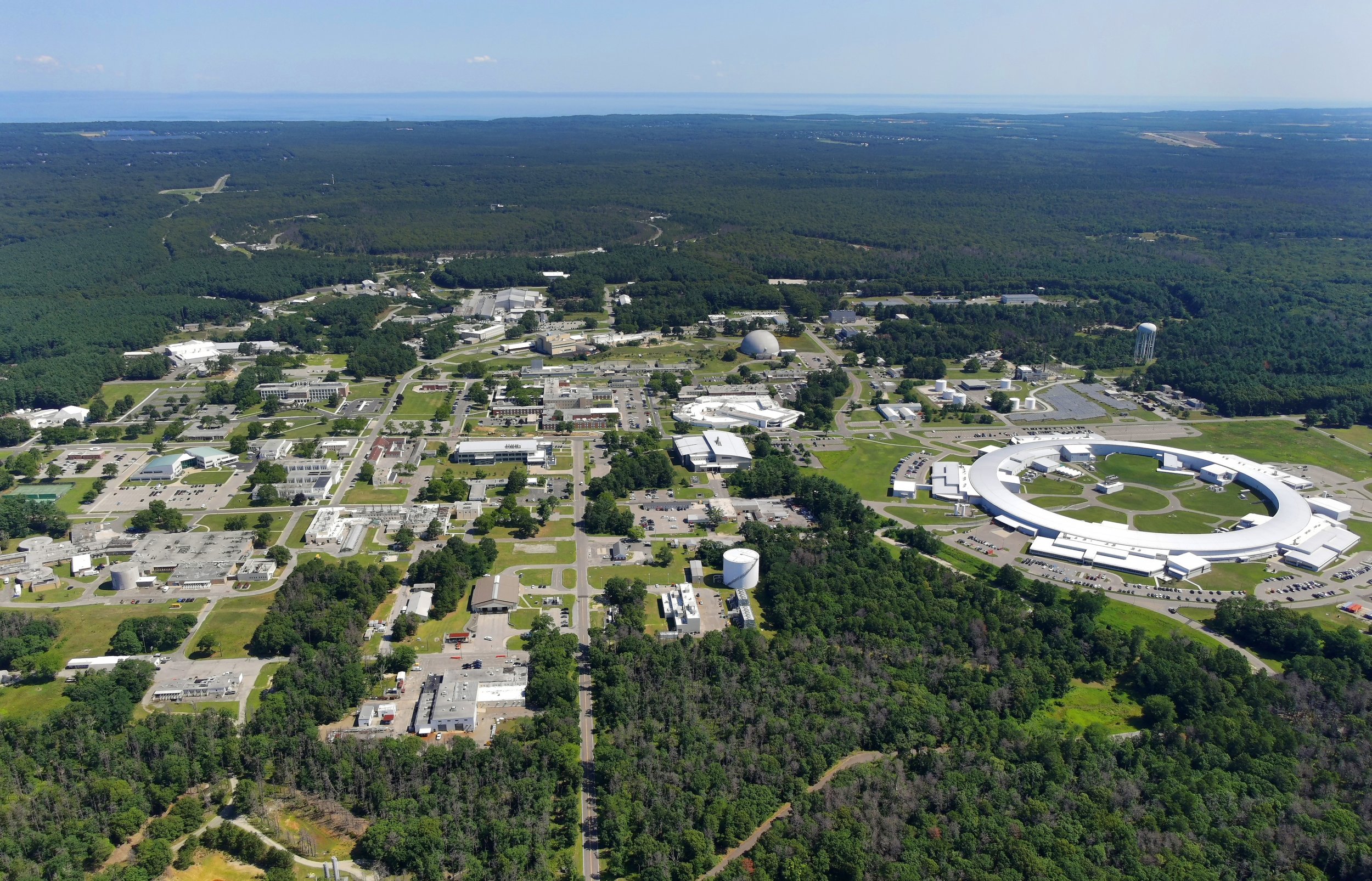
PsiQuantum is collaborating with Brookhaven National Laboratory to develop fault-tolerant quantum algorithms, using the Construct platform to design scientific applications[7]. Under the agreement, Brookhaven scientists will use PsiQuantum's open-access Construct software platform to design and optimize resource requirements for utility-scale quantum workloads. Fault-tolerant algorithms are currently limited by logical qubit counts and error rates, and PsiQuantum has not yet publicly demonstrated logical qubits.
Error-Correcting Codes
Researchers used non-Abelian surface codes to encode qubits in the quantum double model of the D(4N) group, achieving topologically protected phase gates while requiring fewer qubits per edge[21]. Compared with conventional surface codes, this scheme reduces encoding overhead, but its implementation requires non-Abelian anyons, making it extremely difficult experimentally. The work provides a new encoding approach for topological quantum computing, but it remains far from physical implementation.
Quantum Machine Learning
Qilimanjaro trained a machine-learning readout scheme with 99.9% accuracy, but the scheme is not a quantum system; rather, it is a classical readout layer for quantum reservoir computing (QRC)[9]. QRC trains only the linear readout layer, with the quantum system serving as a random nonlinear mapping. The result shows that classical readout layers can achieve high accuracy in QRC, but whether the quantum component provides an advantage still needs verification.
Quantum Simulation
Researchers proposed an algorithm to reduce the space-time dimensionality of multidimensional Caldeira-Leggett models for efficient simulation of open quantum system dynamics[22]. The algorithm incorporates dimensionality-reduction techniques and can lower simulation resource requirements, but no specific speedup was provided.
Quantum Nuclear Physics Simulation
Two separate works used first-quantization methods and fewer qubits to simulate nuclear dynamics[19][23]. Of these, [19] used the full LO-order pionless effective field theory Hamiltonian and achieved improved results on fewer qubits; [23] studied real-time dynamics under first quantization. Compared with previous quantum simulations of nuclear physics, resource requirements are reduced, but there remains a gap before practical nuclear physics calculations.
Quantum Protein Folding
The Python package QuPepFold implements hybrid quantum-classical protein folding simulation, with CVaR-optimized VQE reaching the ground state approximately 30% faster than standard VQE[17]. Tests were conducted on peptides of up to 10 amino acids, focusing on intrinsically disordered regions. The acceleration has potential value for early-stage drug discovery screening, but the current scale is far smaller than actual proteins.