Sep 1, 2026 – Sep 2 · Daily Brief

Quantum computers breaking blockchain keys: the threshold just got lower

45 items · 9 sourcesPDFThis issue's roundup is free
02Hardware

Hardware Frontier

Superconducting Quantum Processors

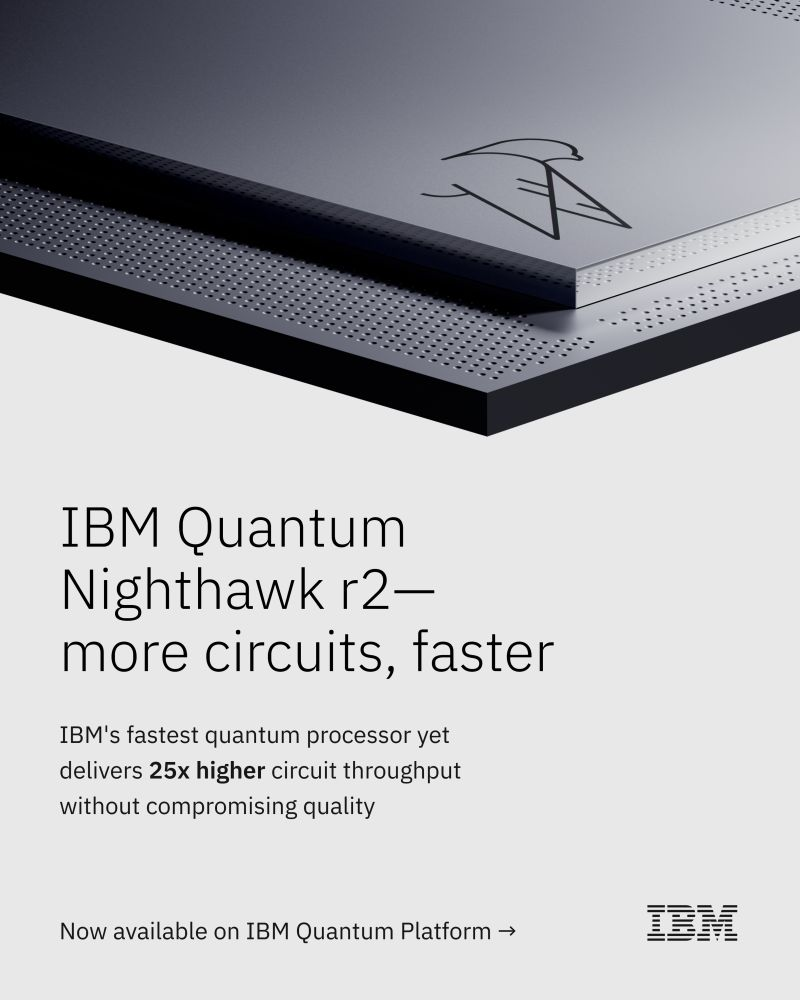
IBM released the Nighthawk r2 QPU (deployed as ibm_phoenix), with 120 qubits, introducing a high-speed dissipative qubit reset framework and achieving maximum circuit throughput exceeding 100,000 circuits/second, a 25x improvement over the previous generation[5]. This is the highest circuit throughput ever achieved in an IBM quantum processor, accomplished by eliminating idle periods between circuits. The processor targets variational algorithms and error-mitigation workflows that require large numbers of circuit executions, enabling users to run hybrid quantum-classical loops faster.

Silicon Spin Qubits

France's Quobly signed two strategic cooperation agreements with the Netherlands' TNO and OrangeQS to advance the industrialization of silicon spin qubit manufacturing[4]. The agreements were signed during the official state visit of French President Macron and Dutch Prime Minister Yeşilgöz, with the two partners being the Netherlands Organisation for Applied Scientific Research and an automated test equipment vendor. Quobly did not disclose specific fidelity metrics, but the industrialization collaboration targets production consistency at scale.

Photonic Quantum Hardware

Photonic quantum computing company Quandela signed a memorandum of understanding with CMC Microsystems to join Canada's quantum computing sandbox as a cloud-based quantum computing resource provider[33]. Quandela did not disclose platform performance parameters, but its entry into the sandbox will expand the photonic approach's exposure in North American industrial validation.

Quantum Annealing Hardware

A superconducting quantum annealer determined the ground state of an Ising model with long-range interactions[10]. The work demonstrates the feasibility of quantum annealing for simulating complex magnetic lattices, but no specific annealing times or success rates were provided. Compared with gate-model quantum computing, annealers remain practical for specific optimization problems, but their generality is limited.

03Algorithms

Algorithms and Software

Quantum Algorithms

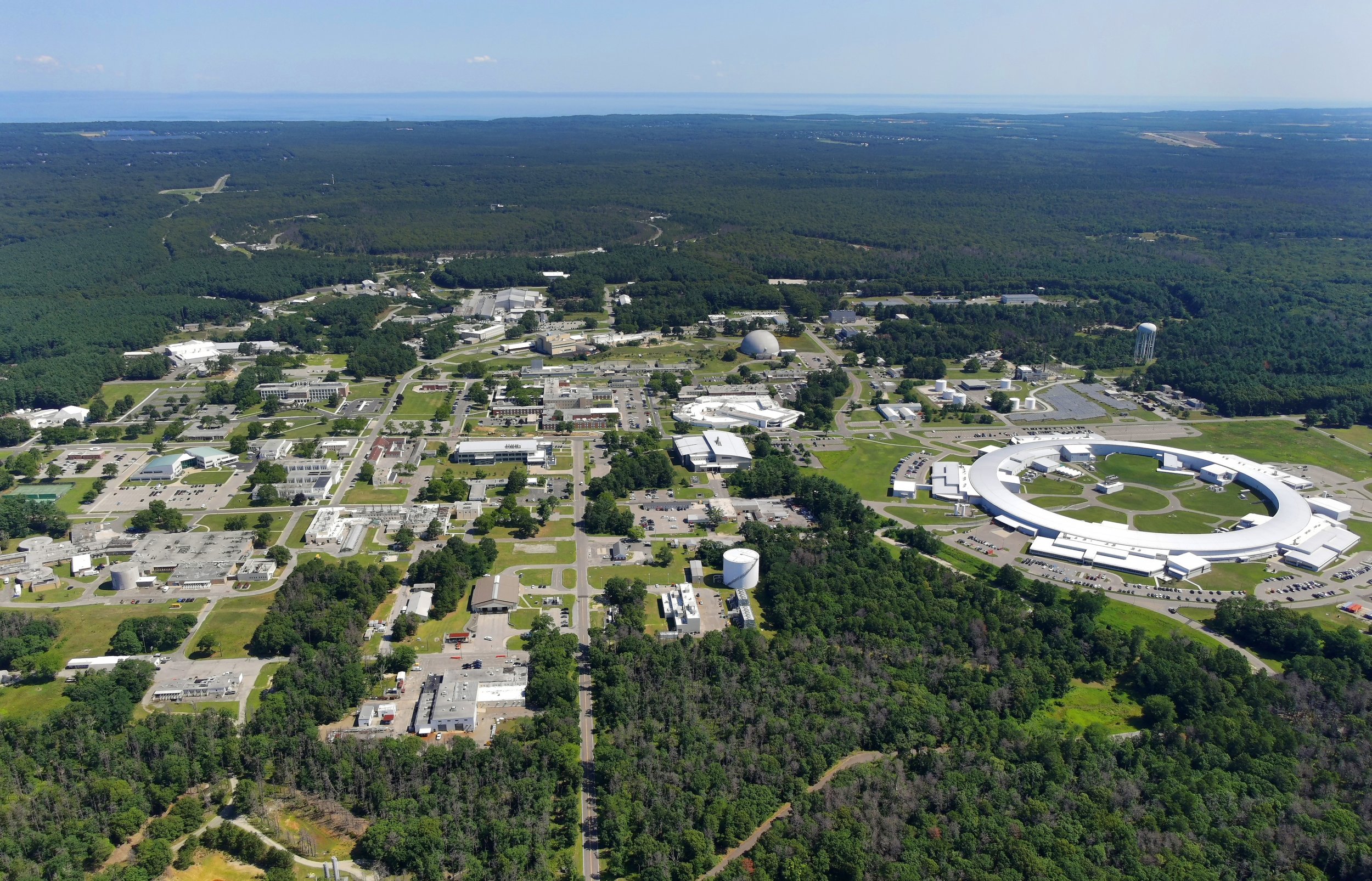
PsiQuantum is collaborating with Brookhaven National Laboratory to develop fault-tolerant quantum algorithms, using the Construct platform to design scientific applications[7]. Under the agreement, Brookhaven scientists will use PsiQuantum's open-access Construct software platform to design and optimize resource requirements for utility-scale quantum workloads. Fault-tolerant algorithms are currently limited by logical qubit counts and error rates, and PsiQuantum has not yet publicly demonstrated logical qubits.

Error-Correcting Codes

Researchers used non-Abelian surface codes to encode qubits in the quantum double model of the D(4N) group, achieving topologically protected phase gates while requiring fewer qubits per edge[21]. Compared with conventional surface codes, this scheme reduces encoding overhead, but its implementation requires non-Abelian anyons, making it extremely difficult experimentally. The work provides a new encoding approach for topological quantum computing, but it remains far from physical implementation.

Quantum Machine Learning

Qilimanjaro trained a machine-learning readout scheme with 99.9% accuracy, but the scheme is not a quantum system; rather, it is a classical readout layer for quantum reservoir computing (QRC)[9]. QRC trains only the linear readout layer, with the quantum system serving as a random nonlinear mapping. The result shows that classical readout layers can achieve high accuracy in QRC, but whether the quantum component provides an advantage still needs verification.

Quantum Simulation

Researchers proposed an algorithm to reduce the space-time dimensionality of multidimensional Caldeira-Leggett models for efficient simulation of open quantum system dynamics[22]. The algorithm incorporates dimensionality-reduction techniques and can lower simulation resource requirements, but no specific speedup was provided.

Quantum Nuclear Physics Simulation

Two separate works used first-quantization methods and fewer qubits to simulate nuclear dynamics[19][23]. Of these, [19] used the full LO-order pionless effective field theory Hamiltonian and achieved improved results on fewer qubits; [23] studied real-time dynamics under first quantization. Compared with previous quantum simulations of nuclear physics, resource requirements are reduced, but there remains a gap before practical nuclear physics calculations.

Quantum Protein Folding

The Python package QuPepFold implements hybrid quantum-classical protein folding simulation, with CVaR-optimized VQE reaching the ground state approximately 30% faster than standard VQE[17]. Tests were conducted on peptides of up to 10 amino acids, focusing on intrinsically disordered regions. The acceleration has potential value for early-stage drug discovery screening, but the current scale is far smaller than actual proteins.
04Industry

Industry and Ecosystem

Funding and Investment

IBM Ventures invested in BQP, which focuses on physics-based acceleration of quantum algorithms and has entered production[34]. The round amount was not separately disclosed; after the investment, BQP's total funding reached $8 million. IBM Ventures' entry indicates that quantum algorithm companies are beginning to attract industrial capital. BQP claims its acceleration solution is already used in production environments, but no performance data has been made public.

Defense Orders

QTREX Quantum reached a multi-tens-of-millions-dollar deal with one of Israel's three major defense companies to deploy its AME technology[16]. This is a new development following earlier reports: the contract value was disclosed for the first time as being in the tens of millions of dollars. AME technology may be used for quantum sensing or navigation, and defense orders will accelerate the technology's maturation and export.

Government and Policy

Cyprus and Greece established a quantum-secure satellite link[35]. The link was announced by Sparkle and satellite operator Hellas Sat, aimed at protecting communications against future threats, and is the first such connection between the two countries. Quantum key distribution satellite links remain constrained by distance and weather, but government-level applications will drive standardization.

Partnerships and Ecosystem

QuNorth completed a milestone for the MAGNE quantum computer facility[36]. Ramboll has completed construction of a dedicated facility to house MAGNE, enabling QuNorth to begin installation of the system in Copenhagen, though no specific qubit count or performance metrics were disclosed.

Saudi Arabia's KACST is collaborating with Imperial College London on quantum brain research[37]. The collaboration focuses on applications of quantum computing in neuroscience, potentially involving quantum simulation or quantum machine learning, but no specific project details were disclosed.

Enterprise Adoption Guide

Doug Finke proposed a four-step process to help enterprise users evaluate quantum technology[8]. The article is aimed at managers of large enterprises; the source summary did not elaborate on the specific content of the four-step process, nor did it include specific cases or data.

05Other

Academic Frontier

Quantum Information Theory

Uppsala University in Sweden is hiring an assistant professor of physics in quantum information theory, with an application deadline of October 5, 2026[3]. The position reflects growing demand for talent in quantum information theory, but no specific research content was mentioned.

Quantum Simulation

A Cornell team achieved light-induced nanoscale magnetization, bypassing conventional magnets[12]. This pathway may offer new routes for spintronics and quantum memory, but no specific parameters were disclosed.

Quantum Gravity

An international team including Roger Penrose demonstrated the influence of gravity on quantum objects in falling atoms[13]. The experiment verified the compatibility of Einstein's theory with quantum behavior, but no specific data were provided.

Quantum Optics

Researchers controlled the geometry of Schrödinger cat states through laser shaping[14]. The work quantified interactions in high-harmonic generation and achieved manipulation of quantum state properties, but no specific fidelities were disclosed.

Dark Matter Detection

The LZ experiment observed the strongest dark matter signal to date, possibly from weakly interacting massive particles[18]. The LZ detector is located nearly a mile underground in South Dakota; the signal has not yet reached the discovery threshold and requires further verification.

06Impact

Today's Impact

  1. Blockchain security teams: The reduction in quantum-cracking resources means the quantum threat timeline for cryptocurrencies such as Bitcoin may be moved up; security teams need to reassess the urgency of migrating to post-quantum cryptography[11].
  2. Defense contractors: QTREX Quantum's multi-tens-of-millions-dollar contract shows quantum technology companies have secured defense-grade orders, potentially triggering more defense orders and export-control discussions[16].
  3. Pharmaceutical R&D enterprises: If Pasqal and True Nexus's protein gelation simulation succeeds, it will open new applications for quantum computing in biomaterials; pharmaceutical companies can watch for follow-up validation[15].
  4. Quantum computing cloud users: IBM Nighthawk r2's 25x circuit throughput improvement will accelerate variational algorithm development, allowing users to iterate faster[5].
  5. European quantum industry: The Cyprus-Greece quantum satellite link and the Quobly-TNO collaboration indicate that Europe is doubling down on quantum security and manufacturing autonomy, which may affect global supply chains[35][4].
07Other

Editor's Commentary

Today's quantum landscape presents two main threads: first, the threat of quantum computing to existing cryptographic systems is moving from theory to resource estimation; second, quantum technology is accelerating from the laboratory toward defense and industrial deployment. The former reminds us that post-quantum migration is no longer a distant issue but one that needs to be incorporated into current security planning. The latter shows that quantum sensing and quantum computing are finding paying customers in specific scenarios, even though general-purpose fault-tolerant quantum computing remains some distance away.

It is worth noting that in hardware progress, IBM's throughput improvement and Quobly's industrialization collaboration both focus on "usability" rather than raw qubit counts, reflecting the industry's shift from pursuing scale to pursuing actual workloads. At the same time, the algorithms and software layer still lacks breakthrough results, with most progress being incremental optimization. In the coming months, attention should be paid to whether quantum-cracking resource estimates trigger regulatory action, and whether defense quantum orders will spread to more countries.