Sep 19, 2026 – Sep 20 · Daily Brief

Room-temperature quantum chips speed up tenfold, moving closer to integration into portable devices

17 items · 7 sourcesPDFThis issue's roundup is free
02Hardware

Hardware Frontiers

Diamond NV Centers (Solid-State Defects)

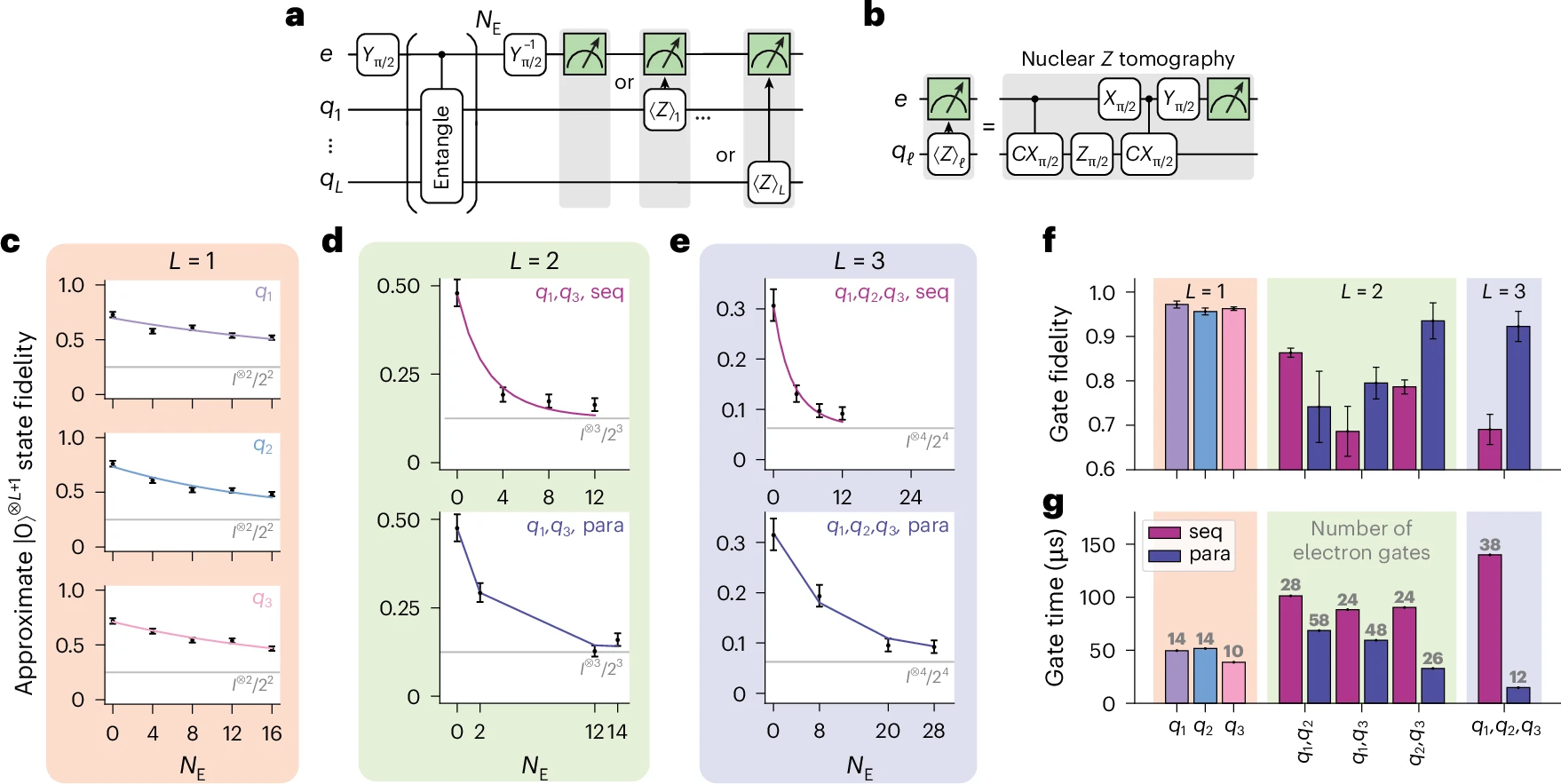
A research team at the University of Pennsylvania achieved parallelized many-body quantum entanglement on a room-temperature diamond quantum register using a single microwave gate operation, successfully preparing a four-qubit GHZ (maximally entangled multi-particle) state in 14.8 microseconds [4].

In terms of technical significance, generating multi-qubit entangled states in solid-state NV (nitrogen-vacancy) diamond systems was previously constrained by serial microwave pulse operations between the electron spin and surrounding nuclear spins; creating four-qubit entanglement typically required sequential multi-gate pulses with total runtimes routinely exceeding 150 microseconds. By employing global single-gate driving to realize parallel entanglement, this approach compressed state preparation time from approximately 150 microseconds down to 14.8 microseconds—a tenfold acceleration in many-body entanglement generation—while markedly suppressing decoherence noise accumulation during the operation [4].

Benchmarked against the State-of-the-Art (SOTA):

① Extent of progress: In room-temperature solid-state quantum systems requiring zero cryogenic refrigeration, generating a four-qubit GHZ state in 14.8 microseconds sets a new benchmark for parallel multi-qubit manipulation on room-temperature chips. However, benchmarked against cryogenic superconducting SOTA—where superconducting two-qubit gate times typically span 20 to 100 nanoseconds (e.g., Google’s Willow chip)—and trapped-ion routes—where two-qubit gate times range between 10 and 500 microseconds (e.g., Quantinuum Helios achieving a two-qubit gate fidelity of 99.921%)—the operational speed of this room-temperature diamond gate reaches the regime of slower trapped-ion gates, yet remains two to three orders of magnitude slower than superconducting gates. In terms of scale, 4 physical qubits remains in a very nascent laboratory prototype stage compared to 1,180 physical qubits in neutral-atom platforms (Atom Computing) or 105 physical qubits in superconducting platforms.

② Remaining gaps: This pathway still lacks critical components for practical fault tolerance: severe spin decoherence caused by lattice phonon scattering at room temperature limits coherence times from sustaining deep quantum circuits, and closed-loop surface code (2D topological quantum error-correcting code) cycles have not yet been demonstrated; furthermore, the absence of an end-to-end loss budget for high-fidelity inter-chip optical interconnects impedes engineering scaling from a single 4-qubit node to multi-node arrays in a quantum network.

In terms of landscape impact, this breakthrough provides physical-layer validation for eliminating reliance on liquid-helium dilution refrigerators and engineering lightweight, vehicular, or portable quantum computing and quantum sensing modules, offering a scalable architectural template for future quantum technologies [4].

Superconducting & Semiconductor Manufacturing Interfaces

GlobalFoundries officially finalized a $375 million award agreement under the U.S. CHIPS and Science Act to expand its quantum technology solutions manufacturing facility in Malta, New York. The site leverages its 22FDX (22nm FD-SOI) process to mass-produce cryogenic CMOS (cryo-CMOS) control and readout chips along with advanced heterogeneous quantum packaging components [6].

In terms of technical significance, superconducting and spin quantum processors have long been throttled by the "wiring bottleneck"—each physical qubit operating in the millikelvin regime typically requires two dedicated coaxial cables running to room-temperature server racks, making thermal isolation and volumetric scaling unsustainable as systems scale beyond thousands of qubits. By tailoring low-temperature transistor behavior on its mature 22nm process, GlobalFoundries has developed digital and RF control integrated circuits capable of stable operation at 4 Kelvin, aggregating thousands of discrete RF cables into a minimal set of high-speed serial digital buses [6].

Benchmarked against SOTA: In terms of advancement, this manufacturing line transitions on-chip control and advanced packaging for superconducting and silicon-spin modalities onto 300mm commercial wafer mass-production lines, aligning with commercial wafer-scale integration standards set by Intel and Diraq. However, comprehensive high-precision cryogenic noise models (PDKs) for transistor devices down to the millikelvin regime remain incomplete, and microwave insertion losses during flip-chip hybrid integration between superconducting chips and silicon-based CMOS control dies have yet to be fully resolved.

In terms of landscape impact, this funding secures the first dedicated commercial wafer foundry capacity in the United States serving quantum hardware developers, reducing North American quantum startups' reliance on Asian packaging and foundry supply chains. Starting in 2027, it is anticipated to drive down rack-level integration costs for dozens of superconducting and silicon-spin hardware companies [6].

03Algorithms

Algorithms & Software

Error Handling & Error-Corrected Compilation

IBM Research officially unveiled the Spacetime Probabilistic Error Cancellation (Spacetime PEC) hybrid framework, coupling conventional PEC (an error-mitigation method that cancels hardware noise via weighted statistical sampling) with post-selected error detection (ED). In test circuits, this reduced sampling overhead by up to a factor of 63 (a 63x reduction) compared to standard PEC [11].

In terms of technical significance, the sampling overhead of standard probabilistic error cancellation scales exponentially with circuit depth and two-qubit gate counts. For circuits exceeding several dozen layers, the required sampling shots can balloon into the billions, becoming prohibitive in both computational time and cost. By introducing spacetime error-tracking graphs and post-selection error-detection mechanisms to filter out deterministic Pauli error propagation paths in advance, the IBM team substantially compressed the multi-layer sampling overhead by nearly two orders of magnitude for the first time [11].

Benchmarked against SOTA:

① Extent of progress: In the realm of error mitigation for Noisy Intermediate-Scale Quantum (NISQ) computing, a 63x reduction in sampling overhead establishes a new record for protocols of this class, compressing complex molecular ground-state simulations that previously demanded two months of continuous cluster runtime down to less than a single day;

② Remaining gaps: This technique fundamentally remains an error mitigation method rather than a fully fault-tolerant quantum error correction (QEC) scheme like the surface code. Compared to below-threshold surface code demonstrations on Google’s Willow chip (which achieved an error suppression factor of 2.1), Spacetime PEC's sampling overhead still exhibits sub-exponential growth as circuit complexity increases, meaning it cannot serve as a permanent replacement for autonomous closed-loop error correction beneath fault-tolerant physical-to-logical thresholds.

In terms of landscape impact, this algorithmic upgrade has been experimentally validated on IBM's 27-qubit superconducting processors. It empowers current physical hardware to execute industrial-scale chemical simulations with depths approaching 100 layers without waiting for fully mature fault-tolerant QEC, establishing an application-layer moat against competitors lacking equivalent error-mitigation toolchains [11].

Distributed Networks & Consensus Protocols

Quantum networking enterprise Quantum B was officially granted European Patent EP 4462727, securing intellectual property protection for its multipartite-entanglement-based Quantum Conference Key Agreement (QCKA) distributed consensus architecture [7].

The patent exploits the intrinsic correlations of many-body quantum entangled states to establish distributed consensus directly across autonomous network nodes, replacing conventional consensus mechanisms in classical blockchains and computing clusters that rely on repetitive network broadcasts, computational proof competitions, or multi-round asynchronous signatures, thereby dramatically decreasing communication overhead in multipartite collaboration [7]. Securing this IP demonstrates that quantum networking technologies are advancing beyond point-to-point encryption and permeating the foundational consensus logic of multi-node distributed systems, representing a 5-to-8-year strategic technological reserve for cross-border financial backbones, electrical grid dispatching, and tamper-resistant distributed ledgers [7].

Automated Cryptographic Asset Management

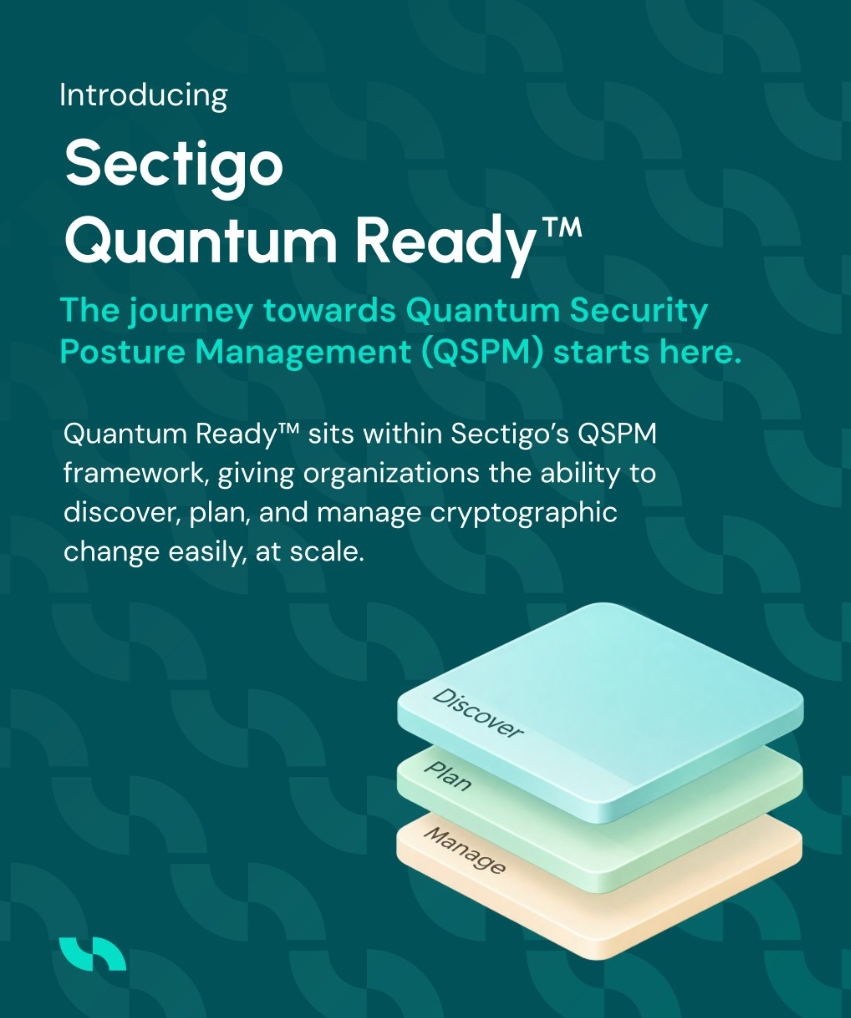
Certificate Authority Sectigo officially launched its enterprise software platform, Sectigo Quantum Ready™, designed to establish enterprise Quantum Security Posture Management (QSPM) for the automated discovery and vulnerability assessment of cryptographic assets. The system autonomously scans network-wide assets to generate dynamic Cryptographic Bills of Materials (CBOM) [9].

The platform eliminates the high omission rates and multi-month timelines associated with legacy manual audits, enabling real-time detection of legacy public-key algorithms vulnerable to quantum attacks (such as RSA and elliptic-curve cryptography) across network protocols, certificate chains, and application source code, while providing automated, crypto-agile migration pathways to post-quantum standards [9]. This accelerates deployment timelines for global financial and telecommunications institutions transitioning to quantum-resistant standards between 2026 and 2030, exposing legacy cybersecurity vendors lacking automated orchestration capabilities to heightened customer attrition risks [9].

04Industry

Industry & Ecosystem

Strategic Financing & Capital Operations

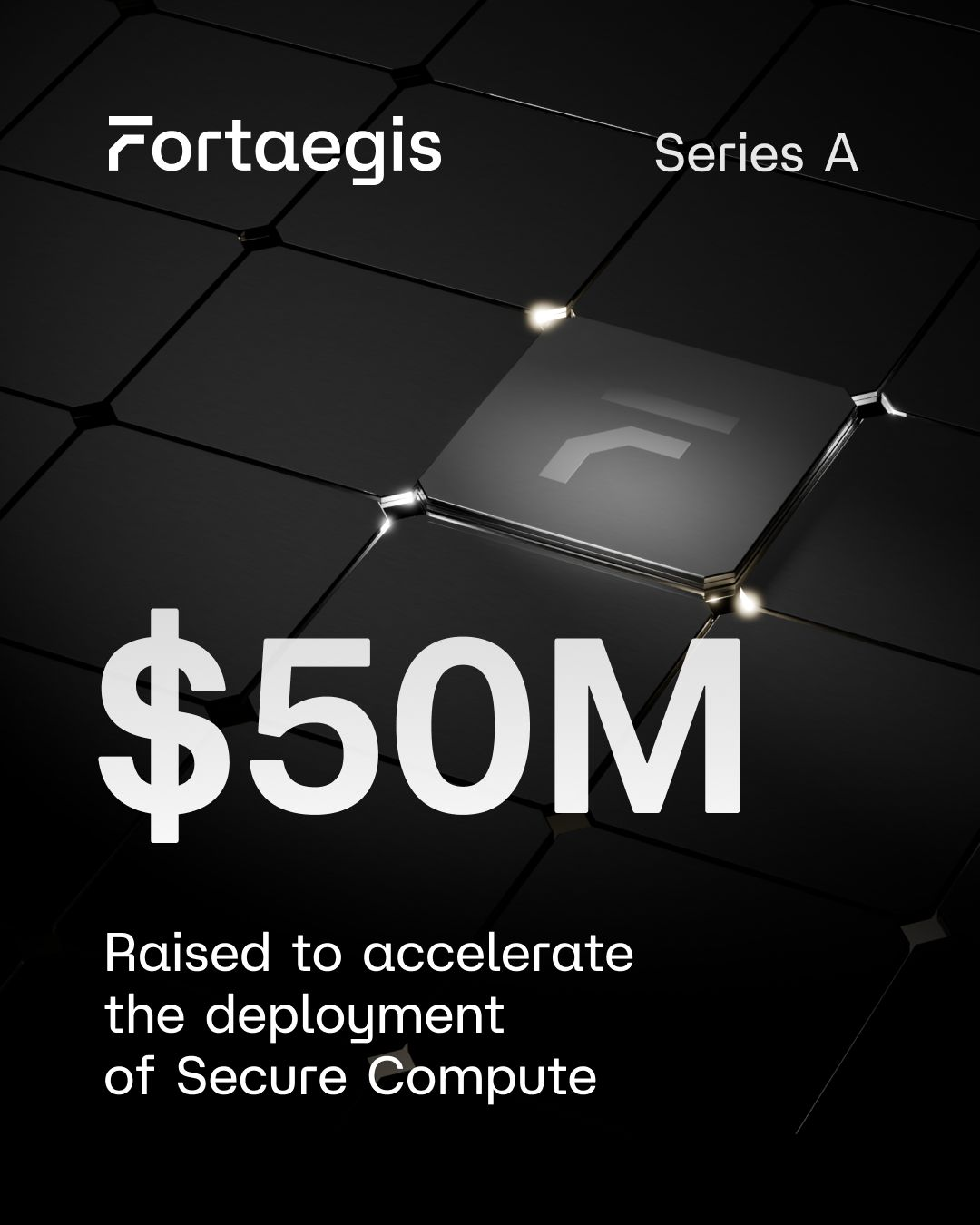
Post-quantum hardware security startup Fortaegis Technologies announced the completion of a $50 million Series A funding round, led by Serendipity Capital with participation from multiple strategic industry investors [5].

In terms of business model and valuation logic, this financing round demonstrates that cybersecurity investments are rapidly shifting from top-layer software-only post-quantum cryptographic patches down to foundational "Hardware Roots of Trust" (tamper-resistant security enclaves integrated directly into physical microarchitectures). The $50 million raise sets a high-valuation benchmark for the post-quantum hardware architecture subsector [5]. Proceeds will be deployed to integrate post-quantum security microarchitectures into core data center computing silicon to neutralize retroactive decryption threats ("harvest now, decrypt later") against sensitive data. The company plans to expand FPGA deployments and develop custom ASICs tailored for AI data centers, defense, and telecommunications [5].

Cross-Sector Commercialization & Industrial Collaboration

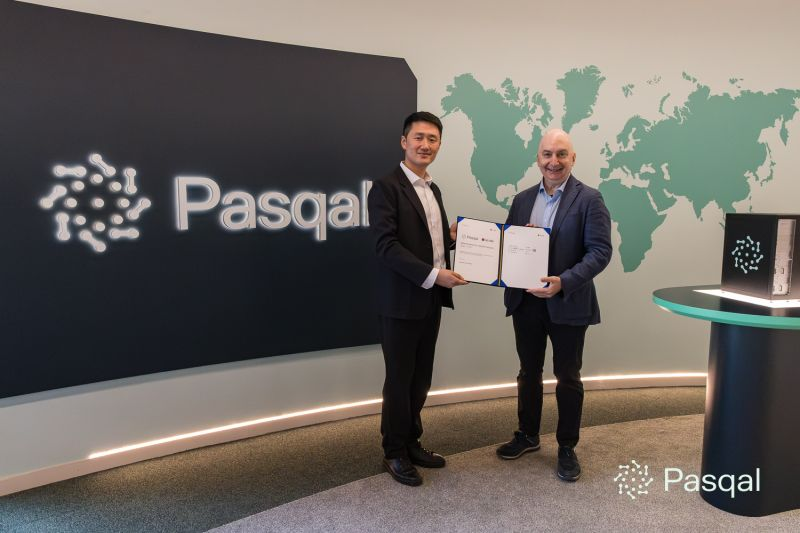
Neutral-atom quantum computing leader Pasqal, USA Rare Earth, and automated chemical experimentation platform Riven Systems signed a tripartite collaboration agreement to co-develop Quantum Machine Learning (QML) models for the chemical separation of critical rare earth elements [8].

This collaboration marks the first injection of neutral-atom quantum processors' topological graph computing and analog annealing capabilities into the high-barrier strategic mineral refining industry. By utilizing quantum algorithms to predict the complex reaction kinetics of organic extractants complexing with rare earth ions, coupled with Riven Systems' fully automated hydrometallurgical reaction pipeline, the initiative bypasses the protracted trial-and-error synthesis cycles typical of classical chemistry. The goal is to compress the screening cycle for novel extractants from several years down to a few months [8]. This milestone helps reduce rare earth refining's dependence on harsh chemical reagents and energy-intensive separation columns, providing Pasqal with a flagship commercialization use case in advanced manufacturing, with laboratory-validated formulations slated for delivery within 12 to 18 months [8].

Executive Transitions & the Talent War

Four global quantum technology companies announced executive appointments on the same day: UK-based silicon spin developer Quantum Motion named Dr. Anna Stockklauser as Chief Product Officer; Australia's Silicon Quantum Computing (SQC) appointed John Hollister as Chief Financial Officer; epitaxial wafer manufacturer Lawrence Semiconductor named Don Garrison as General Manager and Chief Operating Officer; and Pasqal appointed Roberto Mauro as Chief Product Officer and Joëlle Lumb as Chief Human Resources Officer [10].

This influx of executives with extensive backgrounds in semiconductor volume manufacturing and public corporate finance indicates that the quantum hardware industry is rapidly transitioning from the "academic laboratory phase" into the "engineering delivery and commercial capital operations phase." SQC's appointment of a seasoned CFO signals clear preparations for a future public listing, while personnel appointments at Quantum Motion and Lawrence Semiconductor directly target commercial wafer-scale foundry integration and high-volume test procedures for silicon-based quantum chips [10].

Global Compliance & Market De-Hype

Industry insights from the GISEC conference in Dubai and the Post-Quantum Cryptography Summit in Maryland highlight divergent global pathways toward PQC migration: the United States enforces National Institute of Standards and Technology (NIST) standards as mandatory compliance baselines with strict deprecation deadlines; Europe leans toward sovereign compliance using hybrid cryptography; Gulf states prioritize comprehensive national-scale infrastructure replacements; and Asian technology hubs seek a balance between sovereign algorithms and international standards [2]. Concurrently, quantum security startup Post-Quantum published a rigorous physical and engineering rebuttal against the "orbital space quantum data center" concepts recently promoted in capital markets, detailing insurmountable hurdles including high-energy cosmic radiation-induced decoherence, severe thermal dissipation challenges for deep-cryogenic isolation in microgravity, and prohibitive launch and maintenance expenditures [3]. This highlights the complex jurisdictional compliance adaptations facing enterprise clients during migration, alongside a rapid market correction that is stripping capital valuations away from physically unfeasible concepts [2][3].

05Other

Academic Frontiers

Quantum Entanglement Limits in High-Energy Physics

A team of physicists working on the Large Hadron Collider (LHC) at CERN obtained compelling evidence confirming quantum entanglement between massive, neutral Z bosons (neutral weak-interaction force carriers) produced in Higgs boson decays [13].

In terms of technical significance, this represents definitive evidence of quantum entanglement detected at extreme high-energy physical scales (gigaelectronvolt regime) within massive particle systems undergoing femtosecond-scale decays. It demonstrates that quantum state correlations persist without distortion even under extreme relativistic energies and harsh, strongly and weakly interacting environments [13].

Benchmarked against SOTA: Previous experimental validations of Bell inequalities and quantum entanglement relied predominantly on near-infrared photons, trapped ions, or ultracold atoms in dilution refrigerators at room or cryogenic temperatures, with particle energies spanning the microelectronvolt to electronvolt range. This experiment elevates the physical energy scale for verifying quantum entanglement by nearly ten orders of magnitude, confirming the universal validity of fundamental quantum mechanical laws within ultra-high-temperature, dense collision debris [13].

In terms of landscape impact, while this discovery will not translate into commercial quantum computing qubits in the short term, the entanglement measurement techniques it establishes for high-energy, high-radiation environments introduce a new theoretical paradigm for engineering radiation-hardened quantum sensing chips and next-generation particle detectors operating in extreme conditions [13].

06Other

Today's Strategic Implications

  1. For Superconducting & Silicon-Spin Chip Fabrication Teams: GlobalFoundries finalized its $375 million CHIPS Act grant to expand its Malta, New York facility, transitioning its 22FDX cryo-CMOS line into volume production. This disrupts the fragmented status quo in which U.S. quantum hardware startups were forced to custom-build discrete control electronics without access to commercial foundry packaging [6]. Next steps: Closely monitor the public release timeline for GlobalFoundries' cryogenic Process Design Kit (PDK) and initial tape-out yields for 4K on-chip microwave control devices interfaced with superconducting processors [6].
  1. For Industrial Materials & Molecular Simulation Teams: IBM introduced Spacetime Probabilistic Error Cancellation (Spacetime PEC), slashing sampling overhead in deep, noisy circuits by 63x. This significantly lowers the barrier for complex molecular chemistry simulations—which previously cost hundreds of thousands of dollars and months of runtime on superconducting quantum processors—bringing them down to routine, single-day computational workflows [11]. Next steps: Track whether IBM integrates this framework into the default cloud execution pipeline within the Qiskit Runtime environment, and observe comparative benchmark validations by academic institutions in catalytic molecular simulations [11].
  1. For Large Multinational Financial Institutions & Enterprise CISOs: Fortaegis secured a $50 million Series A round to advance hardware-level post-quantum silicon architectures, which, together with Sectigo's automated posture management platform, pivots post-quantum defensive strategies from passive observation awaiting finalized standards to active engineering execution via dynamic CBOM inventorying and Hardware Root-of-Trust fortification [5][9]. Next steps: Track corporate procurement budgets and deployment timelines for automated cryptographic asset management solutions across multinational banks amid diverging cross-border regulatory mandates [2][9].
  1. For Neutral-Atom Hardware Developers & Strategic Mineral Processors: Pasqal’s partnership with USA Rare Earth to optimize chemical separation processes refutes the narrow assumption that quantum computing is confined to abstract mathematical problems like financial portfolio optimization, carving out tangible physical applications across strategic heavy-industry supply chains [8]. Next steps: Monitor the initial separation efficiency reports emerging from hydrometallurgical laboratories under this partnership, as well as the actual energy-efficiency ratios of neutral-atom arrays processing complex molecular dynamics graphs [8].
07Other

Editor's Commentary

The quantum information ecosystem is currently navigating a decisive watershed: transitioning from the "physical qubit myth" toward "hardcore engineering delivery." In past years, industry attention was disproportionately fixated on laboratory records of physical qubit counts and the number of coaxial lines packed inside dilution refrigerators. However, in practical commercialization, the physical constraints of cryogenic refrigeration and the exponential explosion of sampling noise have emerged as massive chasms impeding commercial ROI.

The single-gate multi-qubit acceleration achieved by UPenn in room-temperature diamond, paired with GlobalFoundries' $375 million award for cryogenic foundry lines, demonstrates the two complementary paths of physical hardware engineering: "bypassing extreme cryogenics" versus "optimizing cryogenic integration." Meanwhile, IBM's algorithmic achievement in slashing sampling overhead by 63x proves that during the transitional era before fully mature fault-tolerant QEC, software orchestration and intelligent error-mitigation algorithms can unlock immense gains in practical compute capacity. Capital markets' growing skepticism toward unviable concepts like orbital space data centers—contrasted with large funding allocations for heavy-industry rare earth separation and hardware-level post-quantum silicon—sends an unmistakable signal: detached conceptual hype is being discarded, and pragmatic ventures resolving real-world supply-chain bottlenecks and systems engineering costs are restructuring the global quantum industry's valuation framework.