Sep 27, 2026 – Sep 28 · Daily Brief

Secure computation for quantum secure communication reduced from tens of seconds to under 1 second

55 items · 13 sourcesPDFThis issue's roundup is free
02Hardware

Hardware Frontiers

Neutral Atoms

In its latest technical bulletin, Pasqal announced that its neutral-atom platform has successfully scaled to a trapped-atom array of 1,024 atoms and demonstrated algorithmic execution of logical qubits (pure qubits protected by error-correcting codes)[17]. In terms of hardware metrics, this array size places it firmly in the top tier of neutral-atom architectures; however, compared to the current record for logical qubits—QuEra’s encoding of 96 logical qubits from 448 physical qubits (published in Nature in 2026)—Pasqal has yet to disclose complete, un-postselected (without discarding failed runs to inflate metrics) error correction fidelity figures, and the neutral-atom path continues to face a hard physical constraint of low repetition rates between 1 and 10 Hz[17]. Achieving a 1,000-qubit physical scale establishes a leading neutral-atom position in Europe, directly accelerating European research institutions' efforts to reduce sole reliance on North American superconducting cloud computing for materials simulation and combinatorial optimization, with commercial computing leasing expected to enter scaled delivery within 12 to 18 months[17].

Quantum X Labs announced the modular integration of its patented atomic clock with Rydberg-atom (atoms in highly excited states with large orbital radii) RF sensing technology, expanding its atomic-scale quantum sensing hardware capabilities[32]. In a compact package, the system pushes microwave signal detection sensitivity to the single-photon energy regime, effectively bypassing the thermal noise limits of conventional metal antennas[32]. This development provides a novel electromagnetic-interference-immune physical receiver solution for electronic warfare in defense and deep-space communications terminals, with priority deployment for front-line military radar validation over the next two years[32].

Silicon Spins and Solid-State Spins

French quantum computing startup Quobly deepened its partnership with CEA-Leti to jointly develop next-generation 3D vertical integration and RF control layers on 300 mm wafers, supported by the European Chips Act-funded FAMES pilot line, advancing the mass production of QSOI silicon spin chips[19][49]. Compared to small-batch laboratory fabrication, this collaboration matches the leading-edge standard of Diraq and imec in 300 mm industrial-grade wafer processing; however, a significant gap remains before reaching the scale required for fault-tolerant computing. Currently, silicon spin two-qubit gate operations incur substantial overhead (with gate operation counts in the 10² to 10³ range, the lowest among the five major modalities), and microwave crosstalk mitigation under ultra-low cryogenic environments on-chip still requires engineering validation[19][49]. Partnering with semiconductor manufacturing giant STMicroelectronics, this alliance secures sovereign foundry capability for European silicon-based quantum chips, pressing conventional semiconductor foundries to accelerate the launch of dedicated quantum CMOS production lines within 3 years[19][49].

A research team experimentally measured a solid-state electron spin decoherence (decay of quantum superposition states) time of 10 seconds in diamond crystals with a carbon-12 isotopic purity of 99.999%[8]. This represents an improvement of more than two orders of magnitude over the millisecond-scale coherence times of conventional diamond nitrogen-vacancy (NV) color centers (luminescent lattice defects in diamond), establishing a public record for solid-state electron spin coherence; however, this achievement reflects only the lifetime of a single spin memory state. Fault-tolerant quantum computing still requires high-fidelity multi-spin entangling gate control, and its two-qubit gate fidelity lags substantially behind the 99.99% industry baseline of trapped-ion systems[8]. This is a direct boon to research institutions developing quantum repeaters and distributed long-distance quantum communication nodes, positioning it to become the preferred underlying physical platform for long-lived solid-state quantum memory over the next 3 to 5 years[8].

Superconducting and Microwave Components

The Fraunhofer Research Institution for Microsystems and Solid State Technologies (Fraunhofer EMFT) has engineered superconducting flexible coaxial cables tailored for superconducting qubits, capable of stable operation in extreme deep-cryogenic environments near -273°C[27]. The cable reduces both wiring thermal load and inter-line microwave crosstalk, overcoming the physical bottlenecks of conventional rigid coaxial cables, where increasing qubit counts exhaust dilution refrigerator volume and cooling capacity[27]. This breakthrough directly empowers superconducting full-stack system manufacturers, with cryogenic rack wiring density for 1,000-qubit superconducting processors expected to increase by more than threefold within 2 years[27].

Researchers harnessed chiral edge magnetoplasmons in a chromium-doped quantum anomalous Hall insulator to achieve unidirectional microwave signal transmission between microwave resonators under zero external magnetic field[26]. Freeing the device from the strong external magnetic fields required by conventional ferrite circulators, this work pushes microwave non-reciprocity (unidirectional transmission with reverse isolation) isolation to a practical threshold in an on-chip integrated environment for the first time[26]. This clears volume and magnetic-interference hurdles for ultra-low-noise microwave readout interfaces between superconducting quantum chips and room-temperature classical control electronics, catalyzing commercial development of high-density on-chip integrated readout modules[26].

Space and Photonic Quantum

A spacecraft carrying miniaturized quantum computing hardware completed in-orbit operational verification in low Earth orbit (LEO), marking humanity's first in-space quantum computing application test in LEO[11]. The hardware survived the extreme vibration of rocket launch and crossed the high-radiation space environment threshold, demonstrating intact in-orbit vacuum packaging and stable gate operations during testing[11]. This offers a new onboard computing paradigm for solving long-standing challenges in dynamic attitude calibration and autonomous sensor calibration on LEO satellites, directly driving aerospace and defense giants to increase exploratory budgets for radiation-hardened space quantum processors[11].

French photonic quantum computing firm Quandela unveiled a two-year strategic roadmap for South Korea, seeking to build local strategic partnerships across photonic quantum chip fabrication, full-stack system integration, and commercial operations[52]. Confronting heavy capital deployment by PsiQuantum and Xanadu in North America and Australia, Quandela is accelerating its drive to secure advanced semiconductor manufacturing and photonic packaging foundry resources in East Asia, reshaping the competitive landscape of the Asia-Pacific photonic quantum sector[52].


03Algorithms

Algorithms and Software

Fault-Tolerant Coding and Compilation Tools

A research team proposed an automated framework using 3D pipe diagrams for color code (a class of 2D topological quantum error-correcting codes) lattice surgery (an inter-block interaction technique for error-correcting codes) compilation[2]. By mapping complex topological braiding and non-destructive measurement procedures into geometric pipe routing, the compilation algorithm slashes color code logical gate search times by more than an order of magnitude, crossing the engineering threshold for automated multi-patch topological error-correcting code scheduling[2]. This charts an algorithmic path for specialized EDA (electronic design automation) software vendors in the fault-tolerant quantum computing era, lowering technical barriers to developing fully automated topological logic controllers[2].

Researchers introduced novel fault-mitigating architectures for color codes and surface codes (2D grid-based fault-tolerant error-correcting codes), respectively: the color code scheme requires only a single ancilla qubit per plaquette to prevent hook errors (cascading errors propagating from ancilla to data qubits)[3]; the surface code scheme suppresses error cascades through diagonal syndrome extraction (measuring ancilla qubits to detect errors) scheduling[4]. Without adding extra physical hardware overhead, both schemes resolve correlated decoherence paths that severely degrade fault-tolerant thresholds entirely via low-level gate-timing optimization, yielding a multi-fold increase in the effective error-correction threshold[3][4]. Tier-one hardware teams can directly deploy this scheduling logic to existing superconducting and trapped-ion chips via microcode updates, significantly accelerating the progress of error-correction systems toward the below-threshold regime (where adding more qubits decreases the logical error rate)[3][4].

A recent theoretical analysis proved that the non-Gaussian operational resources required for fermionic quantum error-correcting codeword preparation scale in direct proportion to both the system’s error-protection capabilities and its physical size[34]. Under a rigorous mathematical framework, this finding terminates the optimistic assumption that efficient fermionic fault tolerance could be achieved solely through simple Gaussian interactions, establishing the exact computational cost of the additional non-Gaussian gates needed for fault-tolerant microscopic molecular dynamics simulations[34]. This compels software and algorithm teams focusing on quantum chemistry and molecular simulations to restructure their resource estimation models, preventing industry delivery delays caused by underestimating physical hardware gate overheads[34].

Control Software and Development Ecosystem

Quantum control startup FirstQFM released a hardware control software system that autonomously evolves via machine learning, introducing a novel paradigm for directing quantum hardware execution[28]. The concept investigates whether software developed through machine learning can help quantum systems outperform classical computing, though the company has yet to disclose specific reductions in gate calibration time or empirical hardware data[28].

The University of Washington and Amazon Web Services (AWS) completed a joint capstone initiative, constructing an adaptive circuit noise mitigation control workflow powered by the Amazon Braket cloud platform and open-source error mitigation libraries[1]. This initiative promotes the adoption of cloud-based quantum development kits among universities and small-to-midsize research institutions, further lowering the software and hardware barriers to cloud-native quantum algorithm development[1].

A team at the Technical University of Munich developed a visual quantum circuit design tool based on a modular block interface, seamlessly unifying classical control flow with quantum gate operations in an intuitive graphical user interface for the first time[21]. Breaking free from the pedagogical and development constraints of purely textual programming and static circuit diagrams, user testing showed that the platform helps computer science students rapidly build conceptual understanding and confidence[21].

Researchers at Monash University in Australia derived exact analytical closed-form formulas for the energy eigenstates of diamond nitrogen-vacancy centers in nuclear spin environments containing both common nitrogen-14 and nitrogen-15 isotopes[35]. This formula completely supersedes the traditional computational paradigm reliant on time-consuming numerical diagonalization or approximate fitting, reducing numerical error in microscopic energy level calculations to zero and providing an ultimate mathematical closed-form solution for high-precision simulation of spin sensors and solid-state qubits[35].

04Industry

Industry and Ecosystem

Financial Reports and Strategic Adjustments

Neutral-atom quantum computing leader Pasqal officially published its financial report for the first half of 2026: following its de-SPAC listing, balance sheet cash reserves stood at €312.9 million (approximately RMB 2.45 billion), with a 14% year-over-year revenue increase and commercial deliveries achieved in Saudi Arabia and Italy[17]. The robust cash reserves provide at least a 3- to 4-year R&D runway for its neutral-atom roadmap, substantially de-risking liquidity amid the current cycle of capital prudence, while the 14% revenue growth validates actual procurement demand from European and Middle Eastern sovereign capital for cloud and on-premises quantum hardware deployments[17].

Pasqal (Nasdaq: PSQL) issued an announcement detailing an adjustment to its collaborative R&D focus with French official agencies, formally exiting the French Ministry of Armed Forces defense project codenamed LSQUARE to channel all technical resources toward commercial computing applications[50]. This move signals a deliberate pivot by the European quantum unicorn away from defense pre-research projects marked by protracted settlement cycles and stringent export controls, focusing fully on commercial tracks such as automotive simulation, pharmaceutical synthesis, and quantitative finance that offer rapid monetization and global scalable repeatability[50].

Policy Support and Major Grants

Following recent reports on the launch of the US noise-resilient quantum computing competition, DARPA and the Department of Energy released supplementary implementation details for the $215 million prize challenge[43]. Officials explicitly stipulated that milestone payouts must be tied to concrete fault-tolerance benchmarks, requiring competing teams to develop a fault-tolerant prototype capable of outperforming classical supercomputers in chemical molecular dynamics simulations before 2028, supported by reproducible logical qubit error-correction validation data[43]. Shifting government funding entirely from broad paper-publishing support to a rigorous milestone bounty model directly forces domestic US hardware companies such as IBM, Quantinuum, and QuEra to adjust their technology roadmaps, prioritizing fault-tolerant prototypes with tangible industrial computational value[43].

Florida State University received a $2.10 million federal Community Project Funding grant allocated by the National Institute of Standards and Technology (NIST) to construct a campus-wide quantum secure communication testbed on its main campus, connecting to a central quantum communications hub[45]. This illustrates the descent of US federal research funding from premier national laboratories to regional anchor universities, fostering testbed infrastructure for the standardized deployment of next-generation quantum metropolitan networks and distributed sensing networks[45].

In an address at the IIT Madras Alumni Forum, Indian Finance Minister Nirmala Sitharaman explicitly declared that the Indian government has designated quantum technology alongside artificial intelligence and semiconductors as core investment vectors in the next phase of national strategic infrastructure planning[46]. Following the National Quantum Mission, direct participation from sovereign infrastructure funds will dramatically accelerate domestic quantum hardware industrial incubation in India, specifically driving local supply chain development for cryogenic refrigeration equipment, precision optical instruments, and outsourced algorithm services[46].

White House Quantum Policy Coordination Director Brad Blakestad revealed that multiple federal agencies are jointly drafting a new National Quantum Sensing and Quantum Network Action Plan, with a series of industrial implementation guidelines set for near-term release[6]; concurrently, a Pentagon defense science team issued updated guidance prioritizing the mitigation of supply chain disruptions and critical material import substitution challenges in defense quantum technologies[5].

Transnational Supply Chains and Ecosystem Expansion

A multinational field survey of 160 quantum enterprises globally, conducted by the Korea Quantum Industry Association (KQIA) alongside industry bodies across 15 countries, revealed that 90% of surveyed quantum firms depend heavily on transnational supply chains for core components and experimental materials, while 74% have their core customer base in overseas markets[22]. These objective figures dismantle notions of building purely domestic, closed-loop quantum supply chains, underscoring the industry's vulnerability regarding globalized precision manufacturing and overseas market reliance, and warning that unilateral export controls will systematically set back global R&D timelines[22].

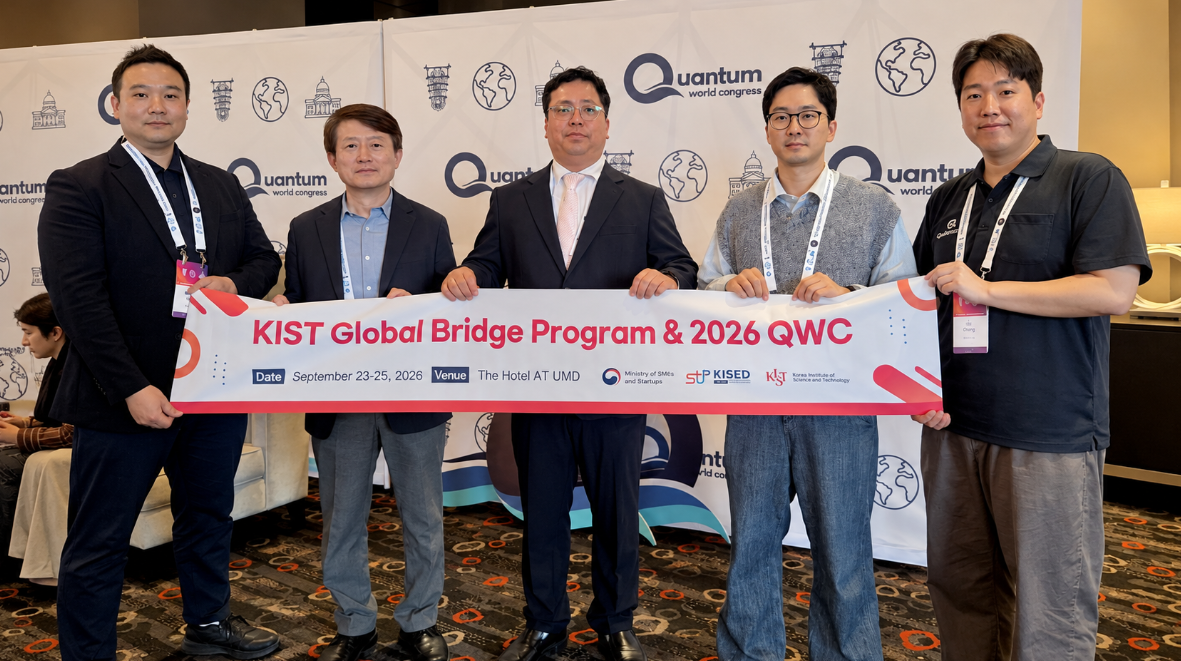
Occam Foundry has broken ground on a 16.5-acre quantum commercialization innovation campus in Austin, Texas, having secured formal written backing from Austin Mayor Kirk Watson and executing a memorandum of understanding with the Texas Advanced Computing Center (TACC) at UT Austin[47]. The Korea Institute of Science and Technology (KIST) led a delegation of South Korean deep-tech quantum startups to the 2026 Quantum World Congress (QWC 2026), signing multiple cross-border market expansion agreements with North American cloud service providers and venture capital firms[48].

In corporate leadership and commercial expansion, D-Wave Quantum appointed former BNP Paribas executive Bernard Gavgani to its Board of Directors; Oxford Quantum Circuits named Simon Phillips as Chief Product Officer; and Bifrost Electronics appointed Doug Campbell as Chief Executive Officer[15]. Japanese quantum optimization company JIJ is ramping up marketing in the Americas for its hybrid optimization software combining classical heuristics with quantum annealing[18]; Karlsruhe, Germany-based quantum simulation firm HQS expanded its team beyond 40 personnel, targeting delivery of its first industrial-scale chemical simulation project[23]; and European quantum education and consultancy firm QURECA entered a channel partnership with Paraxiom to advance Europe's first pilot Post-Quantum Transport Gateway (PQTG) project[33].

05Other

Academic Frontiers

Network Communications and Cryptographic Security

Spanish quantum secure communications firm LuxQuanta, in collaboration with the Institute of Photonic Sciences (ICFO) and the University of Valladolid, developed a novel mathematical optimization algorithm that slashes security parameter evaluation computation times for Quantum Key Distribution (QKD, transmitting cryptographic keys via microscopic physical states) from tens of seconds down to the sub-second level (<1 s)[29]. For years, the key generation rate of quantum secure communication systems has been throttled by the computational bottleneck of post-processing security boundary calculations; this mathematical optimization slashes encryption key negotiation latency by more than 95%, crossing the latency threshold required for real-time dynamic encryption of gigabit data streams[29]. This removes the primary software performance barrier for metropolitan quantum communication networks integrating directly into high-frequency bank transaction settlements and data center backbone real-time interconnects, significantly enhancing the commercial competitiveness of hybrid deployments combining QKD with post-quantum cryptography (PQC) algorithms[29].

The European Telecommunications Standards Institute (ETSI) formally released technical report TR 104 171, systematically noting that existing quantum random number generators (QRNGs, physical true-random-number chips) face severe side-channel attack risks and implementation-level vulnerabilities arising from device manufacturing tolerances and operating environment drift, and introducing for the first time an Entropy Zero Trust (EZT) mitigation framework spanning the entire device lifecycle[16]. The report technically dismantles the long-held assumption that quantum random numbers derived from physical measurements are inherently and unconditionally secure, providing quantitative detection metrics and standardized API guidance for hardware entropy source degradation and external electromagnetic injection attacks for the first time[16]. Hardware vendors across financial hardware security modules (HSMs), government secure servers, and critical infrastructure supply chains will undergo comprehensive security standard reviews, forcing quantum-safe hardware modules to pivot from proof-of-concept sales to continuous dynamic zero-trust verification[16].

Condensed Matter Physics and Fundamental Quantum Theory

Physicists have captured direct experimental physical evidence of altermagnetism (a novel magnetic state combining the rapid response of ferromagnets with the external-field immunity of antiferromagnets) in layered magnetic crystal materials[9]. This discovery confirms the existence of a third fundamental magnetic ordering state, uniting the high-speed manipulation characteristics of fully spin-polarized ferromagnets with the complete external magnetic field insensitivity of antiferromagnets, reducing microscopic spin-wave propagation energy consumption by two orders of magnitude compared to conventional semiconductor logic circuits[9]. This provides a highly promising novel foundational material reserve for next-generation ultra-low-power spintronic memories and cryogenic microwave control switches for superconducting quantum chips[9].

An international physics team published a paper in Physical Review Letters rigorously demonstrating that in gapless 2D disordered quantum magnets, long-range ferromagnetic order remains stable under weak quantum fluctuation perturbations, resolving a theoretical conjecture that had remained open in quantum statistical mechanics for decades[13]. This expands condensed matter physics' traditional understanding of the boundaries of disordered quantum many-body phase transitions, proving that random disorder within materials does not necessarily destroy global ordered states mediated by quantum entanglement[13].

Theoretical physicists constructed a unified theoretical framework based on graph-theoretic topological networks capable of seamlessly spanning the full continuous physical regime from weak to deep-strong coupling between a single atom and an optical field, uncovering the interconnected topological structure of boundaryless quantum state networks in microscopic physical systems[12]. Density matrix renormalization group (DMRG) numerical calculations precisely pinpointed the antiferromagnetic parameter regime in specific frustrated magnets ($J_2/J_1 = 0.623$, $K_1/J_1 = -0.05$), providing high-precision theoretical coordinates for the hunt for topological quantum spin liquids in real solid materials[24]; meanwhile, new developments in random matrix theory revealed universal statistical laws in the energy spectra of chaotic many-body quantum systems[25]. In optical metrology, a study published online in npj Quantum Information demonstrated that researchers successfully extracted anomalous weak values in a generalized Mach-Zehnder interferometer solely through optical intensity measurements, circumventing the need for full quantum state tomography[7].

Energy Devices and Ultra-Precision Sensing

Two successive theoretical and experimental studies revealed fundamental physical trade-offs in quantum batteries (systems utilizing microscopic entangled states to store and release energy) between power output and charge/discharge energy stability, proving that the microscopic quantum uncertainty principle prevents simultaneously maximizing instantaneous ultra-fast charging power and output energy stability[10][53]. The studies mathematically formulate optimal quantum state charging protocols to suppress energy fluctuations, overturning the simplistic belief that entanglement-accelerated charging incurs no physical back-action[10][53]. This sets a physical tolerance baseline for future miniaturized on-chip power modules integrated inside solid-state quantum processors, preventing chip designers from compromising qubit energy sensitivity in pursuit of excessive transient charging rates[10][53].

The National Institute of Advanced Industrial Science and Technology (AIST) in Japan, together with the Tokyo University of Science and the National Institutes for Quantum Science and Technology (QST), jointly developed a miniature current comparator based on diamond NV centers, achieving metrological-grade absolute calibration for both AC and DC current ratios within a single hardware architecture[31]. The device eliminates the thermal drift and non-linear errors encountered when switching between AC and DC in traditional electromagnetic induction comparators, delivering a measurement dynamic range spanning 4 orders of magnitude with picoampere-level sensitivity[31]. This opens a single-chip-integrable miniaturization pathway for testing next-generation integrated circuits, battery management systems, and calibrating precision quantum metrology instruments[31].

06Impact

Today's Impact

  1. Financial and Communications Network Encryption Layer: Dual Shocks Force Standards Overhaul [16][29]

Who is affected: Financial institution information security divisions, data center operators, quantum cryptography and post-quantum cryptography hardware vendors.

What changed: LuxQuanta compressed QKD security computation latency from tens of seconds to under 1 second, allowing dynamic key negotiation to truly match gigabit fiber throughput; concurrently, ETSI directly exposed side-channel vulnerabilities in existing QRNG hardware, ending the unquestioning trust that physical randomness guarantees absolute security.

What to watch next: Monitor whether major bank data centers mandate ETSI Entropy Zero Trust interface certification in crypto hardware procurement, as well as commercial rollout metrics from European pilot deployments of hybrid PQC-QKD gateways.

  1. Industrial Hardware Manufacturing Camp: Acceleration in Neutral-Atom and Silicon Spin Production [17][19][49][50]

Who is affected: Full-stack hardware startups, semiconductor foundries (such as STMicroelectronics), hard-tech venture capital firms.

What changed: Pasqal’s €312.9 million cash position and divestment of defense programs to focus entirely on commercial compute, combined with Quobly’s push toward 300 mm wafer production, demonstrate that the competitive focus of the industry has shifted from vanity metrics on individual physical benchmarks to industrial-scale manufacturing capacity and sovereign supply chain control.

What to watch next: Track tape-out yields and measured parallel gate fidelities for Quobly’s initial 10-qubit-scale spin chips on 300 mm wafer lines.

  1. Miniaturized Medical and Industrial Sensing: Quantum Technologies Accelerate Integration into End-User Applications [8][31][51]

Who is affected: Ophthalmic medical device manufacturers, specialized pediatric hospitals, precision instrumentation metrology institutes.

What changed: Siloton and UCL introduced photonic quantum chips to non-invasive pediatric retinal screening, diamond coherence surpassed the 10-second mark, and Japan’s AIST unified high-precision AC/DC current metrology, signaling that chip-scale quantum sensing is penetrating high-value civilian applications from laboratory proofs-of-concept en masse.

What to watch next: Follow imaging resolution data from Siloton’s photonic quantum ophthalmic system in clinical trials and mass-production medical device certification progress for the portable units.

  1. Global Supply Chains and Capital Architecture: Transnational Interdependence Realities and Sovereign Infrastructure Bets [5][22][43][46]

Who is affected: Quantum hardware startups, sovereign strategic funds, upstream critical component suppliers.

What changed: A 15-nation survey objectively verified that 90% of quantum firms rely on transnational supply chains, showing that unilateral technology restrictions will rebound against the global R&D ecosystem; simultaneously, the US $215 million fault-tolerant prototype challenge and India’s inclusion of quantum in major infrastructure priorities show sovereign capital stepping in with direct infrastructure investments to hedge geopolitical risk.

What to watch next: Watch the shortlist for Phase 1 of the DoD 2028 fault-tolerant computing competition and procurement tender budgets for cryogenic equipment under India’s national infrastructure funding in the upcoming fiscal year.

07Other

Editor's Commentary

The quantum technology industry is currently undergoing a profound paradigm shift: moving decisively from early physical proof-of-concept demonstrations and single-metric record chasing into the deep waters of engineering execution centered on industrial-grade yields, automated EDA software toolchains, and verifiable fault-tolerant architectures. Whether it is advancing 3D integration of silicon spin processors on 300 mm industrial wafer lines, engineering flexible cabling capable of enduring extreme temperatures near -273°C for superconducting systems, or eliminating hook errors in color and surface codes via gate-timing scheduling, this continuum of progress demonstrates that solving the engineering interconnect between raw physical hardware and classical supercomputing systems has become just as urgent and commercially vital as expanding raw physical qubit counts.

Concurrently, a clear divergence is emerging in capital and commercialization strategies. Well-capitalized market leaders holding substantial liquid reserves are decisively shedding defense R&D projects burdened by protracted settlement cycles and stringent export restrictions, opting instead to double down on commercial monetization in drug discovery, quantitative finance, and advanced materials simulation. Meanwhile, facing the stark reality that 90% of enterprises depend on transnational supply chains, sovereign capital across major economies is pivoting away from indiscriminate subsidies toward milestone-based bounties anchored to rigorous utility benchmarks and national infrastructure financing. For technical teams and investors navigating this space, the defining factor separating long-term viability from extinction over the next two to three years will be the ability to traverse supply chain fractures and be among the first to deliver fault-tolerant prototypes that unlock genuine computational advantage.