Oct 7, 2026 – Oct 8 · Daily Brief

Crypto Wallets Face Quantum Decryption: Europol Urges Preemptive Defenses

65 items · 17 sourcesPDFThis issue's roundup is free
02Hardware

Hardware Frontiers

Trapped-Ion Modality

Using the Quantinuum System Model H2 trapped-ion quantum processor, a research team successfully simulated the liquid-state proton NMR spectrum of 1,2-di-tert-butyldiphosphane (containing 21 nuclear spins) on a complex circuit with a two-qubit gate depth of 1,442, accurately reproducing fine spin-coupling peaks within the 3.9 to 4.0 ppm range[35]. Technically, this marks the first time a trapped-ion platform has executed the dynamical evolution of a realistic multi-spin system at a depth exceeding one thousand gates without hardware-level approximation truncations; benchmarked against the current state-of-the-art (SOTA) baseline for trapped-ion two-qubit gate fidelity (a median of 99.921% across all qubit pairs on commercial Quantinuum Helios systems, with isolated pairs reaching up to 99.99%), this exceptional fidelity prevented the signal-to-noise ratio from collapsing even after accumulating 1,442 operational layers, though reaching practical chemistry simulation remains bottlenecked by the operational clock speed governed by ion shuttling transport times[35]. Structurally, this advance directly challenges classical density functional theory (DFT, an electronic structure method) in proximal simulations, accelerating the evaluation timeline for high-fidelity trapped-ion computing in computational chemistry and biopharma to before 2027[35].

A research team from the University of Western Australia introduced a pre-measurement basis transformation technique on Quantinuum hardware, compressing the measurement sampling required for high-dimensional complex quantum state verification from millions of conventional runs down to just 1,000, reducing the critical fitting parameter τ by more than 10 orders of magnitude and ultimately achieving a state preparation fidelity of 92.9%[41]. This technique collapses the overhead of quantum state tomography from exponential to constant-linear scaling; however, compared to current trapped-ion SPAM (state preparation and measurement) baselines typically exceeding 99.9% (reaching 99.99% on Helios), the achieved 92.9% state preparation fidelity remains well below fault-tolerant error correction thresholds, still requiring active syndrome error detection to filter out physical decoherence drift[41]. This effectively reduces on-machine time and verification costs for algorithm developers, shortening live-machine testing cycles for domain-specific algorithms[41].

UK trapped-ion hardware enterprise Universal Quantum announced the completion of a $100 million Series A funding round to expand operations across Europe, Singapore, the United States, and Japan, as well as to fulfill a $77 million development contract signed with the German Aerospace Center (DLR)[23]. The company employs an all-silicon microfabricated modular microwave trapped-ion architecture; while silicon-based microchips integrate more readily into commercial semiconductor foundry lines, its inter-module chip-scale coherent ion shuttling efficiency still awaits publicly available, independent verification data when benchmarked against laser-controlled 99.921% gate fidelities from players like Quantinuum[23]. This financing accelerates head-to-head competition between European approaches and U.S. all-optical trapped-ion architectures, driving multi-module distributed trapped-ion systems toward engineering integration ahead of 2028[23].

IonQ announced its selection for Phase C of the U.S. military’s Quantum Benchmarking program: under a framework with a total potential value of up to $300 million, DARPA will conduct fully independent empirical evaluations of multi-generation Superion trapped-ion quantum computers through 2029[9]. The U.S. military will evaluate its engineering roadmap against rigid experimental metrics, focusing on verifying whether single- and two-qubit gate operations can match or exceed the current 99.99% isolated-pair fidelity under all-to-all connectivity scaling, while eliminating inflated claims padded with error mitigation disguised as algorithmic qubits[9]. This cements IonQ’s long-term evaluation standing within the defense supply chain, making subsequent milestone deliveries a direct bellwether for valuations across the trapped-ion sector[9].

Superconducting Modality

Fermilab physicist Daniel Bafia received a U.S. Department of Energy Early Career Research Award to develop a novel measurement methodology leveraging magnetic vortices to characterize defects and interfaces in superconducting devices, investigating energy dissipation mechanisms at their microscopic origins[2]. The project directly targets TLS (two-level systems, microscopic defects in interface materials), the persistent cause of coherence degradation in superconducting quantum computing; benchmarked against Google Willow’s published SOTA coherence time T₁ of approximately 100 microseconds (which still suffers from 2x to 3x temporal fluctuations), isolating high-frequency microwave absorption sites at material interfaces offers a fundamental path to pushing superconducting qubit coherence beyond the 500-microsecond ceiling[2]. This shifts the focus of superconducting R&D deeper into surface physics and microscopic materials science, with findings set to feed directly back into U.S. national laboratories and commercial superconducting foundries[2].

Researchers successfully lowered the detectable magnetic field limit of a superconducting quantum magnetometer by 27.3% by recovering data discarded during conventional measurements at the qubit state assignment stage[40]. Technically bypassing the conventional approach of blindly packing more information into initial state preparation, the method boosts the detection signal-to-noise ratio purely by optimizing the terminal readout mapping; benchmarked against current superconducting readout fidelities of 98% to 99.5%, this approach eliminates information loss during the signal classification stage[40]. This directly benefits high-sensitivity biomagnetic field detection and ultra-weak physical signal sensing, upgrading downstream sensing metrics without requiring hardware redesigns of cryogenic cryostats[40].

A team from Southern Methodist University developed an autonomous optimal control algorithm that eliminates manual parameter tuning, discovering high-performance microwave pulse sequences through autonomous exploration that outperform conventional stochastic search and significantly reduce state preparation errors in superconducting devices[31]. The algorithm drastically boosts the design efficiency of microwave control pulses, providing a fully automated calibration tool to eliminate subtle overlapping distortions caused by multi-qubit crosstalk against the SOTA threshold of 99.95% for superconducting single-qubit gates[31]. This significantly shortens daily routine calibration times for multi-qubit superconducting chips, improving the effective compute availability of cloud processors[31].

Photonics & Quantum Networking

Israeli quantum startup Quantum Source introduced a memory-assisted photonic interconnect technology named QS-LINK, utilizing individual rubidium-87 atoms trapped inside microcavities as asynchronous quantum memory buffers to establish remote entanglement between discrete quantum processing units (QPUs)[22]. The architecture overcomes the synchronization bottleneck of all-optical networks caused by photon transmission loss during entanglement distribution; benchmarked against the 99.72% chip-interconnect fidelity demonstrated by PsiQuantum’s Omega system over 42 meters of optical fiber, incorporating single-atom memory achieves deterministic synchronization, although the end-to-end insertion loss budget at the microcavity-to-fiber coupling interface remains a critical hurdle for system-level scaling[22]. This approach offers a hybrid modality path for multi-processor distributed quantum computing, directly challenging probabilistic fusion architectures based purely on linear optics[22].

The U.S. Department of Defense Office of Strategic Capital (OSC) approved a conditional loan commitment of up to $150 million to silicon photonic quantum computing firm PsiQuantum to support the expansion of its manufacturing facility in Milpitas, California (PsiFactory), representing a core pillar of the U.S. military’s broader $350 million quantum technology initiative[20]. Capital will primarily fund the volume fabrication of photonic quantum chips on 300 mm wafer lines; while its two-qubit fusion fidelity remains undisclosed, high-density thermal loads and cryogenic interconnects across millions of photodetectors and waveguide switches following large-scale integration still require final validation[20]. Backed by hard asset loans, U.S. defense capital is placing heavy bets on domestic manufacturing to ensure sovereign supply chains for critical optoelectronic chips, widening its volume fabrication lead over European counterparts[20].

India’s Ministry of Electronics and Information Technology (MeitY) approved a 999.4 million INR (approximately $10.3 million) grant for Phase II of the SPECTRA initiative, jointly conducted by IIT Madras and izmo Microsystems, targeting silicon photonics chips for data centers and communications, including chip-scale QRNGs (quantum random number generators) and integrated QKD (quantum key distribution, a physics-based secure communication encryption method) circuits[21]. The project propels silicon photonic devices toward wafer-scale co-packaged optics, advancing the South Asian subcontinent’s sovereign positioning across the low-level hardware security communications supply chain[21].

Neutral-Atom Modality

Oratomic, a neutral-atom hardware developer based in Pasadena, California, announced it has secured a cumulative $775 million in funding to fully accelerate R&D for utility-scale neutral-atom systems and quantum error correction engineering[24]. Capital is concentrated on ultra-large cold-atom optical tweezer arrays and fault-tolerant logical qubit architectures; benchmarked against current neutral-atom physical qubit counts (Atom Computing reporting 1,180 qubits) and logical qubit records (QuEra’s 96 logical qubits), while the neutral-atom modality holds a pronounced edge in scaling qubit count, its cycle repetition rates typically linger at 1 to 10 Hz alongside high mid-circuit non-destructive measurement loss, presenting a primary bottleneck compared to microsecond-scale superconducting cycles[24]. This massive $775 million capital reserve intensifies the technical arms race within the modality, pressuring incumbent leaders to accelerate the delivery of prototypes capable of continuous error correction cycles before 2027[24].

Three months after its launch in Brussels, France’s Pasqal announced that the Q-PLANET pilot line—coordinated across 28 institutions from 11 European countries—has entered active execution[6]. This phase focuses on achieving breakthroughs in the localized industrial manufacturing of critical components, including laser sources, spatial light modulators (SLMs), and ultra-high-vacuum atomic cells, elevating neutral-atom instrumentation from lab-bench assemblies to standardized industrial-grade modules and shielding Europe’s hardware supply chain from overseas disruption[6].

03Algorithms

Algorithms & Software

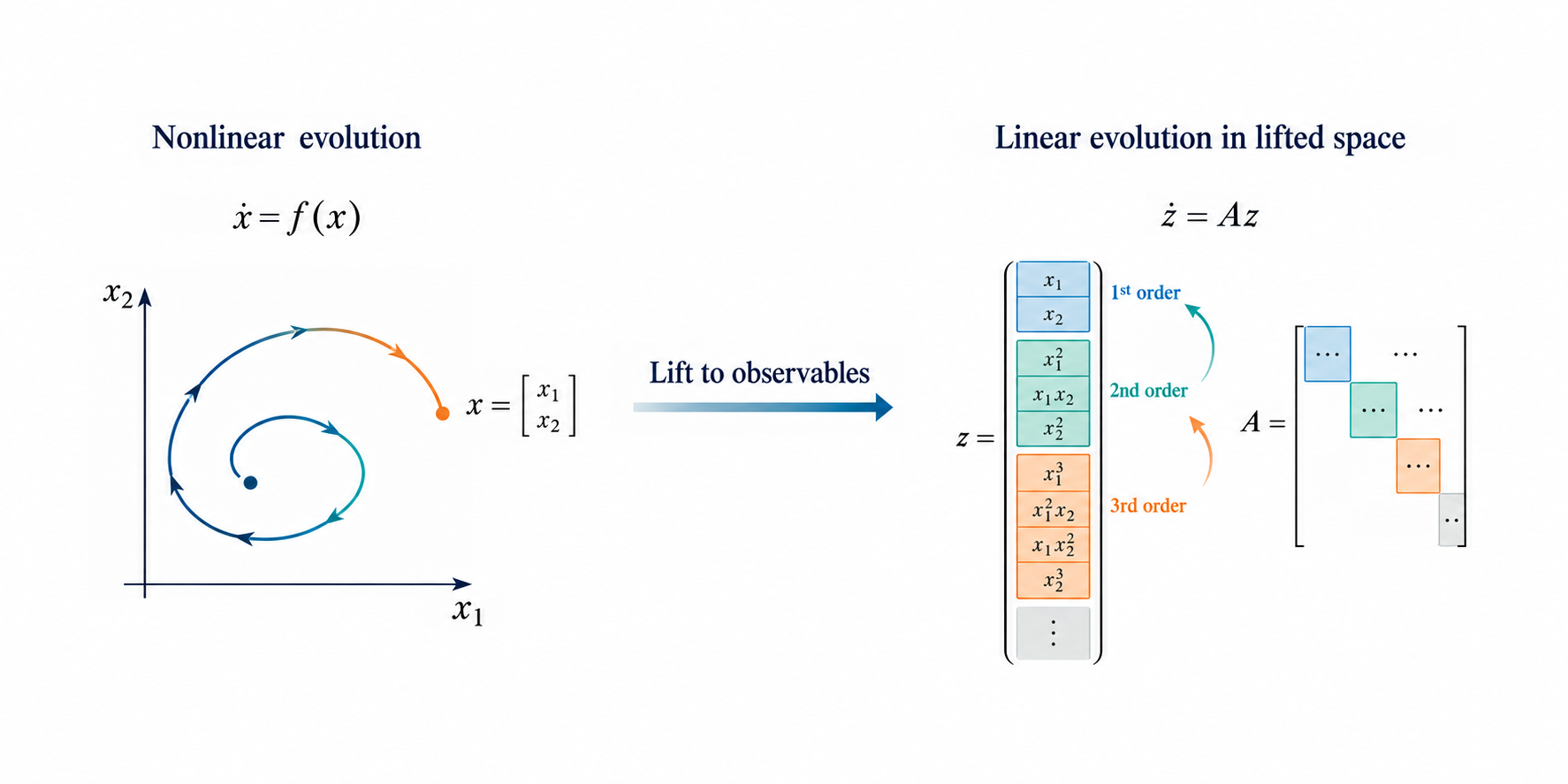
The latest issue of Quantum published a quantum algorithm leveraging Carleman embedding to solve general nonlinear dynamical systems, rigorously mapping finite-dimensional nonlinear differential equations into high-dimensional linear spaces and establishing a polynomial complexity proof for fault-tolerant quantum computing architectures[26]. The algorithm overcomes computational bottlenecks faced by classical supercomputers when modeling strongly nonlinear turbulence and fusion plasma evolution; compared to prior schemes restricted to weak nonlinear perturbations, it expands the convergence radius and numerical boundedness, charting an algorithmic path to migrate fusion physics simulations from classical supercomputers to logical quantum chips[26]. Institutions researching controlled nuclear fusion and hypersonic aerodynamics gain a powerful new theoretical simulation tool[26].

Researchers published a paper in Quantum introducing a novel single-scalar metric tailored for approximate quantum error correction, utilizing it to re-evaluate logical gate implementations in GKP (Gottesman-Kitaev-Preskill continuous-variable bosonic error-correcting) codes[29]. This work addresses the long-standing challenge where residual physical noise prevented rigorous mathematical composition of multi-level error-corrected logical gate errors, establishing the first end-to-end logical fidelity validation benchmark for superconducting cavities and bosonic-encoded devices[29]. This will directly standardize design baselines for bosonic error-correcting compilers, transitioning error-corrected gate design from phenomenological parameter fitting to mathematically rigorous calibration and verification[29].

A research team proposed a compute resource scheduling framework dubbed Adaptive Algorithmic Control that dynamically allocates compute based on the real-time computational hardness of mathematical problems without altering underlying physical hardware, boosting optimal solution search efficiency by 22% to over 100,000% across test instances[36]. The method overturns conventional rigid schemes that rely on fixed evolution times or uniform sampling passes, demonstrating the dramatic amplification dynamic scheduling provides for scarce quantum coherence resources[36]. For noisy intermediate-scale cloud resources currently constrained by sampling repetition rates and decoherence times, this technique enhances problem throughput at zero hardware modification cost[36].

A research team implemented a quantum LDA (Linear Discriminant Analysis) algorithm achieving 85.3% classification accuracy using only 5 extracted feature dimensions, matching the 85.1% accuracy baseline achieved by classical systems utilizing 384 dimensions[30]. By maintaining equivalent classification performance under an extreme 98.7% feature dimension reduction, the work illustrates the innate expressive power of quantum Hilbert spaces when compressing high-dimensional sparse features[30]. This opens a new pathway for compact feature pre-processing on low-power edge devices, helping alleviate massive data transmission overhead in financial fraud detection and multispectral monitoring[30].

D-Wave announced early testing access to its gate-model quantum computing simulator for BBVA, First Quantum Financial Management (FirstQFM), Florida Atlantic University, and Forschungszentrum Jülich, focusing on error-aware logic and quantum error correction exploration[33]. D-Wave is expanding beyond its pure quantum annealing roots toward the universal gate-model error correction ecosystem, exposing realistic low-level physical noise environments to enable financial institutions to design fault-tolerant error-corrected algorithms in advance[33]. Tier-one European banks are using this access to deepen exploratory research into post-quantum asset allocation and risk-pricing algorithms[33].

Quantum circuit simulation tool PKTron 13.0.0 was officially released, introducing multiple physical noise models to support high-fidelity Clifford circuit simulations up to 60 qubits[34]. The release enhances modeling precision for inhomogeneous dephasing and Pauli noise channels, significantly reducing the classical simulation overhead of mid-scale error-correcting code distances and syndrome measurement circuits[34].

04Industry

Industry & Ecosystem

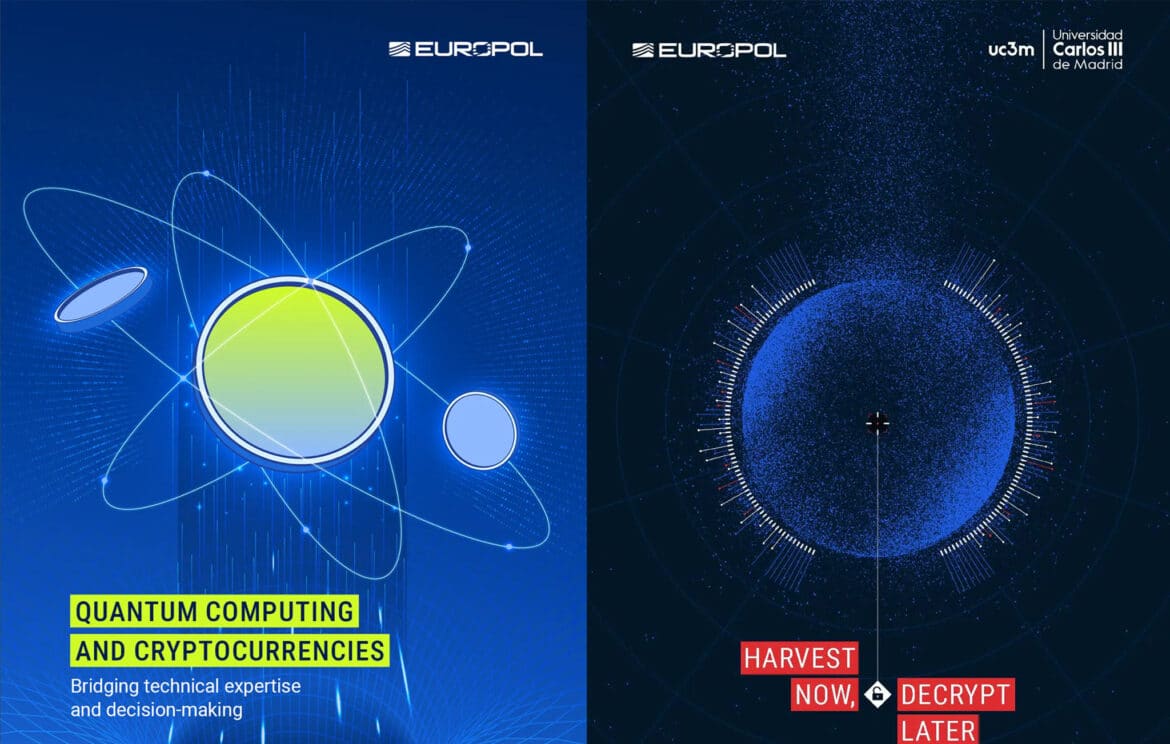
Europol issued an official warning in its October 2026 targeted security review stating that quantum computing poses a tangible threat to crypto wallet private signing keys and long-term secure archival data, urging stakeholders to initiate defensive countermeasures immediately; the IETF has already published post-quantum OpenPGP standards, and hybrid TLS key exchange has rolled out across mainstream software[13]. This marks the first time law enforcement has placed decentralized digital asset private keys and cold/hot wallet security on an active quantum-threat watch list, dispelling the financial sector’s complacency that quantum threats remain far on the horizon[13]. Global crypto custodians and digital banks will be forced to accelerate the deprecation of legacy ECDSA (Elliptic Curve Digital Signature Algorithm), and commercial compliance audits mandating post-quantum cryptography (PQC) transitions may become strict entry hurdles within the next two years[13].

NVIDIA announced plans to invest $1 billion over the next five years to accelerate U.S. scientific computing and quantum infrastructure, prioritizing classical-quantum hybrid hardware integration, fault-tolerant quantum software, controlled fusion, and microelectronics design[19]. The semiconductor giant is decisively positioning quantum hardware as heterogeneous co-processors within GPU-accelerated clusters, aiming to leverage its foundational ecosystem to control the distribution entry points and standard protocols of hybrid compute[19]. Middleware development among global quantum software startups will become increasingly tied to NVIDIA’s technology stack, continuing to squeeze the commercial bargaining power of independent compilation ecosystems[19].

The U.S. Department of Energy Office of Science released the Quantum Genesis Priority Applications (QGPA) guidelines, defining eight pivotal scientific challenges to evaluate the scientific utility of fault-tolerant quantum computers, establishing acceptance baselines for the $215 million "Q-Compete" challenge and National Quantum User Facilities[17]. On the same day, the DOE allocated $159 million in Phase II funding across 12 flagship projects, including Harvard’s ASQC quantum error correction project and materials co-design at Oak Ridge National Laboratory[18]. Federal funding has decisively shifted toward "fault-tolerant scientific utility" as its sole benchmark, putting an end to speculative grant pursuits based purely on physical qubit counts and entrenching the dominance of national labs and premier academic consortia over basic research budgets[17][18].

Australia’s Silicon Quantum Computing (SQC) secured $2.5 million to advance its partnership with Schneider Electric, co-developing quantum optimization algorithms for energy-efficient dispatch across complex modern power grids[42]. A global heavy industry and energy leader committing hard capital to procure atomic-precision spin compute validates SQC’s commercial appeal[42]. Urgent utility requirements for high-dimensional grid power-flow optimization are prompting the energy sector to supplant traditional finance as a primary buyer of custom algorithmic development[42].

Japanese telecom giant NTT DOCOMO BUSINESS formed a strategic commercial partnership with quantum software developer Classiq to accelerate the deployment and enterprise adoption of quantum applications across the Asia-Pacific region[1]. By serving as an enterprise sales channel paired with automated logic synthesis tools, the telecom giant bridges the development chasm between low-level hardware and traditional enterprise business logic[1]. This accelerates quantum readiness budget allocations (metrics tracking an enterprise’s preparedness to migrate to quantum technologies) across manufacturing, supply chain, and finance in APAC[1].

The U.S. National Science Foundation announced the initial private-sector and philanthropic founding partners for its $1.5 billion X-Labs consortium, including the Astera Institute, Ginkgo Bioworks, and the Florida Center for Quantum Studies[50], while rolling out new funding programs targeting frontier quantum and basic sciences in alignment with White House strategic directives[51]. U.S. basic research funding is evolving from pure federal appropriations toward a hybrid model driven by government seed capital backed by private philanthropy, diversifying funding mechanisms at the intersection of biopharma and quantum tech[50][51].

An undisclosed U.S. federal agency fully deployed Quantum XChange’s Phio TX-EM post-quantum data transmission solution across 15 production sites to meet the end-of-2030 compliance deadline mandated by Executive Order 14412[37]. Crypto-agile products centered on seamlessly overlaying protection onto existing network infrastructure are achieving rapid commercial traction, setting a federal procurement benchmark for in-transit data eavesdropping defenses[37].

Cybersecurity provider Surfshark announced the full integration of the ML-DSA digital signature algorithm and ML-KEM key encapsulation mechanism into the WireGuard protocol across its proprietary stack, achieving end-to-end post-quantum authentication and traffic encryption[52]. Consumer-facing cybersecurity products have begun adopting NIST’s finalized post-quantum public-key cryptographic standards at scale, driving the rapid descent of PQC technology from sovereign private networks down to millions of consumer endpoints[52].

Project Eleven announced plans to partner with Quantus, connecting its Quantus Network into Strongpoint’s institutional-grade post-quantum custody platform, with Quantus advising on custodial architecture design[53]. Regulated digital asset custodians are establishing post-quantum capabilities as a standard offering to guard against systemic threats from future compute targeting private key inversion and side-channel leakage[53].

UK quantum cybersecurity company Arqit released unaudited preliminary results, projecting revenues of $355,000 to $380,000 for the second half of the fiscal year ending September 30, 2026, and full-year revenues of just $975,000 to $1,000,000[38]. Commercial order conversions and cash collection cycles for pure-software encryption concepts are lagging far behind market expectations; razor-thin revenues serve as a wake-up call for high-multiple public market pure-plays, prompting secondary capital to concentrate into assets with definitive defense and government contracts[38].

Fermilab secured two new research grants under the Genesis mission framework, focusing on high-density microelectronics chips and quantum information physical systems[4]. The projects aim to integrate cryogenic control chips with superconducting qubits into a unified fabrication pipeline, reinforcing the sovereign technological moat of U.S. national facilities in cryogenic electronic control chips[4].

French neutral-atom hardware firm Pasqal launched an automated assistant workflow on its cloud platform capable of translating scientific hypotheses into hardware-compatible tasks, executing task verification, and interpreting results into physical observables[39]. The feature lowers the operational barrier for non-quantum engineers interacting with optical-tweezer neutral-atom hardware, improving the turnaround velocity of cloud compute resources[39].

The Melbourne Quantum Diamond Hub (MQDH) officially commenced operations in Australia, focusing on vertical applications of diamond NV centers (nitrogen-vacancy defects) in ultra-sensitive physical metrology and room-temperature quantum computing, cementing Oceania’s cluster leadership in solid-state spin technologies[8].

Patent legal analyses noted that under existing U.S. case law, asserting patent claims over foundational algorithms such as Shor’s factoring algorithm faces severe patent eligibility hurdles, cautioning quantum software firms to pivot IP protection strategies toward hardware-software co-designed architectures and specialized control/readout implementations[16].

SpecterAI Quantum Security hosted a hands-on post-quantum banking workshop at the inaugural Asia FinTech Forum in Kuala Lumpur, briefing regional financial executives on PQC migration paths and asset exposure assessments[54].

05Other

Academic Frontiers

Fermilab physicist Rakshya Khatiwada received U.S. Department of Energy funding to employ a four-qubit entangled superconducting system for ultra-weak signal sensing, verifying entanglement-enabled sensitivity gains in simulated dark matter environments to target axions and dark photons[3]. The research extends many-body quantum entanglement from computing into frontier deep-space high-energy physics; technically, leveraging many-body entanglement to surpass the standard quantum limit and approach the Heisenberg limit (the ultimate physical measurement precision allowed by quantum mechanics) establishes theoretical detection bounds for ultra-weak microwave electromagnetic responses[3]. This pioneers an interdisciplinary paradigm repurposing superconducting processors as fundamental physics detectors[3].

A Singapore-based research team achieved a breakthrough in quantum state certification theory, rigorously proving an Ω(1/ε²) theoretical lower bound on sample complexity for non-adaptive equivalence testing algorithms when distinguishing between just two quantum states, while demonstrating that comparable efficiency can be achieved without adaptive scheduling under specific rank conditions[32]. This finding rigorously establishes sample complexity separations between adaptive and non-adaptive measurements under fidelity decision criteria, contrasting sharply with prior studies showing no asymptotic advantage for adaptive strategies under trace distance criteria[32]. This establishes definitive sampling bounds for factory calibration and cloud benchmarking of quantum chips[32].

Theoretical research published in Quantum established a rigorous mathematical hierarchy linking n-simulability, compatibility structures, and multi-copy compatibility in quantum measurements[28]. The work deepens understanding of the algebraic properties of "incompatible measurements" (conjugate operators that cannot be measured simultaneously), resolving the strict conditions under which incompatibility is partially lifted given access to finite identical state copies[28]. This establishes algebraic foundations for rigorous security proofs in device-independent quantum cryptography and true random number generation[28].

A research team proposed in Quantum a generalized theoretical framework for local joint measurements in quantum field theory that satisfies both relativistic spacetime locality and operational composability[27]. The theory bridges the long-standing formal divide between relativistic causality and quantum measurement axioms, eliminating superluminal collapse paradoxes when defining multiple local projective measurements in continuous field theories[27]. This provides foundational mathematical scaffolding for investigating distributed quantum information routing and causal networks under gravitational fields and relativistic bounds[27].

Experimental physicists utilized two-dimensional layered semiconductor structures to manipulate exciton-polaritons, achieving continuously tunable magnetic control over the stimulated emission properties of a macroscopic Bose-Einstein condensate[11]. The study controls a macroscopic degenerate phase in a chip-scale solid-state architecture without requiring ultra-low-temperature laser cooling, illustrating the control flexibility of strong spin-photon coupling[11]. This offers a novel solid-state material platform for exploring on-chip, energy-efficient coherent light sources and ultrafast photonic quantum logic devices[11].

A team led by Rice University physicist Pengcheng Dai discovered that the collective behavior of microscopic quantum spins in an ytterbium-bearing crystal exhibits directional ordering reminiscent of liquid crystal molecules[12]. The work observed the coexistence of a quantum nematic phase and an unconventional spin liquid in a real strongly correlated electron material, expanding the phase diagram of topological quantum matter and providing a new candidate system for engineering quantum spin storage media with intrinsic topological protection[12].

Researchers developed a novel characterization framework capable of accurately distinguishing individual internal quantum excitation pathways from measured spectral lines within single molecules under demanding conditions where microscopic theoretical models remain incomplete[10]. The technique removes identification ambiguities between complex single-molecule excitation processes and their underlying microscopic physical states, clearing analytical data roadblocks for the reliable readout of molecular spin qubits[10].

06Other

Today's Implications

  1. Crypto Asset Holders & Financial Security Institutions: Europol has officially classified quantum decryption risks as an active threat to wallet private signing keys and archived data[13], while federal agencies have led the way by completing production deployments of post-quantum middleware[37], forcing the financial and blockchain sectors to shift defense timelines from theoretical debate to operational migration; next, watch hard fork debates surrounding post-quantum signature proposals (such as ML-DSA and SLH-DSA) across the Ethereum and Bitcoin ecosystems, as well as upgrade timelines among institutional custodians[13][37][53].
  2. Computational Chemistry R&D & Drug Discovery Teams: Quantinuum’s successful simulation of precise NMR spectra for a 21-spin molecule at a 1,442-gate depth[35] proves that high-fidelity trapped-ion hardware now possesses genuine simulation capabilities surpassing conventional DFT estimates, transitioning chemical simulation from shallow-circuit proofs of concept across the threshold of deep, complex dynamical utility; next, track whether global pharmaceutical leaders begin substantively migrating simulation workloads for target molecules and metalloenzyme catalytic reactions from supercomputing centers to commercial quantum cloud clusters[35].
  3. Quantum Hardware Manufacturing Supply Chain & Foundries: The U.S. Department of Defense committed $150 million to PsiQuantum to expand its manufacturing facility[20], complemented by NVIDIA’s $1 billion pledge toward classical-quantum hybrid and hardware infrastructure[19], signaling that capital from governments and compute giants is pivoting decisively from pure academic inquiry to capital-intensive semiconductor fabrication and system integration; next, monitor 300 mm foundry yield ramps and packaging loss performance across key processes such as electro-optic modulation and single-photon detector integration[19][20].
  4. Utilities & Traditional Heavy Industry Giants: Schneider Electric injected $2.5 million to procure atomic-precision silicon quantum algorithms for grid dispatch[42], while NTT partnered with Classiq to unlock enterprise applications[1], indicating that non-tech incumbents are moving past wait-and-see postures to engage industrial optimization directly via vertically tailored initiatives; next, keep a close watch on empirical runtime speedups and energy efficiency gains demonstrated by grid power-flow simulations across small-to-midscale operational grid nodes[1][42].
07Other

Editorial Commentary

The valuation anchor for the quantum computing industry is undergoing a cold, uncompromising reset from quantity to quality. Over past years, narratives trading linear physical qubit expansion for venture capital hype have broken down entirely. They are being supplanted by two rigid criteria: whether physical fidelity can endure the compounding degradation of thousand-gate circuit depths, and whether compute output can resolve physical realities intractable to classical algorithms without software sleight of hand. Whether reconstructing experimental spectra at thousand-gate depths in multi-spin molecular systems or establishing composable logical gate error metrics in error correction theory, technological competition across the sector has pivoted away from vanity parameter races toward deep coherence resilience.

Unfolding in lockstep with this low-level technical convergence is the heavy-handed entrance of institutional capital and geopolitical industrial policy. Multi-billion-dollar sovereign initiatives and semiconductor titan balance sheets are no longer content with piecemeal algorithm sponsorships; instead, they are deploying en masse into 300 mm wafer fabrication, cryogenic microelectronic control, and heterogeneous classical integration backbones. This capital-intensive pivot marks the industry’s graduation from lab-scale proof-of-concept into the uncompromising engineering grind of foundry yields, interconnect losses, and industrial standards. Meanwhile, Europol’s public warning on cryptographic private key vulnerabilities sounds an unmistakable alarm, declaring that the window for cryptographic defense is closing fast and irreversibly.