Oct 16, 2026 – Oct 17 · Daily Brief

Threshold for Breaking Bitcoin's Cryptographic Core Drops to 900 Logical Qubits

41 items · 9 sourcesPDFThis issue's roundup is free
02Hardware

Hardware Frontiers

Fault Tolerance, Error Correction, and Superconducting Architectures

Following earlier theoretical simulation stages, recent hardware experiments have, for the first time, executed a complete magic state distillation protocol on physical chips (magic states: pivotal quantum states for achieving fault-tolerant computation), suppressing the input logical qubit error rate to one-fortieth of its original value (a 40-fold reduction)[2].

In terms of technical significance, this marks the world's first closed-loop, end-to-end verification of this fault-tolerant purification protocol on physical silicon. Benchmarked against the current superconducting and fault-tolerant state-of-the-art (SOTA), the industry-leading error suppression factor achieved by Google's Willow chip running a surface code reached Λ ≈ 2.1 (code distance d=7), QuEra demonstrated 96 error-corrected logical qubits in Nature, and magic state preparation has long consumed over 90% of physical resources in fault-tolerant computing. This 40-fold experimentally measured suppression dramatically narrows the chasm between algorithms and fault-tolerant hardware. However, two critical bottlenecks remain before general-purpose practical utility is realized: first, nanosecond-scale real-time decoding latency across the entire chip has not yet achieved a full closed loop; second, constrained by two-level system (TLS: coherence loss caused by material defects) fluctuations in superconducting chips, the ancilla qubit overhead during distillation remains massive.

In terms of landscape impact, this progress directly reduces the dependence of surface codes and concatenated error correction architectures on physical qubit counts, easing physical system scaling pressures for IBM, Google, and hardware manufacturers planning to deliver commercial fault-tolerant machines between 2029 and 2030[2].

Next Labs at Chalmers University of Technology, ConScience, and the National Quantum Fabless Foundry (NQFF) of Singapore completed a cross-continental joint validation of the superconducting quantum chip QiB1, confirming that after round-trip transport and recooling between vastly disparate test environments in Gothenburg and Singapore, the qubit decoherence times and gate operation parameters remained fully stable without environment-induced performance degradation[17].

In terms of technical significance, this work establishes, for the first time on a cross-national benchmark, quantified metrics for the environmental robustness of superconducting wafer fabrication and remote assembly. Compared with the superconducting SOTA baseline for median two-qubit gate fidelity (F₂Q between 99.5% and 99.9%), this test verifies the physical transport shock and temperature-variation thresholds of superconducting devices; nevertheless, full-process mass production still lacks automated cryogenic wafer-level parallel test screening specifications to meet commercial semiconductor standards.

In terms of landscape impact, this achievement dispels quality and risk-control concerns regarding cross-border distributed quantum chip foundry, off-site packaging, and global on-site client delivery models, benefiting independent chip foundry service providers across Europe and Asia[17].

D-Wave Systems utilized up to 728 superconducting qubits on its Advantage2 superconducting quantum annealing processor to successfully execute a three-dimensional analog-digital hybrid quantum simulation of a higher-order topological insulator, directly measuring localized boundary states and extracting 3D bulk topological invariants via proprietary quantum control protocols[15].

In terms of technical significance, this sets a new scale record for the quantum simulation of 3D higher-order topological phases in solid-state physics. Compared to superconducting universal gate-model baselines (such as Google Willow's 105 qubits and IBM Nighthawk's 120 qubits), quantum annealers demonstrate a distinct scale advantage with 728 qubits for dedicated topological matter simulations; however, because it operates on a non-universal Hamiltonian evolution framework, it cannot execute arbitrary universal logic gates, and the system must still contend with flux noise eroding effective decoherence times.

In terms of landscape impact, this advance further broadens the industrial simulation scenarios of quantum annealing in researching complex functional materials and the microscopic mechanisms of topological superconductors, complementing traditional supercomputing-based high-performance cluster simulations[15].

Photonic and Neutral-Atom Architectures

Researchers leveraged a deterministic fusion mechanism (photonic fusion: a mechanism that measures and merges photonic entanglement) to successfully generate a 13-photon quantum graph state exhibiting multipartite entanglement in the laboratory, breaking through the technical ceiling that had long stalled below 12 entangled photons[20].

In terms of technical significance, this experiment sets a new public record for the number of globally multipartite-entangled photons and topological graph state dimensions. Benchmarked against the photonic roadmap SOTA (where PsiQuantum measured two-qubit fusion fidelities of 99.22% ± 0.12% on 300 mm wafers), this result represents an incremental step forward in discrete photon count. However, key data regarding core photonic metrics remains missing: all reported fidelities are conditioned on successful photon detection (heralded fidelity), leaving end-to-end full-link loss budgets completely undisclosed—including single-photon source emission efficiency, on-chip waveguide insertion loss, and superconducting nanowire single-photon detector (SNSPD) efficiency.

In terms of landscape impact, this work supplies higher-dimensional cluster state foundational resources for measurement-based quantum computation (MBQC), directly benefiting the architectural evolution of photonic quantum startups such as PsiQuantum and Canada's Xanadu[20].

Room-Temperature and Novel Quantum Physical Systems

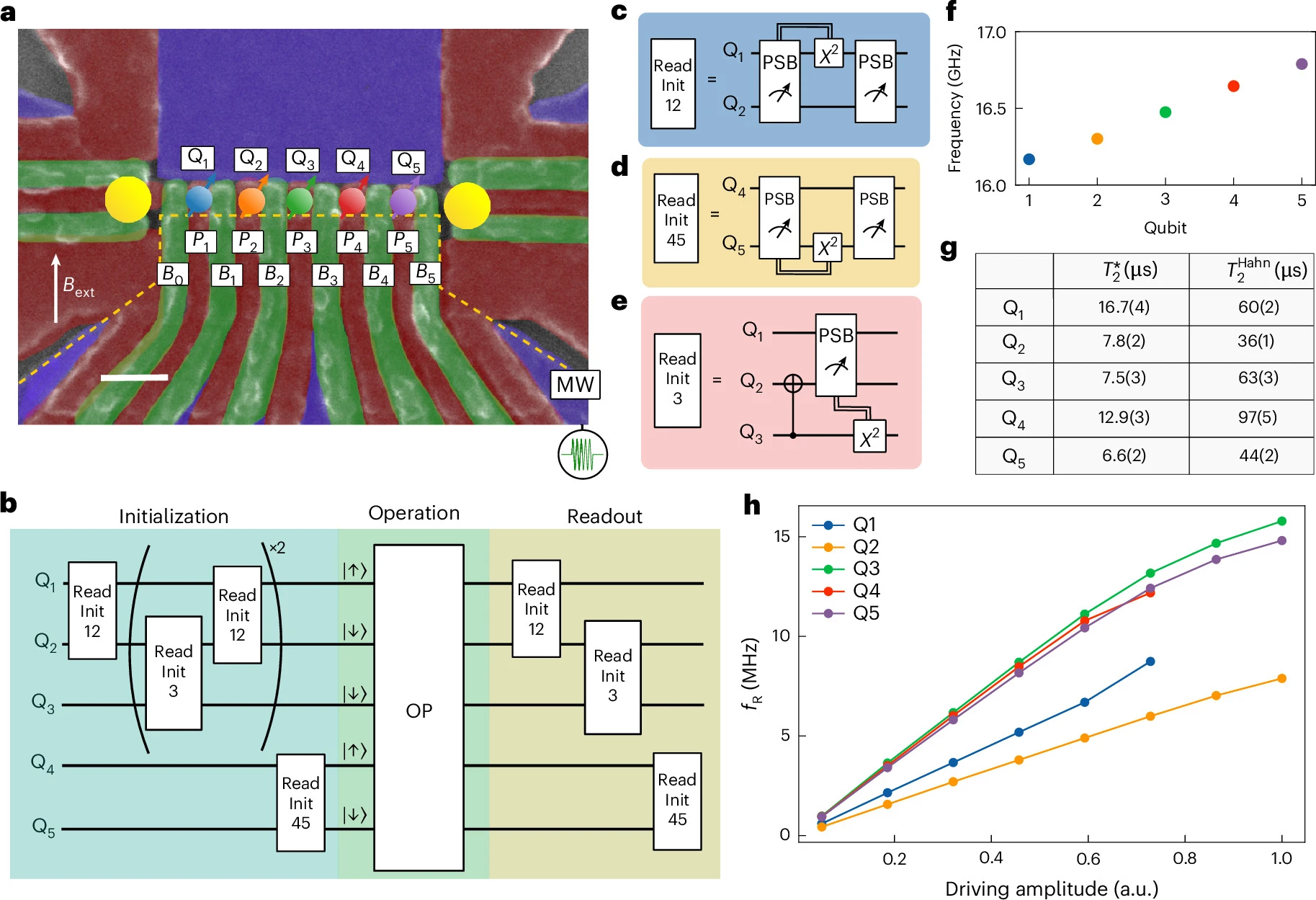
The R&D team at SAXON Q built a room-temperature solid-state quantum computing prototype that ran Grover's search algorithm (Grover: a quantum unstructured database search algorithm) on 3 qubits, achieving a 77.3% target-state success rate under ambient temperature and pressure without any cryogenic refrigeration equipment[27].

In terms of technical significance, this marks the first mathematical validation of a multi-qubit quantum search algorithm in an uncooled, room-temperature solid-state system. Benchmarked against mainstream cryogenic SOTA baselines (where single-qubit fidelity exceeds 99.95% and two-qubit gate fidelity generally exceeds 99.5% in superconducting and trapped-ion systems), the system's 77.3% algorithmic hit rate lags mainstream modalities by more than an order of magnitude in error rate; the system has extremely short decoherence times and lacks fault-tolerant error-correcting code support, leaving the current physical architecture with an evident ceiling on scalability.

In terms of landscape impact, while this system cannot substitute for general-purpose data-center quantum computing in the near term, it establishes an early commercial blueprint for dilution-refrigerator-free architectures in extreme operational environments such as vehicular edge sensing and tactical field-deployable portable computing[27].

Researchers demonstrated a novel room-temperature quantum magnetic sensing prototype utilizing noble gas isotope atomic spins, with a theoretical sensitivity potentially reaching 24 aT/√Hz (attotesla per square root Hertz: a unit for ultra-weak magnetic field measurement) while completely dispensing with liquid helium and cryogenic vacuum systems[25].

In terms of technical significance, this sensitivity crosses the technical threshold of traditional room-temperature magnetometers, directly matching the core measurement domain of expensive cryogenic superconducting quantum interference devices (SQUIDs); however, practical engineering deployment still faces the challenge of active magnetic shielding compensation in complex dynamic environments.

In terms of landscape impact, this technology paves the way for the cost-effective, mobile adoption of high-end biomedical magnetoencephalography (MEG) and magnetocardiography (MCG) screening equipment, directly challenging the supply chain dynamics of traditional cryogenic medical imaging instrumentation[25].

Johannes Pollanen, co-founder of EeroQ and professor at Michigan State University, systematically outlined in an academic interview the technological path of building qubits using single electron spins floating on a thin film of superfluid helium, emphasizing that leveraging mature semiconductor silicon manufacturing processes represents the only viable engineering path to scaling to one million qubits[11].

In terms of technical significance, the electrons-on-superfluid-helium concept theoretically combines the high clock speed of superconducting circuits with the long coherence times of trapped ions; currently, however, physical prototypes remain in the fundamental proof-of-concept phase for single- and two-qubit operations, lagging roughly a generation behind superconducting and trapped-ion roadmaps that have already transitioned to hundreds of qubits and error-correction validation.

In terms of landscape impact, this discussion showcases the potential disruptive power of silicon-based hybrid architectures to deep-tech venture capital firms long dominated by superconducting and trapped-ion platforms, capturing the attention of patient, long-horizon capital[11].

03Algorithms

Algorithms and Software

Cryptanalysis and Secure Compilation

In a newly established open-source cryptanalysis benchmarking leaderboard, the newly optimized quantum logical circuit scale for point addition on the secp256k1 elliptic curve—the core mathematical operation underlying mainstream blockchain signature generation and verification—was successfully compressed to within 900 logical qubits, with overall gate costs falling entirely within Google's published Toffoli gate (Toffoli: three-qubit controlled-NOT gate) budget[3].

In terms of technical significance, this represents the world's first achievement in bringing the logical compute threshold for a key attack step against asymmetric cryptography down to three digits while satisfying industrial-grade hardware constraints (specifically gate budgets and tailored topologies). Although executing a complete public-key break still requires chaining point additions into an end-to-end discrete logarithm solver, this crosses a decisive watershed in the engineering implementation of discrete attack operators.

In terms of landscape impact, this finding significantly shortens the previously estimated 10-to-15-year security window for legacy crypto-financial networks (such as Bitcoin and Ethereum), forcing base-layer protocols and major custody institutions to comprehensively accelerate hard-fork upgrades toward post-quantum signature schemes within the next 3 to 5 years[3].

Automated Program Synthesis and Error-Correction Optimization

A joint research team from Harvard University, Anthropic, and QuEra Computing developed a program synthesis system based on deep self-attention mechanisms; when tested across 8 core foundational computing primitives required for fault-tolerant quantum computing, the automatically generated optimized circuits achieved up to a 9,100-fold reduction in hardware resource overhead compared to manual baselines designed empirically by top physicists[13][35].

In terms of technical significance, the system directly synthesizes fully structured underlying Python logic code and autonomously refactors gate sequences, proving for the first time in operator synthesis that high-order machine-generated algorithms can bypass blind spots in human mathematical intuition and realize order-of-magnitude leaps in the synthesis optimization of non-Clifford gates (non-Clifford gates: indispensable, high-overhead gate operations required for universal fault-tolerant computing).

In terms of landscape impact, this breakthrough directly rewrites the design paradigm for fault-tolerant quantum software, drastically reducing physical hardware requirements for pharmaceutical molecular simulations and quantum chemistry algorithms, and bringing applications that originally required millions of physical qubits within reach of 10,000-qubit-class hardware ahead of schedule[13][35].

Following its earlier release of error-correcting architecture prototypes, IBM Research disclosed the use of an autonomous multi-agent pipeline to perform microarchitectural topology searches for quantum error-correcting hardware, achieving a 52-fold comprehensive optimization speedup compared to traditional baseline designs under identical search budgets. In terms of inference costs, a configuration based on cutting-edge open-source parameter models consumed only around $26, approximately one-eleventh (11.5 times cheaper) of the $299 cost incurred by proprietary commercial models[30].

In terms of technical significance, this experiment confirms with precise financial metrics the engineering feasibility and exceptional return on investment (ROI) of low-cost open-source foundation model pipelines in designing complex, low-level quantum microarchitectures.

In terms of landscape impact, this solution breaks down the barrier where high-end quantum microarchitecture design was restricted exclusively to capital-intensive R&D by multinational tech giants, enabling smaller academic groups and startup hardware ventures to execute custom error-correcting chip designs with minimal compute expenditures[30].

Quantum software startup Quantum X Labs released its LayerQake low-level compiler optimization technology; benchmarked across three active production superconducting chips from IBM (ibm_fez, ibm_kingston, and ibm_marrakesh), it reduced the cumulative error of executing multi-qubit circuits by up to a factor of 21 (equivalent to a 21-fold reduction in noise interference)[29].

In terms of technical significance, without requiring physical hardware modifications to refrigeration or wiring, it restructures execution sequences purely through software-layer dynamic pulse scheduling and crosstalk cancellation, significantly extending the coherent compute depth of existing noisy intermediate-scale quantum hardware.

In terms of landscape impact, this technology directly empowers pharmaceutical and materials simulation enterprises leasing capacity on the IBM Quantum cloud, allowing customers to run deeper, higher-fidelity chemical simulation algorithms on existing physical hardware[29].

Cross-Platform Compilation Tools and Application Paradigms

Open-source organization Open Quantum officially released a hardware-native pass module for its Qrisp high-level quantum development framework, enabling high-level algorithms to be compiled in a single click and executed directly on heterogeneous physical hardware from multiple vendors, including IonQ, Rigetti, IQM, and AQT, without requiring developers to write assembly-level code tailored to each vendor's native gate set[16].

In terms of technical significance, the framework features built-in automated qubit allocation and topological routing algorithms, establishing a standardized compiler middleware layer between application-level software and heterogeneous physical backends, eliminating porting overhead across physical architectures.

In terms of landscape impact, this project weakens the proprietary lock-in that leading single-point hardware vendors have exerted over low-level software ecosystems, accelerating industry-wide quantum application convergence toward platform-agnostic, open-source standardization[16].

Kipu Quantum successfully orchestrated an array of 200 neutral atoms to perform analog quantum feature extraction on QuEra's 256-qubit Aquila neutral-atom quantum processor, achieving feature-resolution performance on a molecular toxicity classification benchmark that comprehensively outperformed classical baseline models[19].

In terms of technical significance, this represents the first experimental demonstration on neutral-atom hardware exceeding 200 qubits that analog quantum dynamics deliver computational advantage in biochemical multi-dimensional feature mapping, bypassing stringent global gate fidelity bottlenecks.

In terms of landscape impact, this work unlocks commercial opportunities for neutral-atom hardware in early-stage pharmaceutical screening beyond pure physical simulations, accelerating commercial proof-of-concept (PoC) deployments between biopharma enterprises and quantum startups[19].

04Industry

Industry and Ecosystem

Capital Markets and Industrial Policy

Wall Street international investment bank Morgan Stanley officially upgraded trapped-ion quantum hardware leader Quantinuum from Equal-weight to Overweight, explicitly designating it as the bank's top pick across the entire quantum computing sector[26].

In terms of commercial significance, Morgan Stanley noted in its research report that the public secondary market has not yet fully recognized Quantinuum's intrinsic commercial value.

In terms of landscape impact, this rating recalibrates the global capital valuation benchmark for quantum hardware firms, driving venture capital and public market funds to accelerate allocations toward tier-one contenders possessing both high-fidelity and fault-tolerant error-correction engineering capabilities[26].

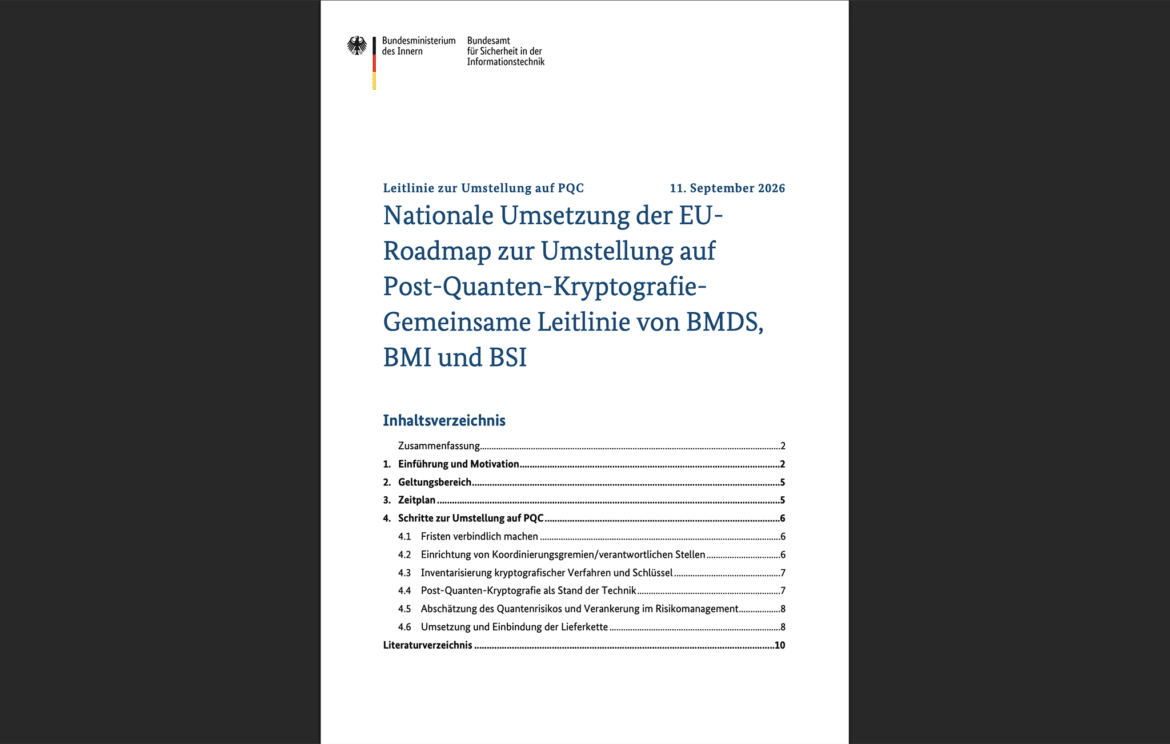
Following the earlier European Union framework release, Germany's Federal Ministry of the Interior, Federal Ministry for Digital and Transport, and the Federal Office for Information Security (BSI) officially enacted national implementation guidelines, mandating that government agencies, core enterprise systems, and critical infrastructure fully complete post-quantum cryptography migrations across high-risk systems by 2030; they also instituted an interim review milestone at the end of 2026, requiring all entities to designate accountable personnel and conclude an initial cryptographic asset inventory by year-end 2026[4].

In terms of commercial significance, rigid compliance mandates will force a structural shift in enterprise IT spending across Germany and wider Europe, rendering cryptographic asset inventorying and automated discovery software the most predictable enterprise procurement expenditures over the next 24 months.

In terms of landscape impact, this policy directly benefits cybersecurity vendors providing automated cryptographic asset discovery and post-quantum migration services, while exerting substantial compliance accountability pressure on multinational financial and industrial entities operating in Germany[4].

The Cyber Security Agency of Singapore (CSA) announced national support details, offering to cover up to 70% of migration pilot project costs through state funding for critical information infrastructure (CII) operators under its regulatory remit that are mandated to complete post-quantum retrofits by 2031[5].

In terms of commercial significance, government co-funding to absorb early-stage trial-and-error costs will substantially alleviate wait-and-see sentiment among financial institutions and public utilities stemming from early technological route uncertainties.

In terms of landscape impact, this measure accelerates Singapore's position as an Asia-Pacific hub for post-quantum financial security, providing a policy blueprint for global financial regulators seeking to drive compliance migrations via fiscal subsidies[5].

The European Quantum Industry Consortium (QuIC) submitted a formal appeal to the European Commission, requesting the rollout of end-to-end digital approval processes with mandatory published licensing turnaround times across all member states, while urging the inclusion of South Korea into the EU General Export Authorisation EU001 framework for dual-use items to prevent member companies from losing Asia-Pacific customer orders amid bureaucratic review delays[8].

In terms of commercial significance, this appeal reflects export-expansion anxiety across the European quantum supply chain regarding upstream core components and advanced control electronics, where export-control delivery delays are eroding the international market share of domestic European hardware vendors.

In terms of landscape impact, if adopted by the EU, this would substantially shorten supply chain lead times for Asia-Pacific laboratories and commercial clients procuring high-precision European dilution refrigerators and control electronics[8].

Industry Deployments and Cross-Sector Collaboration

IT infrastructure giant Hewlett Packard Enterprise (HPE), Toshiba, and Singaporean quantum-secure communications provider SpeQtral jointly introduced a quantum-safe networking solution tailored for critical information infrastructure and government agencies, interconnecting Toshiba's QSN platform with HPE's next-generation network firewall hardware to introduce dynamic, quantum-resistant key material into IPsec VPN tunnels[21].

In terms of commercial significance, the solution bridges the physical protocol barrier between dedicated quantum secure communications hardware and mainstream data-center networking equipment, integrating cutting-edge quantum key distribution (QKD) and post-quantum cryptography (PQC) into mainstream IT architectures via a plug-and-play approach.

In terms of landscape impact, this collaboration lowers the engineering barrier for critical sectors to deploy quantum-secure communications assurances, accelerating the evolution of legacy cybersecurity infrastructure toward post-quantum defense-in-depth[21].

Crypto-asset custodian Coinbase, which secures roughly 12% of circulating Bitcoin globally, outlined three core hardware system admission requirements on October 13 regarding Bitcoin post-quantum signature proposals: native support for secure multi-party computation (MPC: multi-party joint signing technology), hardware security module (HSM) physical storage compatibility, and a stateless signature paradigm, explicitly stating that adapting multi-party signatures represents the industry's most challenging bottleneck[9].

In terms of commercial significance, managing over $100 billion in assets, Coinbase's criteria directly represent the baseline risk-control requirements of institutional custody capital; any algorithmic proposal incompatible with multi-party joint signing will be summarily rejected by institutional custody systems.

In terms of landscape impact, this establishes rigorous industrial screening standards for post-quantum upgrade roadmaps across the Bitcoin community and cryptographic academia, preventing theoretical proposals from drifting out of alignment with financial realities[9].

The Institute for Bioengineering of Catalonia (IBEC) hosted an execution meeting in Barcelona for the European Quantum Medical Imaging Consortium project, showcasing NVision's quantum-enhanced analytical software to advance an 8.3-million-euro healthcare R&D initiative designed to leverage quantum sensors and enhancement algorithms to boost the diagnostic resolution of magnetic resonance imaging (MRI) for early disease detection[28].

In terms of commercial significance, the project marks the formal entry of quantum sensing and advanced algorithms into the high-barrier in vitro and in vivo early medical diagnostic imaging space, establishing a commercial translation pipeline from fundamental physics to clinical imaging devices.

In terms of landscape impact, this progress drives performance leaps in conventional high-field MRI scanners via quantum software and hyperpolarization techniques, accelerating clinical penetration for ultra-early metabolic and oncological screening[28].

Renowned U.S. federally funded R&D think tank MITRE released a post-quantum readiness audit spanning eight major enterprise IT categories, showing that while key exchange protocols have reached general availability across 5 categories, post-quantum digital signatures have been deployed in only 2; moreover, zero enterprise-grade products on the market currently hold official FIPS (Federal Information Processing Standards) validation, nor is there any commercially available post-quantum hardware Trusted Platform Module (TPM) chip[6].

In terms of commercial significance, the audit highlights a massive divergence between enterprise security rhetoric and tangible hardware supply chains: even where enterprises have allocated transition budgets, they face the predicament of having zero commercially available hardware chips or roots of trust to purchase.

In terms of landscape impact, this report warns global financial systems and government bodies that if semiconductor vendors fail to achieve volume production of post-quantum TPMs by 2027, the 2030 comprehensive migration deadline will inevitably face substantial postponements[6].

StarkWare, the development team behind Ethereum Layer-2 scaling network Starknet, launched a public governance inquiry targeting staking nodes to explore whether Starknet should evaluate decoupling from Ethereum L1 due to the mainnet's sluggish pace in addressing quantum threats; community modeling indicates that decoupling would incur staggering liquidity disruption costs, and Starknet users' most direct quantum attack surface stems from their local elliptic-curve public-key signatures—a component that operates independently of the Ethereum base layer[7].

In terms of commercial significance, the deliberation mirrors deep-seated anxieties across the decentralized finance ecosystem regarding quantum-threat response timelines, with Layer-2 networks exploring architectural sovereignty to avoid being held back by underlying L1 technological latency.

In terms of landscape impact, this debate compels core Ethereum developers to re-evaluate roadmap prioritization for post-quantum defense, accelerating account abstraction and cryptographic agility retrofits across the smart contract ecosystem[7].

Vietnamese tech conglomerate FPT Group and French neutral-atom quantum company Pasqal entered into a planned strategic partnership, presenting a national quantum computing roadmap in person to Vietnamese Deputy Prime Minister Ho Quoc Dung on October 12 (Beijing Time)[23].

In terms of commercial significance, a mature European neutral-atom hardware vendor is opening up emerging markets via government collaborations alongside a developing nation's IT leader, realizing an overseas expansion of technology assets.

In terms of landscape impact, this partnership provides a precedent for Southeast Asian nations to bypass costly early-stage exploratory phases in superconducting hardware and directly tap neutral-atom compute foundations to establish regional computing infrastructure[23].

Manipal Institute of Technology Bengaluru officially inaugurated its Quantum Innovation Hub (Q-HUB@MAHE), deploying the VIDYAQAR open-architecture dilution refrigerator system developed by QuantrolOx; its initial phase features 25-superconducting-qubit measurement and control capabilities with an architected upgrade path to thousands of qubits, aiming to train an initial cohort of 100 full-stack quantum engineers[18].

In terms of commercial significance, India's National Quantum Mission funds are rapidly flowing into top engineering institutions, establishing autonomous, controllable foundational R&D testbeds via open, modular procurement.

In terms of landscape impact, the hub accelerates talent development across the South Asian subcontinent in quantum control and hardware engineering, progressively reshaping the global quantum engineering workforce supply landscape[18].

The Sarawak Artificial Intelligence Centre (SAIC) in Malaysia entered into a strategic collaboration with IBM Malaysia to establish the country's first quantum-safe innovation center in East Malaysia, aimed at strengthening the cyber resilience of critical information assets and advancing regional digital sovereignty[22].

In terms of commercial significance, by exporting established post-quantum advisory services and algorithmic frameworks, IBM further expands its enterprise ecosystem footprint across Southeast Asian government and energy-hub markets.

In terms of landscape impact, the initiative drives critical infrastructure defense frameworks in ASEAN sub-regions toward early alignment with international post-quantum cryptographic standards[22].

Curated by Bob Sutor and Brian Siegelwax, the 3rd Quantum+AI (Q+AI) Summit in New York is scheduled to open in late October (Beijing Time) in New York City, convening over 80 global industry leaders with dedicated tracks focusing on post-quantum cryptography (PQC) and hardware enterprise adoption[1].

In terms of commercial significance, event preparations demonstrate that PQC compliance and frontier compute convergence have become mandatory annual boardroom agenda items for executives across multinational tech giants and Wall Street financial institutions.

In terms of landscape impact, the summit further cements North America's role as a linchpin for post-quantum industrial standards, capital matchmaking, and top-level policy advocacy[1].

05Other

Academic Frontiers

Topological Physics and Materials Theory

Researchers in the Department of Physics at the Massachusetts Institute of Technology developed a dedicated self-attention multi-body neural network to numerically solve the complex quantum many-body Schrödinger equation under extreme strong Landau-level mixing conditions, confirming the physical reality of the anti-Pfaffian topological phase (topological state: a state of matter with intrinsic noise resilience) from a microscopic physics perspective for the first time[14].

In terms of technical significance, this achievement resolves a decades-long debate in the condensed matter physics community regarding the topological nature of the fractional quantum Hall ground state; more importantly, this topological order was mapped to explicit material parameters in monolayer tungsten diselenide (WSe2) and semiconductor heterostructure quantum wells, supplying a precise microscopic blueprint for artificially synthesizing non-Abelian topological qubits with built-in resistance to decoherence.

In terms of landscape impact, the study fundamentally enhances the theoretical viability of topological quantum computing, providing research organizations committed to topological roadmaps—such as Microsoft—with a new 2D material platform alternative beyond Majorana zero modes[14].

Cryptographic Audits and Advanced Algorithm Reviews

A cryptographic research team designed a collaborative evaluation mechanism combining zero-knowledge proofs, federated queries, secure aggregation, and private set intersection (PSI: a technique allowing set intersection without revealing raw data), enabling financial regulators to automatically assess sector-wide cryptographic exposure across critical nodes without collecting proprietary software bills of materials (SBOMs) from enterprises[10].

In terms of technical significance, this mechanism resolves the structural conflict in European regulatory enforcement between "regulatory compliance demanding granular software audits" and "enterprises fearing commercial source code exposure," achieving decentralized, privacy-preserving audits of sensitive cryptographic assets.

In terms of landscape impact, the solution substantially reduces friction for the financial sector and defense industrial base in conducting post-quantum compliance self-assessments, providing global regulators with a standardized toolbox balancing privacy protection and systemic risk macro-monitoring[10].

Scholar Hongchuan Liu systematically reviewed and evaluated 119 top-tier international publications, categorizing algorithmic evolution in adaptive combinatorial optimization into three frontier paradigms: classical algorithm-assisted quantum optimization, quantum algorithm-accelerated classical models, and bidirectional collaborative optimization; the findings definitively indicate that augmenting quantum parameter optimization via classical deep neural networks currently yields the most significant practical gains, whereas the reverse vector remains bottlenecked by current hardware fidelity limits[12].

In terms of technical significance, this review dispels longstanding industry misconceptions regarding quantum optimization advantage, clearly identifying that hybrid computing—with classical compute serving as the backbone and quantum processors acting as domain-specific acceleration co-processors—represents the most commercially viable near-term configuration prior to the advent of fault-tolerant universal quantum computers.

In terms of landscape impact, this analysis provides an objective decision-making framework for industrial capital and enterprise R&D teams exploring quantum optimization, preventing misdirected investments into unviable pure quantum annealing or variational algorithms[12].

Continuous Variables and Photonic Quantum States

Researchers developed a solid-state photonic chip based on an integrated three-photon Kerr parametric oscillator (KPO: an optical device leveraging third-order nonlinear effects to generate superposition states), successfully observing and confirming Schrödinger cat-like quantum superposition characteristics within micro-nano waveguide structures and verifying high-fidelity quantum coherence inside the chip system[32].

In terms of technical significance, the chip achieves coherent preparation of high-order nonlinear non-Gaussian states at the on-chip micro-nano scale, contributing a crucial, compact microscopic source for hardware fault-tolerant architectures based on bosonic codes and continuous variables.

In terms of landscape impact, the experiment broadens the state-generation technology tree for integrated photonic quantum chip startups, holding potential to integrate higher effective information density within smaller chip footprints[32].

A research team combined mature trapped-ion technology with high-coherence photonic interfaces to achieve spatial quantum entanglement of error-corrected qubits across two physically isolated remote network nodes, measuring a remote entangled state fidelity exceeding 95%[24].

In terms of technical significance and SOTA comparison, this experiment overcomes the qubit decoherence bottleneck that has long impeded distributed quantum interconnects. Benchmarked against the SOTA 99.99% gate fidelity within standalone trapped-ion processors, a cross-node fidelity of 95% places it among the international vanguard for distributed entanglement; however, an error rate gap of nearly an order of magnitude remains before reaching the >99% threshold required for fault-tolerant distributed clusters, and low repetition rates driven by low photon coupling and collection efficiencies remain an open bottleneck.

In terms of landscape impact, this work provides strong physical experimental backing for the engineering architecture of next-generation modular, scale-out quantum computers and inter-data-center quantum-secure backbones[24].

An experimental team in the Department of Physics at the University of Oxford harnessed dual-element cold atoms to build a distributed quantum network, using strontium atoms for high-efficiency photon coupling and transmission while employing calcium atoms as long-lived quantum memory registers, successfully extending the shared quantum entanglement coherence time between two separate locations to over 10 seconds and demonstrating coherent states across up to 4 atoms across nodes[31].

In terms of technical significance and SOTA comparison, the team extended the storage lifetime of cross-node quantum entanglement by more than two orders of magnitude compared to previous millisecond baselines, effectively reconciling the trade-off between photonic transmission loss and memory decoherence; however, dual-element systems impose rigorous demands on laser wavelengths and phase-locking control, and entanglement distribution throughput still requires improvement.

In terms of landscape impact, this breakthrough clears a primary memory-lifetime obstacle for long-distance quantum repeaters and wide-area quantum communication network deployment, directly informing architectural feasibility studies for national-scale quantum-secure backbone projects[31].

06Impact

Today's Impact

  1. Digital Cryptography and Blockchain Industry: Approaching Expectations of Public-Key Decryption Force Urgent Redesign of Multi-Party Signing Technologies[3][9][7]

Who is affected: Cryptocurrency exchanges holding hundreds of billions in assets, base-layer blockchain foundations, digital asset custody institutions, and individual investors.

What changed: The logical qubit threshold for executing the critical operation to break Bitcoin and Ethereum public-key cryptography dropped below 900 for the first time while fitting within Google's hardware gate budget[3]; Coinbase explicitly disclosed that existing post-quantum schemes are ill-suited for secure multi-party computation (MPC) hardware[9], and Ethereum Layer-2 network Starknet has even begun evaluating decoupling from L1 for self-preservation[7]. A quantum threat previously projected to be at least a decade away has transformed into an engineering upgrade imperative that must be delivered within the next 3 years.

What to watch next: Closely monitor review trajectories for stateless post-quantum signature proposals across the Ethereum Foundation and Bitcoin developer communities, as well as the timeline for major secure hardware chip vendors to release physical modules with native post-quantum multi-party signing support.

  1. Enterprise IT Compliance and Information Security: Policy Deadlines Diverge from Hardware Supply Chains, Diverting Security Budgets Toward Asset Audits[4][5][6]

Who is affected: Multinational banks, critical infrastructure operators in energy and telecommunications, and corporate Chief Information Security Officers (CISOs).

What changed: Germany set a strict year-end 2026 asset inventory deadline alongside a 2030 final cutoff[4], while Singapore committed direct government subsidies covering 70% of critical system overhauls[5]; conversely, MITRE's latest audit reveals zero FIPS-validated technologies across the entire industry and a complete void in commercial post-quantum TPM hardware module availability[6]. A sharp discrepancy has emerged between regulatory mandates and physical hardware supply.

What to watch next: Track the precise timetable for the U.S. NIST to release the first batch of official commercial FIPS algorithm validations, alongside mass-production delivery milestones for commercial post-quantum TPM chips from semiconductor leaders such as Infineon and STMicroelectronics.

  1. Quantum Hardware Engineering and Error-Correction R&D: Deep Program Synthesis Takes Over Microarchitecture Design, Compressing R&D Cycles from Years to Hours[13][30]

Who is affected: Quantum chip microarchitecture designers, error-correcting code algorithm engineers, and EDA automation software developers.

What changed: Teams from Harvard, Anthropic, and QuEra utilized program synthesis to slash circuit resource overhead by up to 9,100x[13], while IBM achieved a 52-fold hardware architecture optimization speedup at an inference cost of just $26[30]; the traditional artisanal design paradigm reliant on manual derivations by top physicists is being upended, with low-cost, open-source program synthesis emerging as a powerful engineering lever.

What to watch next: Observe the fidelity metrics of automatically synthesized, complex error-correcting circuits in actual tape-out trials on superconducting and neutral-atom physical chips, alongside native compilation support for machine-synthesized code in cross-platform frameworks like Qrisp[16].

  1. Secondary Market Investing and Capital Allocation: Wall Street Moves Past the Sidelines to Establish Overweight Posture, Shifting Valuation Anchors to All-to-All Connectivity and Fidelity[26]

Who is affected: Frontier-tech hedge funds, private deep-tech venture capital, and executive leadership at public and pre-IPO quantum computing enterprises.

What changed: Morgan Stanley upgraded Quantinuum to Overweight and named it its top sector pick[26]; this signals a qualitative shift in Wall Street's valuation playbook for the quantum sector—pivoting away from inflated physical qubit headcounts toward all-to-all physical qubit fidelities (such as Helios at 99.921%) and the engineering delivery track record of fault-tolerant logical qubits.

What to watch next: Monitor Quantinuum's spinoff progress toward an independent IPO, alongside equity research re-evaluations across Wall Street investment banks appraising the fidelity assets of superconducting and trapped-ion leaders.

07Other

Editorial Commentary

The evolution of quantum computing power is exhibiting a stark asymmetric acceleration. On the cryptanalytic and algorithmic front, theoretical modeling and optimization toolsets are eroding traditional cryptographic security perimeters at unprecedented speeds—the logical qubit overhead of mission-critical mathematical operators has been systematically compressed into the three-digit range, steadily pulling forward the convergence point between algorithmic execution and physical processors. Conversely, across defensive systems and physical industries, we observe a sluggish march: despite increasingly urgent statutory compliance deadlines and the deployment of substantial fiscal subsidies, the foundational hardware security modules, enterprise-grade multi-party signing architectures, and end-to-end chip-level roots of trust face severe supply chain deficits. This widening scissors effect—with algorithmic offense sprinting ahead of engineering defense—sounds a clarion alarm for global digital assets and critical information infrastructure.

Simultaneously, the foundational toolchain powering quantum R&D is undergoing an industrial automation revolution. For decades, quantum physicists operated in a craft-guild mode, manually deriving circuits and assembling error-correcting microarchitectures through trial and error; this is now being supplanted by program synthesis engines powered by deep self-attention networks and multi-agent collaborative workflows. A computational spend of a few dozen dollars can now unlock tens-of-fold speedups in architectural optimization while eliminating thousands of times of resource overhead. This indicates that quantum computing is pivoting away from an exploratory phase—where physicists search for novel phenomena in academic laboratories—into a mature industrial era where modern automated software reconstitutes physical chip implementations. Whoever first closes the loop between advanced automated code generation tools and high-fidelity physical hardware will hold the ultimate key to fault-tolerant quantum advantage.