Capital Markets and Commercial Strategy
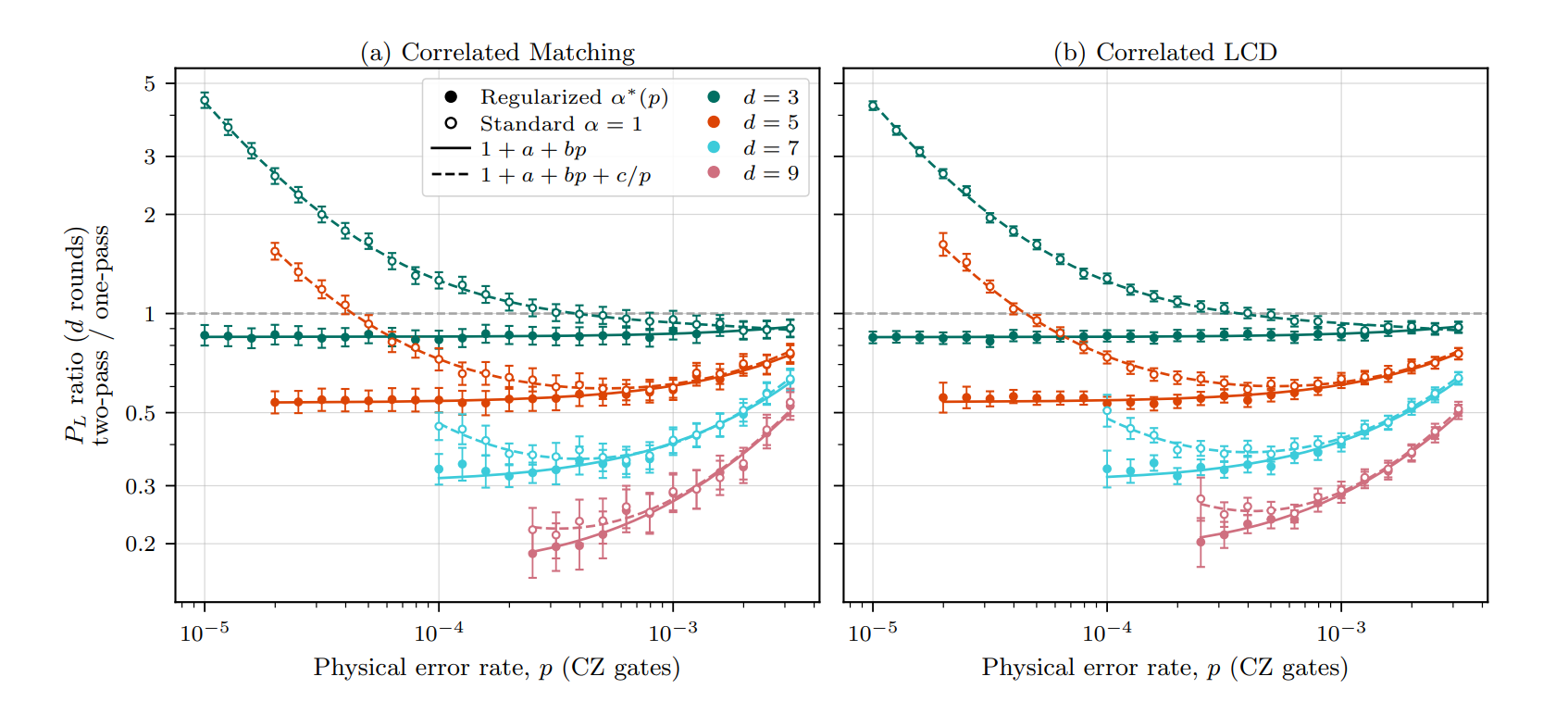
NVIDIA officially announced a strategic equity investment in UK quantum error correction technology company Riverlane; the two parties will jointly deploy an NVIDIA H100 chip cluster to accelerate Riverlane's Local Clustering Decoder (LCD, a fast error correction algorithm based on local features), shortening surface-code training cycles by dozens of times and enabling dynamic recalibration[14]. This indicates that computing giants are no longer confining themselves to pure simulation software, but are directly securing core error-correction chip patents and supply chains through capital investments, initiating heterogeneous co-processing computing layouts[14]. By tying capital and ecosystem resources together, NVIDIA is widening the engineering gap between Riverlane and independent decoding research teams, signaling that the specialized QEC chip sector has entered a consolidation phase[14].
Concurrently with New Mexico Tech Week kicking off on October 27, 2026 (Beijing Time), the State of New Mexico announced the creation of a $25 million quantum venture studio, with venture capital investment volume in the state's quantum technology sector growing at 50% year-over-year[22]. The institution establishes a hard-tech vertical incubation and translation closed loop led by government guidance funds[22]. This drives the formation of a defense-grade quantum hardware startup cluster in the American Southwest distinct from those on the East and West coasts, reinforcing the North American domestic foundational supply chain[22].
Shareholders of Special Purpose Acquisition Company (SPAC) Charlton Aria formally passed a resolution extending the deadline for its business combination with KQC Quantum, the parent company of a South Korean quantum computing enterprise, by 12 months to October 25, 2027[19]. The extension reflects public capital markets' cautious stance toward quantum hardware assets that have yet to generate scaled revenues, with valuation review cycles for de-SPAC transactions lengthening across the board[19]. South Korean domestic hardware manufacturers have been forced to postpone their fundraising cadences in public markets, relying further on sovereign government subsidies in the short term to sustain day-to-day R&D expenditures[19].
At the World Economic Forum's Geneva Quantum Economy Days held on October 13–14, 2026 (Beijing Time), Logical Qubit Technology attended as a representative, with COO Liam Wang delivering a speech highlighting that the next phase of quantum computing will be driven by compound technological breakthroughs[46]. This showcases emerging quantum error correction firms' engagement across global industrial and policy spheres, calling on multinational capital to establish long-term patient capital mechanisms spanning diverse physical modalities[46]. This public appearance raised the profile of QEC startups in international multilateral economic and trade organizations, laying the groundwork for subsequent cross-border technological collaborations[46].
Tech analyst Brian Lenahan released an analytical report titled The 2026 Year-End Modality Race, offering a systematic horizontal comparison of commercialization races among superconducting, trapped-ion, neutral-atom, and photonic approaches[2]. The commentary points out that capital markets have shifted from tracking physical qubit counts to rigorous audits of effective logical qubit costs, cooling power ratios, and actual error-correction thresholds[2]. This provides a technical due-diligence reference frame for institutional investors rebalancing quantum hardware portfolios in the fourth quarter[2].
Cross-Disciplinary Synergies and Infrastructure
Aerospace and defense giant BAE Systems joined forces with photonic quantum computing developer Aegiq and NVIDIA to launch a collaboration at the UK National Quantum Computing Centre, testing the use of photonic quantum computing to accelerate complex aerodynamic simulation workflows for next-generation aircraft[23]. This marks the first time an aerospace manufacturing giant has mapped the solving of complex fluid dynamics partial differential equations to a photonic quantum processor, validating photonics’ acceleration potential throughout industrial engineering design pipelines[23]. This partnership explores the potential of quantum computing to speed up aerodynamic design, promising to shorten engineering R&D cycles[23].
Following reports on October 23 (Beijing Time) of Ericsson collaborating with universities on telecom scheduling algorithms, Ericsson’s footprint in Canada underwent capital-scale expansion: Ericsson and Export Development Canada announced a joint investment of $3 billion dedicated to expanding Canadian R&D hubs, prioritizing next-generation 5G networks, advanced intelligent computing, and quantum technologies[20]. Joint funding from sovereign credit capital and a multinational telecommunications titan secures technical high ground as backbone telecom networks evolve toward post-quantum cryptography and distributed quantum computing[20]. This creates a long-term capital reservoir for the North American communications corridor, accelerating the engineering implementation of quantum key distribution and scheduling algorithms in physical base-station networks[20].
Following recent reports on South Korea advancing its national quantum communication test network, the South Korean Ministry of Science and ICT officially selected telecom giant KT (Korea Telecom) by October 24, 2026, to construct and operate the Commercialization Hub and Future Technology Hub among three national quantum test hubs, with the project duration extending through 2028[26]. This signifies that the construction of South Korea’s national quantum communications testbed has entered an operational phase coordinated by telecom leaders, tasked with governing commercial access standards for domestic and international quantum communications products[26]. The decision establishes the telecom giant's core operator leadership in South Korea's future quantum security industry, accelerating the commercial export of domestic equipment supply chains[26].
Brazilian higher education institute for technology Inteli officially obtained National Certified Scientific and Technological Institution accreditation and partnered with IBM Quantum, securing direct cloud access to IBM quantum computer systems[10]. Leveraging IBM's quantum computing capacity, the collaboration is dedicated to developing customized quantum algorithms for Latin America's complex logistics routing, agricultural commodity supply chains, and decision-making under uncertainty[10]. This marks further penetration of the IBM Quantum ecosystem into South American real industries, nurturing Latin America’s first cohort of industrial-grade quantum engineering application talent[10].
UK space technology company Craft Prospect is building a dedicated quantum and optical communications payload for CubeSats as part of the €20 million OPS-SAT VOLT space mission[25]. The project overcame the challenge of packaging single-photon sources with high stability for CubeSats exposed to extreme temperature differentials and space radiation in low Earth orbit[25]. The payload propels satellite quantum secure communications toward miniaturized, cost-effective CubeSats, offering an engineering blueprint for Europe to build low-Earth-orbit quantum-secure networks[25].
New York State Governor Kathy Hochul officially released a statewide quantum technology ecosystem study, with official data showing New York ranking second in the United States in the number of quantum technology enterprises, the scale of research institutions, and patent reserves[45]. The survey highlights New York’s industrial supply chain advantages anchored by IBM headquarters, Brookhaven National Laboratory, and the Rochester optics/photonics cluster[45]. This bolsters New York’s core competitive leverage in competing for the federal policy act's second round of ten-billion-dollar national quantum technology hub subsidies[45].
The Irish government announced the launch of the 2027 Rinn Quantum Postdoctoral Fellowship Programme, with the application deadline set for January 7, 2027 (Beijing Time)[7]. Supported by dedicated funding, the program finances young global scholars to conduct frontier quantum science research in Ireland, strengthening Western Europe's research talent pipeline[7]. This initiative continues to reinforce Europe's talent appeal and academic innovation foundation in fundamental quantum physics research[7].
Following earlier coverage of RhymeQ's technical integration with NVIDIA, the partnership unlocked new milestones: RhymeQ announced that it has officially joined the NVIDIA Inception program, deeply adapting its RHYME middleware abstraction layer to the CUDA-Q hybrid architecture and advancing collaborative R&D based on NVIDIA's NOOA autonomous agent scheduling framework[8]. The solution aims to deliver automated workload scheduling and orchestration between classical GPUs and quantum processing units in heterogeneous computing clusters, eliminating manual dispatch latency across architectures[8]. This accelerates the standardized packaging of hybrid quantum-classical computing toolchains within mainstream computing ecosystems, shortening development cycles for algorithm engineers accessing heterogeneous compute resources[8].