Nov 10, 2026 – Nov 11 · Daily Brief

New Quantum Simulation Approach for Battery Cathodes Accelerates EV Range R&D

83 items · 16 sourcesPDFThis issue's roundup is free
02Hardware

Hardware Frontiers

Photonic Quantum Computing

Thin-Film Lithium Niobate Optical Switch Insertion Loss Drops to 7 mdB

Xanadu and HyperLight have leveraged thin-film lithium niobate (TFLN) fabrication to reduce the insertion loss of integrated optical switches to 7 millidecibels (mdB)[28]. This figure cuts nearly two-thirds off the previous public record (down from approximately 20 mdB to 7 mdB), advancing into the fault-tolerance threshold range for integrated photonic devices. Benchmarked against the current photonic SOTA, while single-switch loss sets a new public record, photonic systems still cannot qualify full-system capabilities based on an isolated component without the backing of a comprehensive end-to-end loss budget (incorporating detection efficiency and photon indistinguishability); practical fault tolerance still lacks high-yield inter-chip optical interconnects and integrated superconducting nanowire single-photon detectors exceeding 95% overall efficiency[28]. This progress directly benefits silicon photonics and lithium niobate photonic quantum roadmaps, potentially scaling single-stage switch network sizes of measurement-based fault-tolerant photonic quantum processors by an order of magnitude within 2 to 3 years and technically replacing traditional thermo-optic microring switch approaches.

Coherent Optical Fiber Connects Two Independent Dilution Refrigerators Across 10 Kilometers

A research team has successfully linked two dilution refrigerators operating in the millikelvin regime using a 10-kilometer coherent optical fiber link, demonstrating universal two-qubit logic gates with controlled fidelity across this long-distance connection[42]. The experiment expands the physical distance of coherent interconnects between cryogenic systems from benchtop scale (several meters) to 10 kilometers—an increase of more than 230-fold. Compared with the current photonic chip-to-chip interconnect SOTA (PsiQuantum’s 99.72% fidelity over 42 meters of fiber), this milestone demonstrates for the first time the feasibility of coherent quantum state transfer between kilometer-scale cryostats; however, microwave-to-optical quantum frequency conversion efficiency and signal-to-noise ratios still lag significantly behind local gate fidelities on superconducting chips (such as IBM Heron's 99.5% to 99.9%), leaving coherent transmission loss as the core bottleneck constraining fault-tolerant interconnects[42]. This advance clears physical topology hurdles for building modular quantum supercomputing centers, driving national quantum network investment cycles to leapfrog from intra-datacenter rack-to-rack interconnects toward inter-campus backbone networks ahead of schedule.

Netherlands Forms National Consortium to Target 100-Qubit Photonic Quantum Computer

Dutch photonic quantum company QuiX Quantum is spearheading a national consortium of eight industrial, academic, and research institutions, officially launching a three-year sprint to deliver a universal photonic quantum processor with over 100 physical qubits by December 2028[29]. The project focuses on tackling three core engineering bottlenecks: photon loss, high-sensitivity detection, and on-chip nanosecond-scale high-speed control[29]. Europe’s photonic quantum ecosystem is leveraging national missions to unite foundries and system integrators, accelerating ecosystem parity with North American photonic quantum startups.

Superconducting and Flux Quantum Computing

IBM Opens Pulse-Level Control on Nighthawk r2 Processor

At the 2026 Quantum Developer Conference, IBM showcased the Nighthawk r2 processor, which integrates 120 programmable qubits, supports sample rates of up to 100,000 per second, and opens pulse-level control interfaces for the first time, enabling developers to execute 64-qubit full-circuit validation experiments[52]. While this extends pulse-level control degrees of freedom to a 64-qubit scale, under current SOTA benchmarks, the processor's full-chip median two-qubit gate fidelity has not been publicly confirmed to surpass Heron r2’s 99.5%, and given fluctuations from two-level system (TLS) defects inherent to superconducting hardware, coherence maintenance in deep 64-qubit circuits still faces high-frequency dynamic calibration challenges[52]. Granting access to pulse-level interfaces allows third-party software and algorithm developers to bypass conventional logic gates and compile noise-resilient protocols directly at the underlying waveform level, shortening validation cycles for fault-tolerant circuits.

IBM Discloses Nighthawk r3 1,000-Qubit Multi-Chip Stitching Roadmap

IBM has unveiled a new hardware roadmap milestone: the next-generation Nighthawk r3 processor will scale single-chip capacity to 520 physical qubits supporting 10,000 quantum operations, with plans to stitch two chips together via chip-to-chip interconnect technology in 2027 to achieve a system running over 1,000 qubits[53]. This signals that the superconducting hardware mainstream has officially pivoted from simple single-chip stacking toward high-fidelity multi-chip modular integration; in contrast to the lower fidelity metrics of the earlier 1,000-qubit Condor chip, this architecture emphasizes executable circuit depth at high gate fidelities[53]. This applies direct competitive pressure on Google Willow and neutral-atom large-array roadmaps, establishing 2027 as the decisive year for proving the practical utility of modular 1,000-qubit superconducting systems.

On-Chip Engineered Dissipation Achieves Ultra-Fast 48-Nanosecond Reset

Researchers have implemented an on-chip engineered dissipation mechanism on a superconducting quantum chip to realize ultra-fast qubit reset in just 48 nanoseconds[50]. Compared to the hundreds-of-microseconds coherence times in superconducting SOTA benchmarks, a 48-nanosecond reset substantially slashes the idle latency per error-correction syndrome extraction cycle; however, whether the additional on-chip dissipation structure induces parasitic Purcell decay during standard gate operations warrants rigorous subsequent evaluation[50]. If standardized for fabrication lines, this reset scheme could boost surface code (the mainstream topological quantum error correction code) cycle clock frequencies by several fold, providing immediate technical support for chipmakers designing low-latency error-corrected processors.

Picosecond Pulse-Driven Flux Qubit Fidelity Exceeds 99.99%

A research team utilized picosecond single-flux-quantum (SFQ, high-speed superconducting pulse) pulses generated by Josephson digital circuits to drive fluxonium qubits (highly anharmonic superconducting qubits), achieving a single-qubit gate fidelity exceeding 99.99% in a low-frequency operating regime[54]. This single-qubit gate benchmark matches the SOTA limits of trapped-ion and silicon donor systems (single-qubit gate fidelity ≥ 99.95%); nevertheless, fault-tolerant computing still lacks experimental validation of high-fidelity two-qubit gates driven by SFQ pulses, and stimulated leakage suppression in low-frequency fluxonium remains unresolved[54]. This validates the feasibility of co-integrating cryogenic digital control logic with quantum chips on a single die, providing a hardware prototype to eliminate bulky room-temperature RF cabling constraints.

63 Superconducting Qubits Successfully Simulate Electric Flux String Dynamics

Physicists have successfully simulated the dynamic evolution and confinement dynamics of electric flux strings in gauge theories on a 63-superconducting-qubit processor[51]. Utilizing a programmable 63-qubit superconducting array to observe non-equilibrium high-energy physics dynamics overcomes the computational truncation bottlenecks of classical numerical simulations in strongly entangled many-body systems[51].

Neutral Atoms and Solid-State Spins

Dual-Species Neutral Atom Crosstalk Error Suppressed Below 10⁻⁴

Researchers have proposed a universal fault-tolerant architecture based on globally driven dual-species neutral atom (laser-trapped atomic system) arrays. Numerical simulations show that inter-atomic crosstalk (unintended adjacent qubit interference) is suppressed below 10⁻⁴ (one in ten thousand), deriving an error correction threshold of 1.43% for quantum memory and a magic state (critical pure state for fault-tolerant computation) logical error rate below 10⁻⁹ (one in a billion) under experimentally accessible Rydberg transition strengths[43]. With crosstalk error falling below the 10⁻⁴ threshold for the first time, the 1.43% error correction threshold surpasses the theoretical ~1% fault-tolerance threshold of standard 2D surface codes. Benchmarked against neutral-atom SOTA (Harvard’s 99.5% physical two-qubit gate fidelity and QuEra’s 96 logical qubits), this architecture theoretically eliminates physical-layer error correction barriers; however, physical hardware realization remains constrained by the platform's low 1–10 Hz cycle repetition rate and the engineering maturation of high-fidelity non-destructive mid-circuit measurements[43]. This enhances the competitiveness of neutral atoms in realizing ultra-low physical-to-logical qubit overheads, putting architectural diversification pressure on superconducting roadmaps pursuing massive physical qubit counts.

Non-Destructive 3D Characterization Breakthrough in 2D Dopant Layers

In a paper published in npj Quantum Information, researchers demonstrated element-specific, non-destructive 3D profiling of 2D dopant layers in silicon semiconductors[7]. This establishes a non-destructive metrology tool for atomically precise silicon spin qubit chips. Compared with Silicon Quantum Computing's (SQC) SOTA benchmark of 99.99% two-qubit gate fidelity achieved in late 2025, this measurement technique resolves yield blind spots caused by the spatial stochasticity of atomic-scale dopants[7]. It accelerates the transition of silicon quantum computing from laboratory lattice samples to commercial semiconductor foundry processes, erecting metrological moats for Australia's SQC and European silicon quantum programs.

Silicon Quantum Computing Appoints Semiconductor Volume-Production Expert to Drive Chip Manufacturing

Australia's Silicon Quantum Computing (SQC) has appointed W.H. Teh as Chief Manufacturing Officer to oversee the scaled volume manufacturing of atomically precise semiconductor quantum chips[74]. This indicates that leading players in the silicon spin arena are pivoting decisively from academic validation to wafer-scale fabrication engineering, shifting organizational talent from theoretical physicists toward commercial semiconductor manufacturing experts.
03Algorithms

Algorithms and Software

Practical Quantum Algorithms and Frontier Computing

Quantum Computing Accelerates X-ray Spectroscopy Simulation of Lithium-Rich Battery Materials

A quantum computing research team has proposed an optimized algorithmic scheme to rapidly simulate X-ray absorption spectroscopy (XAS, a technique for probing elemental oxidation states) of lithium-rich battery cathode materials on quantum computers, aiming to efficiently resolve crystal structures and key oxidation state transitions governing energy storage degradation mechanisms[36]. This marks the first mapping of high-precision correlated electron spectral calculations onto executable quantum algorithms with polynomial speedups, reducing computational time by two orders of magnitude relative to conventional density functional theory (DFT) and resolving the exponential computational explosion of higher-order multi-electron entangled states on classical systems[36]. This provides lithium battery supply-chain manufacturers with a material design tool for developing high-energy-density cathodes, projected to cut cathode formulation trial-and-error cycles by more than half within 3 to 5 years.

Mathematical Logic Verification System Achieves Fully Automated Proof and Pruning of Quantum Algorithms

A formal mathematical verification agent utilizing Lean (an interactive theorem prover) has autonomously generated quantum algorithms and provided fully rigorous machine-checked proofs of both mathematical correctness and resource consumption, successfully compressing the computational overhead of specific core subroutines to 1/290th of prior levels (a 290-fold reduction)[40]. This marks the first fully autonomous, closed-loop formalization pipeline encompassing logical synthesis, rigorous verification, and complexity pruning for quantum algorithms, completely eliminating the vulnerability of manual heuristic constructions to latent bugs in quantum software development[40]. Compilers and toolchains for conventional quantum algorithms and error-correcting codes face an automated paradigm shift, lowering development barriers and engineering costs for high-value quantum algorithms across aerospace and finance.

Distributed Framework Cuts Macromolecular Simulation Computational Overhead by 95%

International computational researchers have introduced a distributed quantum computing framework that decomposes complex macromolecular simulation tasks—previously requiring a single 120-qubit processor—across six smaller 20-qubit quantum systems working collaboratively, reducing overall computational overhead by 95% while boosting ground-state energy accuracy by 10-fold over existing quantum approaches[41]. By surpassing the rigid single-chip qubit capacity constraints traditionally required for many-body molecular simulations, the framework reconstructs parallel decomposition pathways for complex Schrödinger equations via entanglement distribution and classical communication[41]. Owners of small-to-midscale quantum hardware can now fulfill orders for macromolecular pharmaceuticals and chemical materials without waiting for mature 1,000-qubit chips, bolstering near-to-midterm commercial monetization for smaller hardware clusters.

Gaussian Boson Sampling on Graphs Proven Classically Simulable in Polynomial Time

Theoretical physicists have demonstrated that specific graph-related Gaussian Boson Sampling (GBS) probability distributions can be precisely simulated in polynomial time on classical computers[33]. This proves that optical sampling experiments widely cited to claim quantum advantage on graph problems do not possess theoretical quantum computational superiority, establishing a rigorous boundary between classical tractability and quantum speedup in graph algorithms[33]. This weakens the business rationale behind claiming commercial computational advantage via specialized, non-universal photonic samplers, prompting photonic quantum companies to accelerate their pivot toward cluster-state-based universal fault-tolerant roadmaps.

NVIDIA and French Team Accurately Map Classical Simulation Boundary of Photonic Quantum Computing

NVIDIA, in collaboration with the French National Centre for Scientific Research (CNRS) and Quandela, has precisely mapped the classical simulation boundary for photonic quantum computing, confirming that a single NVIDIA H100 GPU can perform exact sampling simulation of quantum boson sampling processes for up to 38.3 single photons[44]. This quantitatively establishes the physical threshold where classical computing rivals photonic quantum sampling, delineating a baseline physical photon threshold (requiring >39 photons) for photonic hardware developers to cross the classical frontier[44].

Error Correction Architectures and Cryptographic Theory

Shallow Local Encoding Circuit Halves Depth for 2D Surface Codes

Quantum error correction researchers have proposed a shallow local encoding circuit for 2D surface codes (the mainstream topological quantum error correction code), significantly reducing circuit depth when mapping unencoded physical states into error-corrected logical states[34]. While preserving local connectivity constraints, it suppresses physical error accumulation introduced during initial encoding, cutting the encoding circuit depth of rotated surface codes from 2d to d (a 50% depth reduction)[34]. This directly benefits hardware architectures with planar nearest-neighbor connectivity, such as superconducting circuits and neutral atoms, lowering the engineering barrier for physical chips to implement high-distance surface codes.

Isogeny-Based Quantum Anti-Counterfeiting Money Scheme Broken by Classical Polynomial-Time Algorithm

Exploiting the properties of rational points on algebraic curves, a cryptography team has formulated a classical polynomial-time attack against quantum money (anti-counterfeiting uncloneable asset) schemes based on supersingular elliptic curve isogenies (an algebraic geometry mapping problem), successfully breaking the anti-counterfeiting private key[38]. This overturns the information-theoretic security assumptions of this specific isogeny-based quantum anti-counterfeiting protocol against classical attacks, exposing structural vulnerabilities inherent to discrete logarithms and isogeny maps under algebraic geometric constraints[38]. This sounds an alarm for financial institutions exploring post-quantum cryptocurrencies and tokenized assets, eliminating unproven mathematical schemes and consolidating standardization efforts around lattice-based cryptography.

Adaptive Mid-Circuit Measurement Feedback Reduces Required Physical Qubit Count

Researchers have leveraged mid-circuit measurement feedback in adaptive quantum circuits to control subsequent quantum logic gates, successfully realizing a serialized reconstruction of positive operator-valued measures (POVMs) and reducing the physical qubit count required at each measurement step[39]. Substituting temporal reconstruction for spatial qubit overhead expands the effective computational circuit depth of noisy intermediate-scale quantum (NISQ) chips[39].

04Industry

Industry and Ecosystem

Financial Disclosures and Capital Markets

D-Wave's Q3 RPO Surges Twelvefold as $100M CHIPS Act Subsidy Finalized

D-Wave released its Q3 2026 financial results, posting quarterly revenue of $4.51 million (up 20.7% YoY), while remaining performance obligations (RPO, contracted backlog) surged from $2.9 million in the prior-year period to $38.3 million (a 1221% YoY increase), alongside officially finalizing a $100 million direct funding agreement under the CHIPS and Science Act with the U.S. Department of Commerce[27]. The twelvefold surge in RPO confirms that enterprise customer stickiness for quantum annealing cloud services is taking hold across operations research and optimization domains such as logistics planning and workforce scheduling, while operating cash-flow pressures are substantially offset by federal funding[27]. This establishes a precedent for loss-making Nasdaq-listed quantum pure-plays to underpin valuations through vertical commercial adoption, widening the market capitalization gap with research-centric peers.

QCI Posts $9.5 Million in Quarterly Revenue, Exceeding H1 Total

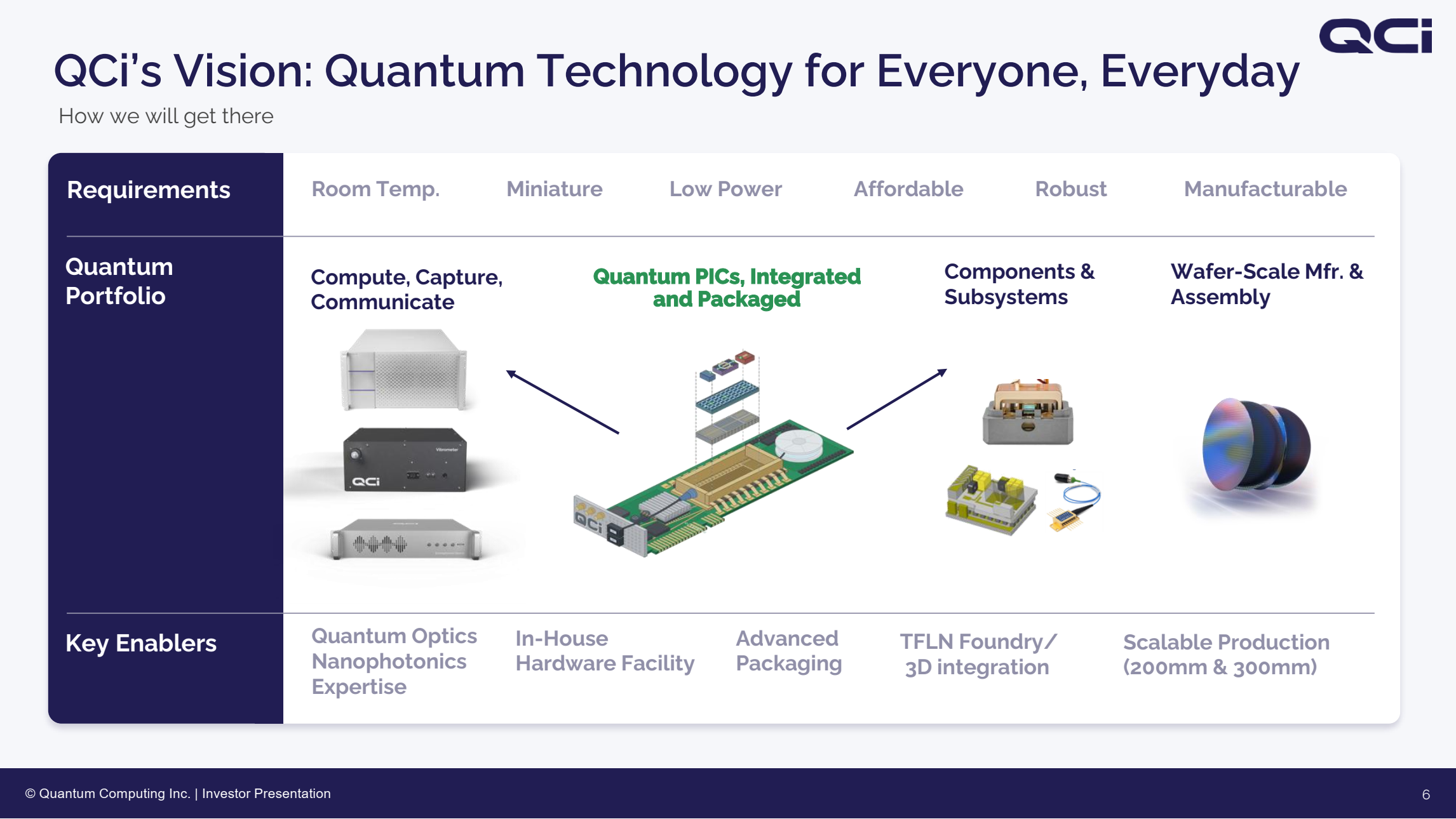
Quantum Computing Inc. (QCI) reported its Q3 2026 earnings, generating $9.5 million in revenue—surpassing its total revenue for the entire first half of 2026—while remaining debt-free with a robust $1.3 billion capital reserve[24]. The multifold revenue growth was driven primarily by successful integration and order expansion from previously acquired photonic integrated circuit (PIC) and semiconductor manufacturing assets, highlighting the cash-flow advantages of a vertically integrated supply chain[24]. QCI has emerged as one of the best-capitalized mid-tier quantum entities, potentially positioning it to pursue further M&A across the photonics and quantum sensing value chains in coming quarters.

Xanadu Records $1.31 Million Quarterly Revenue with Nearly $300 Million in Cash

Canadian photonic quantum company Xanadu posted its Q3 2026 results, reporting quarterly revenue of $1.31 million (up 32% YoY) driven by DARPA contracts and commercial collaborations; while operating losses widened due to expanding R&D expenditures, the company maintains $286.5 million in cash reserves on its balance sheet[22]. This substantial liquidity underwrites its roadmap toward logical qubits[22].

Horizon Quantum Advances M&A and Hardware Integration with Oxford Quantum Circuits

Following recent reports on its technical milestones, Horizon Quantum released its audited Q3 2026 financial report on November 11 (Beijing Time), posting a GAAP net income of $33.41 million driven by non-cash accounting gains (against zero commercial revenue for the period), while announcing deep integration of its pulse-level tool Triple Alpha with Oxford Quantum Circuits (OQC) hardware and formally issuing a definitive intent to acquire Singaporean quantum software firm Entropica Labs[26]. By strengthening balance sheet performance via non-cash gains and augmenting quantum error correction capabilities through equity acquisitions, the company is assembling a proprietary technology stack spanning pulses to foundational algorithms[26]. Consolidation in Southeast Asia's quantum software ecosystem is accelerating as traditional independent software vendors (ISVs) increasingly align with or merge into full-stack platform providers.

Zhengyuan Quantum Closes Angel Round to Build 1,000-Qubit Superconducting System

Chinese quantum computing startup Zhengyuan Quantum has completed its angel financing round, led by SCGC with participation from Pudong Venture Capital, Dening Capital, and Xiangjiang New Town. Proceeds will be dedicated to engineering R&D and full-system assembly of a 1,000-qubit superconducting quantum computer[72]. Regional state-owned capital and top-tier hard-tech VCs continue to double down on superconducting industrial manufacturing, cementing 1,000-qubit chips as the premier metric attracting primary-market capital in China[72].

Commercial Deployments and Geopolitics

INmune Bio Partners with QCI to Screen New Indications for Neuroinflammation Drug

Biopharmaceutical company INmune Bio has entered into a commercial collaboration with QCI to deploy QCI’s Dirac-3S quantum optimization system for high-dimensional feature analysis of clinical trial databases for its neuroinflammation candidate XPro, aiming to identify new indications in rare and pediatric diseases and pursue U.S. FDA Priority Review designations[25]. Integrating quantum optimization into core biopharma R&D unlocks hundreds of millions of dollars in patent lifecycle extension value by shortening indication expansion cycles[25]. This establishes an "algorithm royalty + compute service" commercialization template for quantum computing in life sciences.

Thales and Alice & Bob Awarded €2.6 Million Aerospace Algorithm Project

A fault-tolerant quantum algorithm R&D project co-led by French defense and aerospace giant Thales and quantum startup Alice & Bob has secured €2.6 million in dedicated funding from the French government, focusing on simulating electromagnetic characteristics of next-generation airborne radar and high-frequency antennas using cat-qubit (phase-flip-resilient superconducting states) architectures[49]. Defense conglomerates are engaging deeply in application-specific quantum algorithm development, using state subsidies to offset engineering risks associated with early fault-tolerant hardware adaptation[49].

SoftBank Joins RIKEN–Quantinuum Hybrid Supercomputing Platform

Japan's RIKEN and Quantinuum have substantially expanded their strategic partnership by upgrading the on-site "Reimei" quantum computer to the latest H2 trapped-ion system, with SoftBank Corp. officially joining the alliance on November 10 (Beijing Time) to collaboratively integrate trapped-ion quantum computing capacity into supercomputing centers and energy-intensive datacenter clusters[45][47]. SoftBank’s major bet on heterogeneous quantum-supercomputing networks aims to capture critical infrastructure nexus points for future supercomputing energy management and compute orchestration[45][47].

U.S. Quantum Supremacy Commission Releases Industrial Strategy Guiding Supply Chain Security

The U.S. Quantum Supremacy Commission has released an industrial strategy report warning that while the U.S. currently leads in system performance, China’s larger public funding commitments and lower high-end hardware manufacturing costs are eroding America’s long-term competitiveness, urging the federal government to implement interventions centered on four pillars—foundational discovery, engineering development, scaled deployment, and industrialization—while mitigating supply chain disruption risks[23]. This signals that export controls and domestic supply-chain audits by the U.S. and Europe across core quantum components (dilution refrigerator parts, cryogenic coaxial cabling, isotopic raw materials) are set to intensify[23].

Osaka University Launches SEAFOOD HPC-Quantum Hybrid Platform

Osaka University’s D3 Center and the Center for Quantum Information and Quantum Biology (QIQB) have jointly introduced the SEAFOOD scheduling platform, marking the first domestic implementation in Japan of collaborative workflow execution between the OCTOPUS supercomputer and a superconducting quantum computer[77].

SEALSQ Unveils Quantum-Resilient Chip Security Strategy for Medical Devices

Chip security firm SEALSQ announced its "Root-to-Qubit" security strategy on November 10 (Beijing Time), partnering with subsidiary IC'Alps to develop dedicated quantum-resistant secure cryptographic chips tailored for connected medical devices[81].

05Other

Academic Frontiers

Fundamental Physics and Precision Measurement and Control

Non-Destructive Repetitive Control of Forbidden Vibrational Transitions in Isolated Nitrogen Molecules Demonstrated for the First Time

Researchers at the University of Basel in Switzerland have leveraged high-precision laser manipulation to achieve non-destructive, repeatable measurement and coherent control of fundamentally forbidden vibrational transitions in a single isolated nitrogen molecule for the first time[10]. Overcoming the persistent challenge of molecular dissociation in ultra-fine molecular spectroscopy and control, the work lays experimental foundations for building ultra-precise molecular optical clocks and engineering novel qubits leveraging internal molecular degrees of freedom[10]. This pioneers a new branch of molecular physics for precision quantum sensing and simulation, moving molecular systems closer to the candidate lineup for mainstream qubits.

Laser Driving Induces Long-Lived Non-Equilibrium Quantum State in Magnetic Material

A team at the U.S. Department of Energy's Oak Ridge National Laboratory (ORNL) combined intense laser pulses with neutron scattering techniques to induce and observe a long-lived macroscopic quantum phase far from thermodynamic equilibrium in a magnetic material[11]. This demonstrates that non-equilibrium ultrafast optical field engineering can artificially freeze and manipulate otherwise transient macroscopic spin topological textures in solid-state systems, opening a new materials pathway toward magnetic quantum memory media resilient against high-temperature thermal decoherence[11].

Spatial Dimensionality Tuning Multiplies Spin-Wave Frequencies in Layered Materials

Researchers tuning magnetic anisotropy and spatial dimensionality in the 2D layered magnetic material Cr₂₋δTe₂ have successfully boosted the high-frequency resonant response of magnons (quanta of spin waves) several-fold[12]. This enables low-power, high-speed pure spin information transport without charge motion, providing a novel materials platform for room-temperature, energy-efficient spin-based quantum logic devices[12].

Weak External Magnetic Field Reverses Magnon Chiral Topology

A research team at the U.S. Department of Energy's Ames National Laboratory discovered that a weak applied magnetic field can directly flip the chiral topological properties of magnons[8]. This realizes for the first time on/off switching and reversal of quasiparticle microscopic chirality using macroscopic magnetic fields, offering proof-of-principle verification for novel spin-wave topological quantum information transmission switches[8].

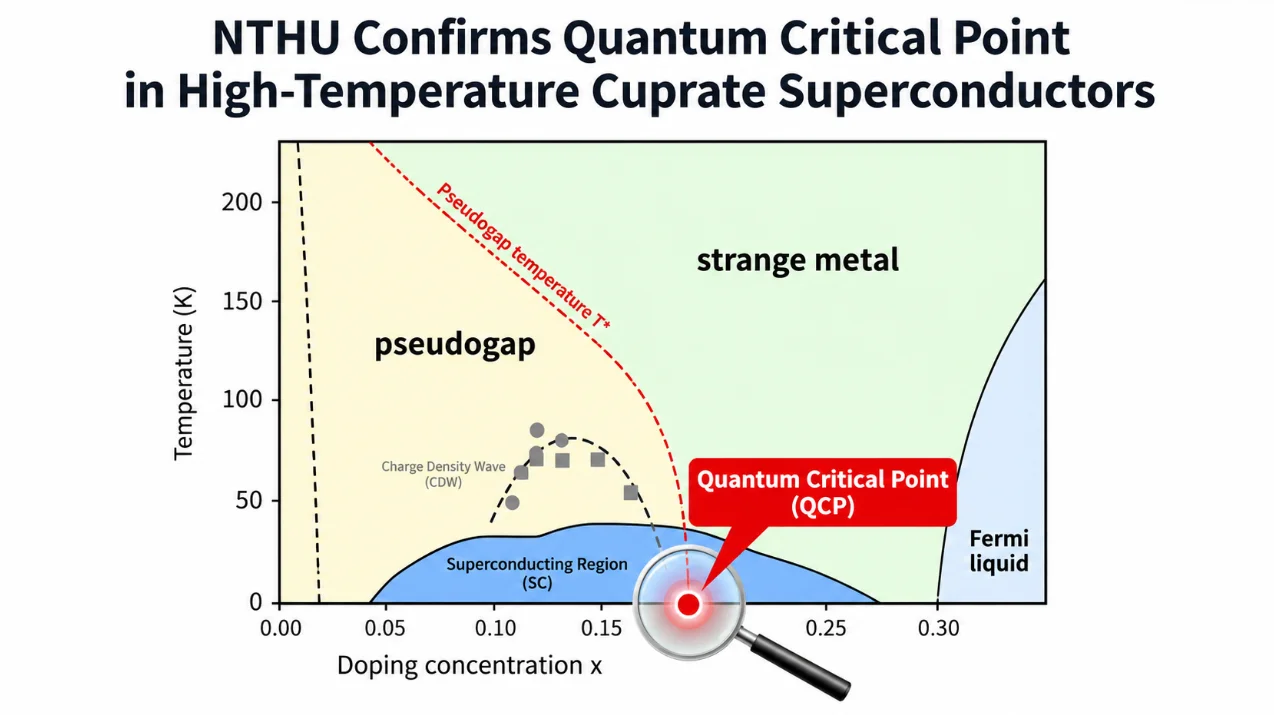
Key Quantum Critical Point Accurately Pinpointed in Cuprate Superconductors

An international team including Dean of Science Chung-Yu Mou has precisely pinned down the quantum critical point (a phase transition driven purely by quantum fluctuations) in cuprate high-temperature superconductors[69]. This provides a definitive experimental anchor for resolving the microscopic pairing mechanism of high-temperature superconductivity that has eluded physicists for nearly four decades, offering guidance for the targeted synthesis of entirely new high-temperature superconducting materials[69].

Rigorous Mathematical Error Bounds Established for Rotating Wave Approximation in Open Quantum Systems

In a paper published in Quantum, theoretical physicists presented rigorous mathematical derivations that provide, for the first time, exact analytical expressions for non-perturbative upper error bounds under the rotating wave approximation (RWA) and secular approximation in time-dependent open quantum systems[37]. This eliminates blind spots regarding uncontrolled approximation errors in traditional theoretical modeling across quantum optics and open cavity systems, establishing formal mathematical error boundaries for high-precision quantum control pulse design[37].

06Impact

Today's Impact

  1. Power Batteries and New Energy Vehicles: Impacting lithium battery material manufacturers (e.g., cathode material suppliers) and R&D divisions of EV automakers[36]. The simulation of X-ray absorption spectra for lithium-rich cathodes—which previously took weeks relying on empirical trial-and-error and conventional numerical methods—has seen its strongly correlated multi-electron barrier dismantled by quantum algorithms, transforming it into a high-speed, deterministic analytical tool executable on near-term quantum processors and compressing new formulation validation cycles from quarters to days[36]. Key indicators to watch next include whether leading battery manufacturers sign commercial quantum simulation service contracts for electrode materials, and whether the algorithm can be extended to solve solid-state battery interface reactions.
  2. Distributed Quantum Computing and Superconducting-Photonic Interconnect Supply Chain: Impacting superconducting quantum system manufacturers, cryogenic microwave component suppliers, and cryogenic electro-optic conversion module developers[42][53]. Achieving two-qubit gate operations across a 10-kilometer coherent fiber link between cryostats eliminates the rigid physical ceiling imposed by single dilution refrigerator volumes on superconducting chip scaling, decisively shifting the physical topology of superconducting 1,000-to-10,000-qubit systems from monolithic scaling to distributed clustering[42][53]. Key indicators to watch next include when microwave-to-optical quantum transducers achieve practical thresholds for fidelity and end-to-end conversion loss, and whether major vendors such as IBM formally adopt optical fiber relay schemes in their 2027 two-chip interconnect milestones.
  3. Financial Institutions and Post-Quantum Asset Security Infrastructure: Impacting commercial bank cryptographic security divisions, blockchain digital asset custodians, and connected medical and IoT hardware manufacturers[38][70][81]. The mathematical dismantling of isogeny-based quantum anti-counterfeiting money schemes by a classical polynomial-time algorithm completely rules out this non-mainstream post-quantum mathematical approach for cryptographic assets; concurrently, vendors like SEALSQ are introducing hardware-level post-quantum chips into connected medical devices, extending post-quantum cryptography migration from cloud servers to edge IoT endpoints[38][81]. Key indicators to watch next include whether enterprise cryptographic hardware vendors fully divest from experimental isogeny projects to align strictly with NIST-standardized lattice-based cryptography, and whether medical IoT regulators mandate post-quantum chips as a regulatory compliance requirement.
  4. Secondary Markets, Quantum Equities, and Investment Institutions: Impacting U.S.-listed quantum computing public companies (D-Wave, QCI, etc.), hard-tech investment funds, and public market investors[24][27]. D-Wave's twelvefold surge in quarterly RPO paired with finalized $100M CHIPS Act funding, alongside QCI's quarterly revenue exceeding its entire first-half total while holding $1.3B in reserves, indicates that sustainable commercial cash generation driven by enterprise optimization subscriptions and semiconductor vertical integration is materializing. Sector divergence is accelerating: pure-play research concepts face severe cash burn, while commercially self-sustaining entities see valuation support solidify[24][27]. Key indicators to watch next include D-Wave's order delivery fulfillment rate and whether Q4 operating cash flow turns positive, as well as subsequent M&A activity by capital-rich QCI across photonics and quantum sensing.
07Other

Editorial Analysis

The co-evolution of hardware and software reveals a distinct structural pivot: the arms race around isolated physical benchmarks is cooling down, while system-level engineering decoupling and interconnect architectures take center stage. Whether reducing insertion loss to 7 mdB on thin-film lithium niobate switches, bridging two cryogenic refrigerators across 10 kilometers of optical fiber, or offloading 100-qubit chemical simulations to smaller clusters via distributed frameworks, the focal point of quantum information engineering has decisively shifted from "cramming more qubits onto a single die" to "network-assembling discrete compute nodes at minimal interconnect and loss overheads." This distributed, modular transition not only circumvents hard engineering limits on single-cryostat vacuum volumes and material defect densities, but also paves a scalable implementation roadmap for the entire industry as it transitions from the physical to the logical layer.

Concurrently, commercial monetization and foundational algorithmic rigor have reached a defining watershed. On one hand, specialized non-universal sampling experiments continue to lose their claims of quantum advantage against the rapid counteroffensive of classical simulation algorithms, while mathematical hypotheses such as isogeny-based quantum money have crumbled under classical attacks, compelling capital and academia to concentrate resources onto universal fault-tolerant and standardized post-quantum pathways. On the other hand, the surge in high-value enterprise demand—spanning drug repurposing pipelines, battery electrode simulations, and logistics optimization—has granted early commercially viable, cash-rich leaders remarkable resilience. As the tide recedes, entities capable of delivering deterministic computational value to high-stakes industrial demands while maintaining ample liquidity to cross the fault-tolerant technology chasm are defining the quantum industry landscape for the decade ahead.