Jul 27, 2026 – Jul 28 · Daily Brief

First neutral atom quantum computing industry roadmap released

35 items · 10 sourcesPDFThis issue's roundup is free
02Hardware

Hardware Frontiers

Neutral atom

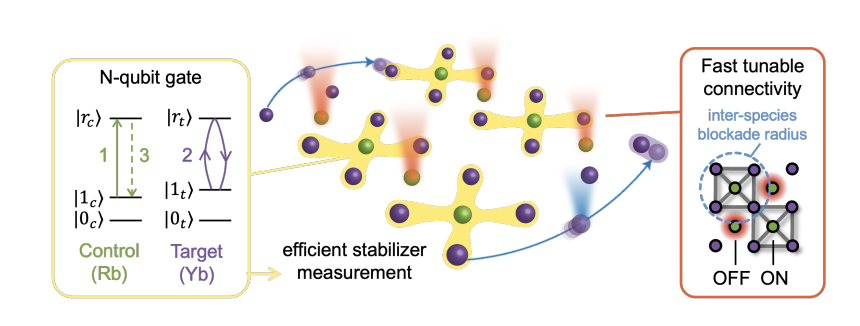
Neutral-atom quantum computing roadmap released: A joint team from academia and industry mapped out the scaling path from hundreds of physical qubits to millions of physical qubits, pointing out that the current system cycle repetition rate (typically 1–10 Hz) and measurement fidelity are the main obstacles on the path to practical utility.[24]This roadmap sets industry-consensus performance milestones for the neutral-atom approach for the first time, helping to coordinate R&D resources and accelerate the engineering process.[24]Currently, the scale of neutral-atom arrays has reached 1,180 physical qubits, with the number of logical qubits up to 96, but the repetition rate is far lower than that of superconducting and trapped-ion platforms. If it cannot be increased to the kHz range, it will severely constrain the speed of error correction.[24]

Spin qubits

Qubit shuttling damage tolerance exceeds 10%: Researchers demonstrated that electron spin qubits can tolerate a defect rate exceeding 10% when shuttled in solid-state devices.[7]This result significantly reduces the material uniformity requirements for large-scale spin quantum processors, potentially relaxing the manufacturing yield threshold for silicon-based quantum chips by an order of magnitude.[7]Currently, the number of coherent operations for spin qubits is the lowest among the five main approaches; the improvement in shuttling tolerance directly alleviates the physical defect bottleneck in scaling.[7]

Trapped ion

Long-lived state measurement in ytterbium ions: Researchers discovered a long-lived state in ytterbium ions, whose coherence time could potentially be used for quantum memory and precision measurement.[23]The coherence time of trapped-ion platforms has already reached the seconds-to-minutes range; the discovery of long-lived states may further improve storage fidelity, but their actual contribution to logical operation speed remains to be verified.[23]

Photonic

Hangzhou Heguang Quantum completed a seed funding round and reported progress on deterministic photonic GKP encoding: The company claims progress in the deterministic generation of photonic Gottesman-Kitaev-Preskill error-correcting codes and has developed a plug-and-play nonlinear module to address the probabilistic preparation bottleneck.[27]Photonic GKP encoding is one of the key paths to achieving fault-tolerant photonic quantum computing. A shift from probabilistic to deterministic generation would fundamentally change the loss-tolerance capability of the photonic approach, but publicly available information lacks end-to-end loss budgets and fidelity data, leaving an unknown gap compared to PsiQuantum's conditional fidelity metrics.[27]
03Algorithms

Algorithms & Software

Quantum error correction

  • Quantinuum achieves a logical block error rate of approximately 0.00014: Using integer linear programming to optimize fault-tolerant state preparation circuits, an extremely low logical error rate was obtained on the Steane code.[8]This result approaches the physical error rate limit of Quantinuum's own Helios system, demonstrating the significant improvement in logical performance from software-level optimization, but the logical error rate still needs to be further reduced to meet the demands of practical algorithms.[8]
  • Alice & Bob tiger code logical structure analysis: Research reveals that the multi-mode bosonic code structure of the tiger code family is determined by the homology of chain complexes.[6]This mathematical characterization provides a theoretical foundation for designing high-performance bosonic codes and may accelerate the optimization of bosonic error-correcting codes, but actual hardware implementation still requires verification.[6]

Quantum Simulation and Algorithms

  • Probing entanglement scaling laws on a quantum computer: The entanglement entropy scaling of the transverse-field Ising model crossing a quantum phase transition was measured on a quantum processor.[4]This work verified the entanglement scaling behavior near the critical point on a quantum computer for the first time, providing a benchmark for using quantum hardware to study strongly correlated systems, but was limited by current device noise and only demonstrated small-scale systems.[4]
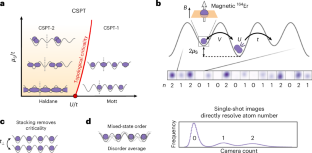
  • Topological phase transitions and mixed-state order in a Hubbard quantum simulator: A one-dimensional crystalline symmetry-protected topological phase transition was observed in an interacting fermion quantum simulator, and mixed-state topological order was characterized.[5]This achievement extends the study of topological order to open quantum systems, offering a new perspective for quantum simulation in noisy environments, but the experimental scale remains limited.[5]
  • Experimental realization of a bidirectional quantum analog-to-digital converter: Bidirectional quantum analog-to-digital conversion between photonic wavefronts and qubits was experimentally realized.[3]This experiment connects continuous-variable and discrete-variable quantum systems for the first time, providing a key interface for hybrid quantum network architectures, but the conversion efficiency and fidelity have not yet reached practical levels.[3]

Software and Tools

  • Quantum X Lab tests AI error-correction decoder: An AI-based quantum error-correction decoder was tested using NVIDIA CUDA-Q tools.[34]Combining AI with GPU acceleration may increase decoding speed to meet real-time error-correction demands, but the improvements in decoding latency and fidelity were not disclosed.[34]
04Industry

Industry & Ecosystem

Funding and Market

  • Multiverse Computing completes $570 million Series C funding round: Valuation reaches $1.7 billion, a 5x increase from the previous round. Funds will be used to compress AI models for deployment on edge devices.[14][22]This funding scale sets a record among quantum software companies, indicating strong investor interest in the intersection of quantum computing and AI, and may accelerate the commercialization of quantum-inspired algorithms on classical hardware.[14]
  • A complete guide to quantum computing companies in Mexico released: The guide systematically catalogs quantum computing vendors, startups, and research institutions in Mexico.[13]This guide reflects the growth of the quantum ecosystem in Latin America, helping international partners identify regional opportunities.[13]

Partnerships and Applications

  • AT&T expands collaboration with D-Wave: A commercial agreement was signed to use quantum annealing technology for telecommunications network optimization, following a pilot that reduced network optimization tasks from 1 hour to under 15 seconds.[20][30]This collaboration represents a substantive deployment of quantum annealing in an enterprise-level application. If the results are sustained, it may prompt other telecom operators to follow suit, but the application scope remains limited to specific optimization problems.[20]
  • Pittsburgh Supercomputing Center to build a hybrid quantum-classical supercomputer: Received a $5 million NSF grant to integrate a 9-qubit Rigetti Novera QPU with HPE classical systems, scheduled to be operational in 2027.[19][26]This testbed will provide researchers with a hybrid computing environment, but the 9-qubit scale is far below the current state-of-the-art; its main value lies in exploring workflow integration rather than a breakthrough in computing power.[19]
  • QTREX collaborates with Northeastern University on cryogenic quantum interconnects: Israel-based QTREX is collaborating with Northeastern University to develop cryogenic microsystem structures and has obtained a right of first negotiation for the commercialization of project intellectual property.[21][25][29]Cryogenic interconnects are a key technology for scaling quantum processor scale. If successful, this collaboration could reduce loss and crosstalk in multi-chip integration, but the technology maturity is still at an early stage.[21]
  • Tennessee Quantum Hackathon opens applications: Focused on energy applications, aiming to cultivate quantum computing talent and explore industry use cases.[18]Such activities help expand the quantum computing developer community, but actual outputs are typically limited to proof-of-concept demonstrations.[18]
  • Bloq Quantum partners with QClairvoyance on quantum education and workforce training.[35]This move targets the quantum talent shortage, but training quality and job conversion rates require long-term observation.[35]

Security and Standards

  • Securosys confirms its HSM supports NIST post-quantum cryptographic algorithms: Responding to a U.S. executive order requiring contractors to complete quantum-safe migration by 2030.[12]This statement underscores the urgency of cryptographic agility, but actual migration progress still depends on the execution speed of enterprises.[12]
05Research

Research Frontiers

  • CEICO researchers construct entanglement maps across conformal field theories: Successfully modeled the Ising model and extended the mapping to connect dual CFTs.[11]This work provides a new framework for understanding entanglement structures between different conformal field theories and may advance holographic duality research, but is currently limited to two-dimensional models.[11]
  • Los Alamos National Laboratory correlates quantum spectral weight with Mott transition control: Derived a criterion for the influence of electromagnetic environment spectral weight on the Mott transition.[9]This theoretical result reveals the regulatory mechanism of vacuum fluctuations on strongly correlated phase transitions, offering new ideas for dynamically controlling quantum materials, but experimental verification is highly challenging.[9]
  • Vortices, waves, and sound demonstrate turbulence in quantum gases: Multiple signatures of quantum turbulence were observed in ultracold atomic gases.[10]This research provides experimental support for quantum turbulence theory, aiding the understanding of the transition from classical to quantum turbulence, but the experimental conditions are demanding.[10]
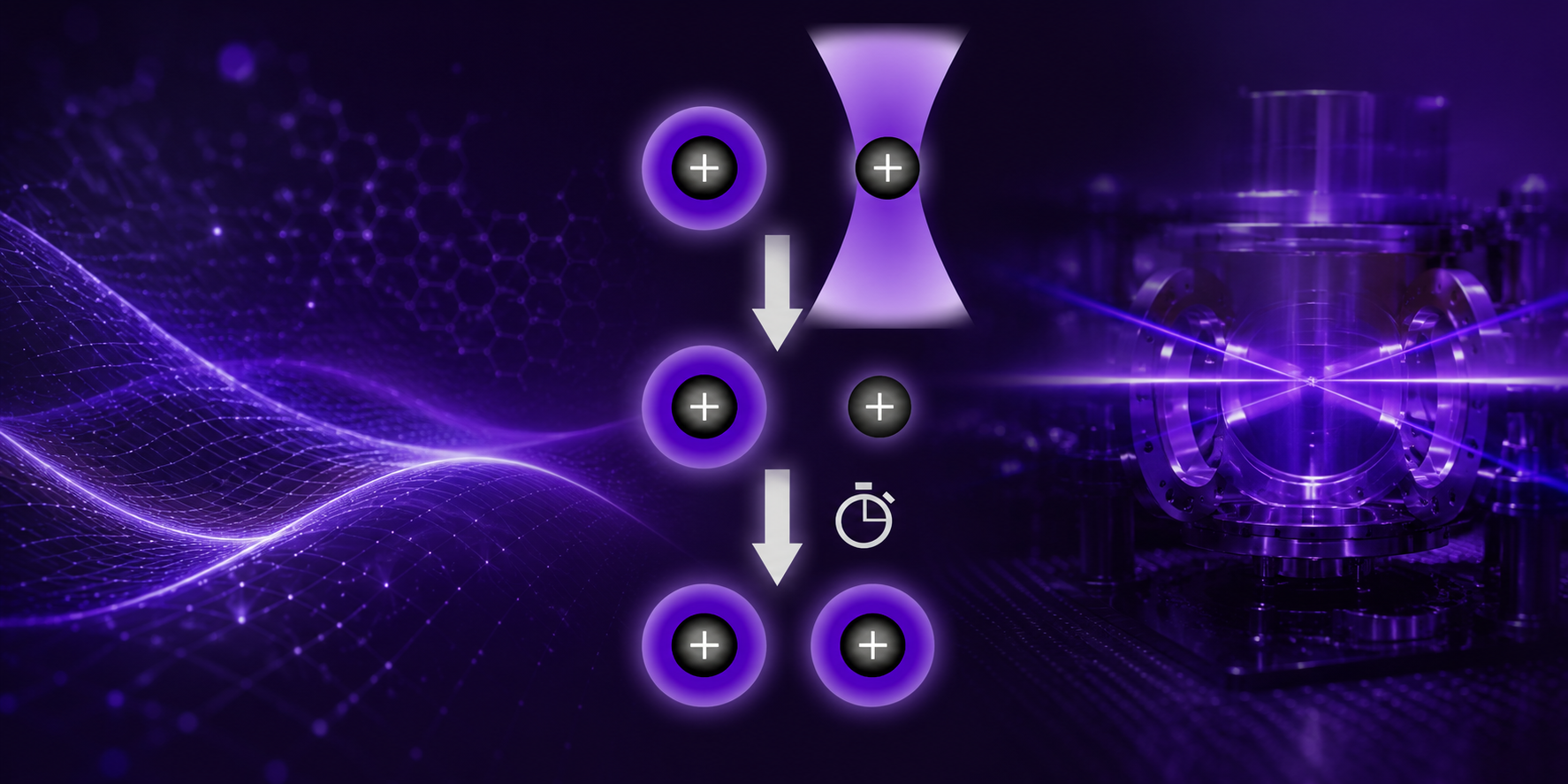
  • HZDR discovers that frequent measurements can freeze quantum processes: Through the quantum Zeno effect, frequent interruptions can nearly halt quantum computation.[32]This finding serves as a warning for quantum error-correction schemes: measurement-induced decoherence could offset the benefits of error correction, requiring a careful balance of measurement frequency in system design.[32]
06Impact

This Week's Impact

  • Following the release of the neutral-atom roadmap, investors and government agencies may reassess the maturity and risk of different quantum computing approaches, accelerating due diligence on neutral-atom companies.[24]
  • Multiverse Computing's massive financing round may trigger a new wave of investment in the quantum software sector, but caution is needed regarding valuation bubbles, with attention focused on the actual deployment effectiveness of its AI compression technology on edge devices.[14]
  • The commercial agreement between AT&T and D-Wave provides a case study for the practical application of quantum annealing in enterprises. If more performance data is subsequently released, it may drive similar collaborations in logistics, finance, and other sectors.[20]
  • If independently verified, the progress on photonic GKP by Hangzhou Heguang Quantum could alter the competitive landscape of photonic quantum computing, but current information is limited; it is advisable to monitor for peer-reviewed papers or third-party evaluations.[27]
  • Although Quantinuum's new low logical error rate (0.00014) is impressive, a huge gap remains to the 10⁻¹⁰ level required for practical algorithms. Attention should be paid to its subsequent progress in code distance scaling and real-time decoding.[8]
07Editors

Editor's Note

This week in quantum computing presents two main threads: one is the neutral-atom approach clarifying its position and challenges through an industry roadmap, and the other is quantum software highlighting its commercial value amidst the AI wave. The neutral-atom roadmap candidly points out the cycle repetition rate, a long-overlooked bottleneck. Such industry self-reflection helps avoid excessive hype but may also temporarily cool some investor enthusiasm. Meanwhile, the scale of Multiverse Computing's funding indicates that the convergence of quantum computing and AI is becoming a new hotspot for capital, though caution is needed against bubble risks under the "quantum" label. On the hardware level, the breakthrough in spin qubit shuttling tolerance and the attempt at deterministic photonic GKP state preparation both offer new ideas for solving the scaling challenges of their respective approaches, but a significant gap to practical utility remains. Overall, the industry is shifting from a "qubit count race" to a more pragmatic "systems engineering" phase, where the importance of supporting technologies like error correction, interconnects, and software integration is increasingly prominent.