Neutral atom
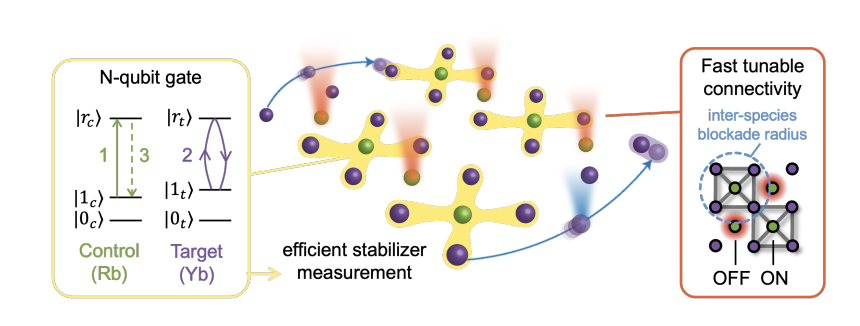
Neutral-atom quantum computing roadmap released: A joint team from academia and industry mapped out the scaling path from hundreds of physical qubits to millions of physical qubits, pointing out that the current system cycle repetition rate (typically 1–10 Hz) and measurement fidelity are the main obstacles on the path to practical utility.[24]This roadmap sets industry-consensus performance milestones for the neutral-atom approach for the first time, helping to coordinate R&D resources and accelerate the engineering process.[24]Currently, the scale of neutral-atom arrays has reached 1,180 physical qubits, with the number of logical qubits up to 96, but the repetition rate is far lower than that of superconducting and trapped-ion platforms. If it cannot be increased to the kHz range, it will severely constrain the speed of error correction.[24]
Spin qubits
Qubit shuttling damage tolerance exceeds 10%: Researchers demonstrated that electron spin qubits can tolerate a defect rate exceeding 10% when shuttled in solid-state devices.[7]This result significantly reduces the material uniformity requirements for large-scale spin quantum processors, potentially relaxing the manufacturing yield threshold for silicon-based quantum chips by an order of magnitude.[7]Currently, the number of coherent operations for spin qubits is the lowest among the five main approaches; the improvement in shuttling tolerance directly alleviates the physical defect bottleneck in scaling.[7]
Trapped ion
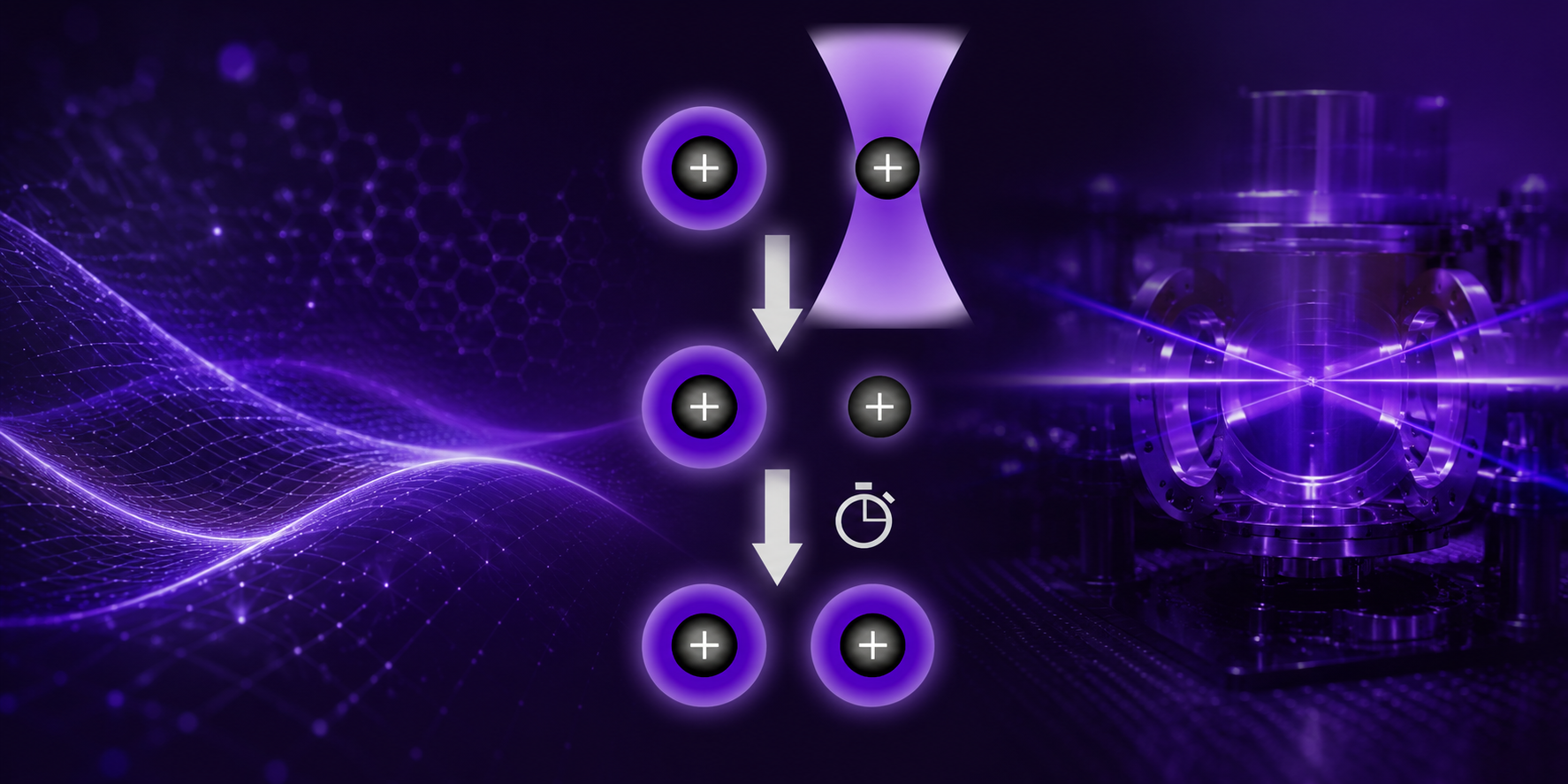
Long-lived state measurement in ytterbium ions: Researchers discovered a long-lived state in ytterbium ions, whose coherence time could potentially be used for quantum memory and precision measurement.[23]The coherence time of trapped-ion platforms has already reached the seconds-to-minutes range; the discovery of long-lived states may further improve storage fidelity, but their actual contribution to logical operation speed remains to be verified.[23]
Photonic
Hangzhou Heguang Quantum completed a seed funding round and reported progress on deterministic photonic GKP encoding: The company claims progress in the deterministic generation of photonic Gottesman-Kitaev-Preskill error-correcting codes and has developed a plug-and-play nonlinear module to address the probabilistic preparation bottleneck.[27]Photonic GKP encoding is one of the key paths to achieving fault-tolerant photonic quantum computing. A shift from probabilistic to deterministic generation would fundamentally change the loss-tolerance capability of the photonic approach, but publicly available information lacks end-to-end loss budgets and fidelity data, leaving an unknown gap compared to PsiQuantum's conditional fidelity metrics.[27]